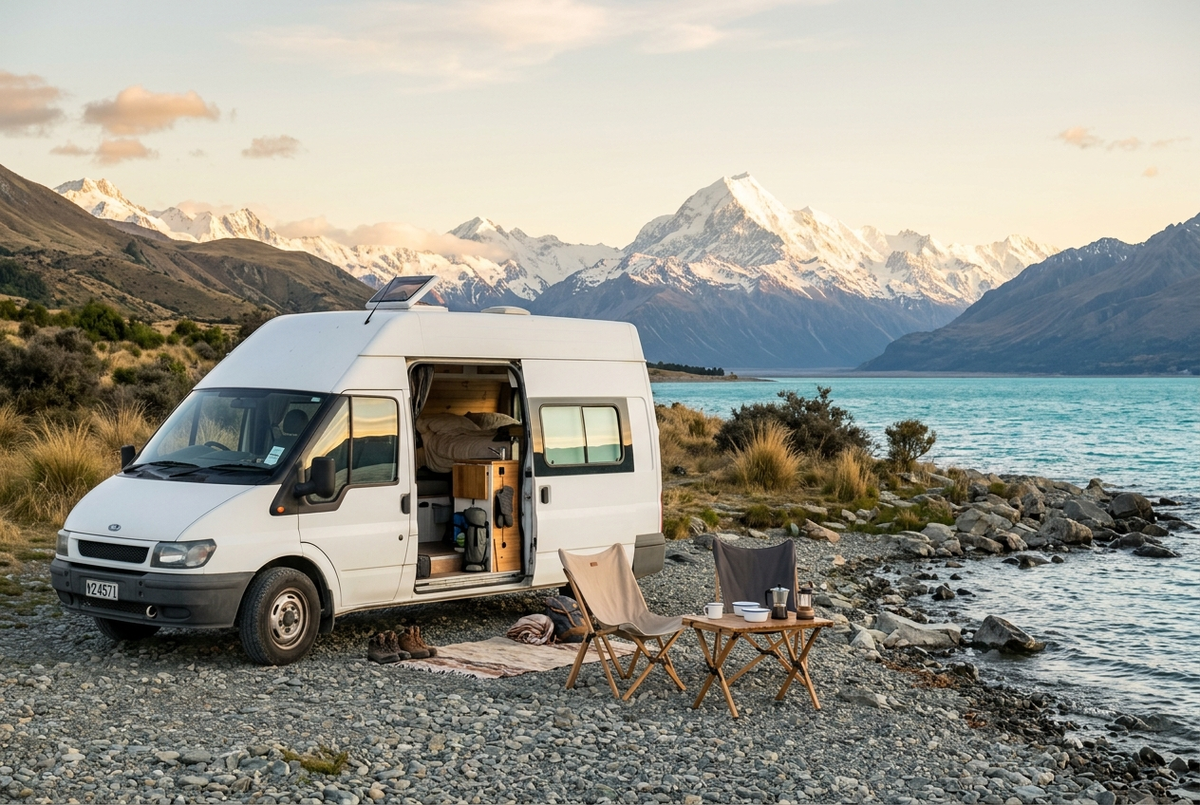
Few travel styles suit New Zealand better than the campervan road trip. Your accommodation and transport roll into one, and you can wake up next to whatever view you fell in love with the day before — a freedom that pairs perfectly with this country's vast landscapes. The catch? Rental prices swing wildly with the seasons, and there are more costs beyond the vehicle itself than most first-timers expect. This guide breaks down the going rates, how to choose a rental company, and the hidden costs that catch people out, so you can build a realistic budget.
Rental rates: the seasons change everything
Campervan rental pricing in New Zealand is dramatically seasonal. In the winter low season you can sometimes find vans from around NZ$50 per day, while in the summer peak (December–February) the same trip can cost $200–400 per day, depending on the vehicle (rough guide, as of August 2026).
| Season | Approximate daily rate |
|---|---|
| Low season (winter) | From around $50 |
| Peak season (Dec–Feb) | $200–400 |
In other words, the same van on the same route can cost several times more just because of when you go. If your dates are flexible, even shifting slightly off the midsummer peak can make a real difference. One caveat: winter in New Zealand means snow on South Island mountain roads. Crossing alpine passes in a vehicle without 4WD demands serious caution, so don't choose winter on price alone.
Big-name or budget: which company to choose?
Rental companies broadly fall into two camps.
- Major operators: Maui, Britz, Apollo and the like. Generally the pick for travelers who value newer vehicles, better fit-outs, and stronger support.
- Budget operators: Jucy, Travellers Autobarn and others — popular with backpackers and younger travelers who want to keep costs down above all.
Vehicle age, equipment, and insurance conditions vary by company and plan, so the golden rule is to compare the cover, not just the headline price. Check the details on each company's official site. For the broader lifestyle side of traveling by van, our New Zealand van life guide is worth a read.
What does "self-contained" mean?
One term you'll run into constantly when choosing a campervan in New Zealand is "self-contained." It refers to vehicles certified as having a toilet, wastewater tanks, and everything needed to stay aboard for a period without external facilities. With a certified self-contained vehicle, your options for free "freedom camping" at permitted sites open up considerably.
Without certification, you'll mostly be staying at paid campgrounds, which changes your accommodation math. Is it better to pay less for the van but pay campground fees every night, or pay more for the van and gain the freedom to park up in more places? Compare the total cost, not just the rental rate. Note that freedom camping rules are said to vary by district, so always check local signage and council information on the ground.
The hidden costs people forget
Budget only for the vehicle rental and you're in for some unwelcome surprises. Here are the most common extras:
- One-way fees: Picking up in Auckland and dropping off in Christchurch (or any one-way itinerary) incurs an extra charge.
- Insurance: The cover included in the base rate is often minimal; reducing your excess with additional insurance pushes up the daily price.
- LPG gas: Don't forget the cost of gas for cooking and heating.
- Campground fees: You'll pay for campsites on nights when your van isn't self-contained, or when you want power hookups and showers.
Add fuel and food, and the "true daily cost" ends up well above the advertised rental rate. If your itinerary involves a lot of long-distance driving, compare it against our guide to getting around New Zealand — a combination of buses or domestic flights plus a rental car can sometimes work out better.
When should you book?
If you're traveling in the December–February peak, book early. The popular vehicle types are said to sell out first, and the closer you get to your dates, the fewer and pricier the remaining options tend to be. The low season is more relaxed, but as noted above, winter on the South Island demands snow preparedness. Always confirm current rates and conditions on each company's official site before booking.
Campervan travel in New Zealand goes hand in hand with the country's "holiday park" culture. A powered site costs around $40–60 per night and comes with full kitchens and showers (as of August 2026). Cheaper than a hotel yet genuinely comfortable, which is why "reset at a holiday park every few days" is the classic rhythm of a campervan trip here.
Once you have a clear picture of the total costs, a campervan trip is one of the best ways to experience the freedom New Zealand offers. Build your plan around three axes — season, vehicle type, and where you'll sleep — and find the setup that fits you.
Prices and policies can change. Please check official websites for the latest information.