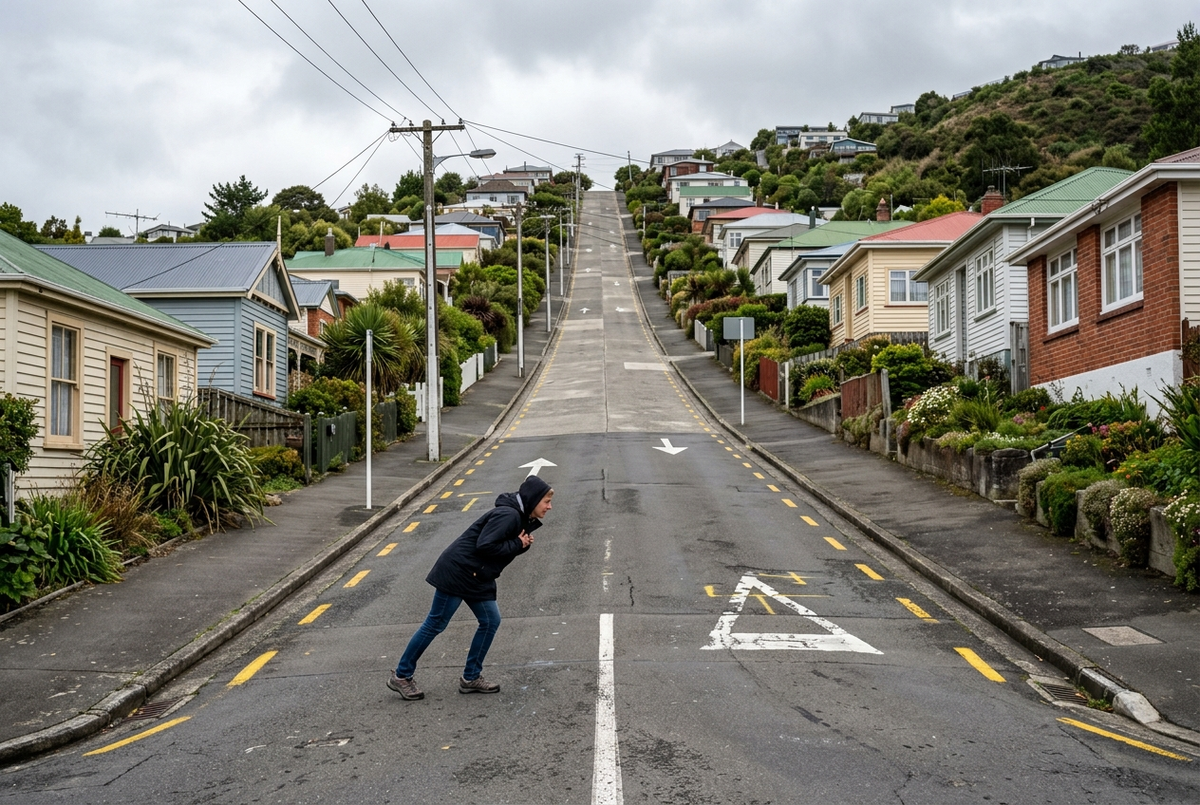
Tucked into the southern reaches of New Zealand's South Island, Dunedin doesn't have the show-stopping scenery of Queenstown or Tekapo — yet a surprising number of travellers come away calling it their favourite city in the country. There's the solid, stone-built cityscape laid down by Scottish settlers, the youthful buzz of a student town centred on the University of Otago, and a wild peninsula where a 30-minute drive puts you face to face with penguins and albatross. That remarkable range is Dunedin's greatest charm.
What Kind of City Is Dunedin? Scottish Heritage Meets Student Town
Dunedin was founded by Scottish settlers in the 19th century — the name itself is said to derive from the Gaelic name for Edinburgh. Stone churches, a grand railway station, and other architecture reminiscent of an old European city still stand today, earning it the nickname "the Edinburgh of the South."
At the same time, this is a student town, home to the University of Otago. During term time, cafes and vintage shops fill with students, giving the historic streets an energetic, youthful edge. For visitors, it's a wonderfully balanced city: heritage architecture on one hand, laid-back urban wandering on the other.
Getting there takes about 3.5 hours by car from Queenstown. The classic approach is to build it in as the southern anchor of a South Island road trip.
Baldwin Street — The World's Steepest Residential Street
The most iconic stop on any Dunedin itinerary is Baldwin Street, the world's steepest residential street, with a gradient of roughly 35%. It made headlines in 2020 when it reclaimed its Guinness World Record title (a street in Wales briefly held the crown).
Standing at the bottom, it's even more dramatic than the photos suggest. Houses cling to the slope as if glued on, and you can't help wondering what it must be like to live here. Walking up and back takes around 20–30 minutes, but it's harder on the legs than you'd expect — wear comfortable shoes.
- Location: A residential neighbourhood about 10 minutes' drive from the city centre (people live here, so keep the noise down)
- Cost: Free if you're just walking the street
- Tip: The view from the top is worth the climb, so push on to the summit if your legs allow
Otago Peninsula — A Wild Kingdom of Penguins and Albatross
Dunedin's other face is the Otago Peninsula, stretching east from the city. It's a treasure trove of wildlife, and two residents in particular are globally significant:
- Royal albatross: Taiaroa Head, at the tip of the peninsula, is the only mainland royal albatross breeding colony in the world. Watching these giant birds — with wingspans said to reach around 3 metres — glide overhead is breathtaking. Viewing is generally via guided tours from the visitor centre, so check the official website for prices and times.
- Yellow-eyed penguins: One of the world's rarest penguin species, and the Otago Peninsula is among their key habitats. Evening tours to watch them come ashore from the sea are popular. As their numbers are declining, always view them through a rule-abiding guided tour or conservation reserve.
You may also spot fur seals and sea lions. Keep a generous distance from all wildlife and never feed them. The Kiwi approach is to enjoy the encounter with the mindset that you're a guest in their territory.
City Highlights — The Railway Station and Larnach Castle
Back in the city, head first to Dunedin Railway Station. With its striking contrast of dark basalt and white limestone, it's said to be one of the most photographed buildings in New Zealand — and the mosaic-tiled floor inside is equally stunning.
Then, up on a hill on the Otago Peninsula, stands Larnach Castle — New Zealand's only castle. Built by the 19th-century banker William Larnach, it's less a fortress than a manor house with beautiful gardens. You can tour the interior and stroll the grounds, and on a clear day the views over the peninsula and harbour are superb. Entry is paid, so check the official website for current prices.
Sample Itinerary — Two Days to Make the Most of Dunedin
- Day 1 morning: Drive in from the Queenstown area (about 3.5 hours)
- Day 1 afternoon: Explore the city centre. Dunedin Railway Station → the Octagon (the city's eight-sided central plaza) → cafe break
- Day 1 evening: Head to the Otago Peninsula for a tour watching yellow-eyed penguins come home from the sea
- Day 2 morning: Take on the Baldwin Street climb
- Day 2 afternoon: Visit Larnach Castle or the Royal Albatross Centre, then continue to your next destination
Since most wildlife tours depart in the evening, staying overnight beats a day trip by a wide margin. If you want to see both the penguins and the albatross, two nights gives you comfortable breathing room.
Baldwin Street used to host an annual charity event called the "Jaffa Race," in which tens of thousands of round chocolate candies called Jaffas were rolled down from the top of the hill. Turning the world's steepest street into not just a tourist attraction but a candy racetrack — that's Dunedin for you, a city with a playful streak that squeezes every drop of fun out of a single slope.
Final Thoughts — Don't Underestimate This Southern Sleeper
The world's steepest street, the world's only mainland albatross breeding colony, and the country's only castle — Dunedin has an uncanny knack for collecting "onlys" and "world firsts." The 3.5-hour drive from Queenstown is no small detour, but for anyone who wants to experience the South Island in depth, it's well worth it. Set aside one or two nights in your itinerary — you won't regret it.
Prices and policies can change. Please check official websites for the latest information.