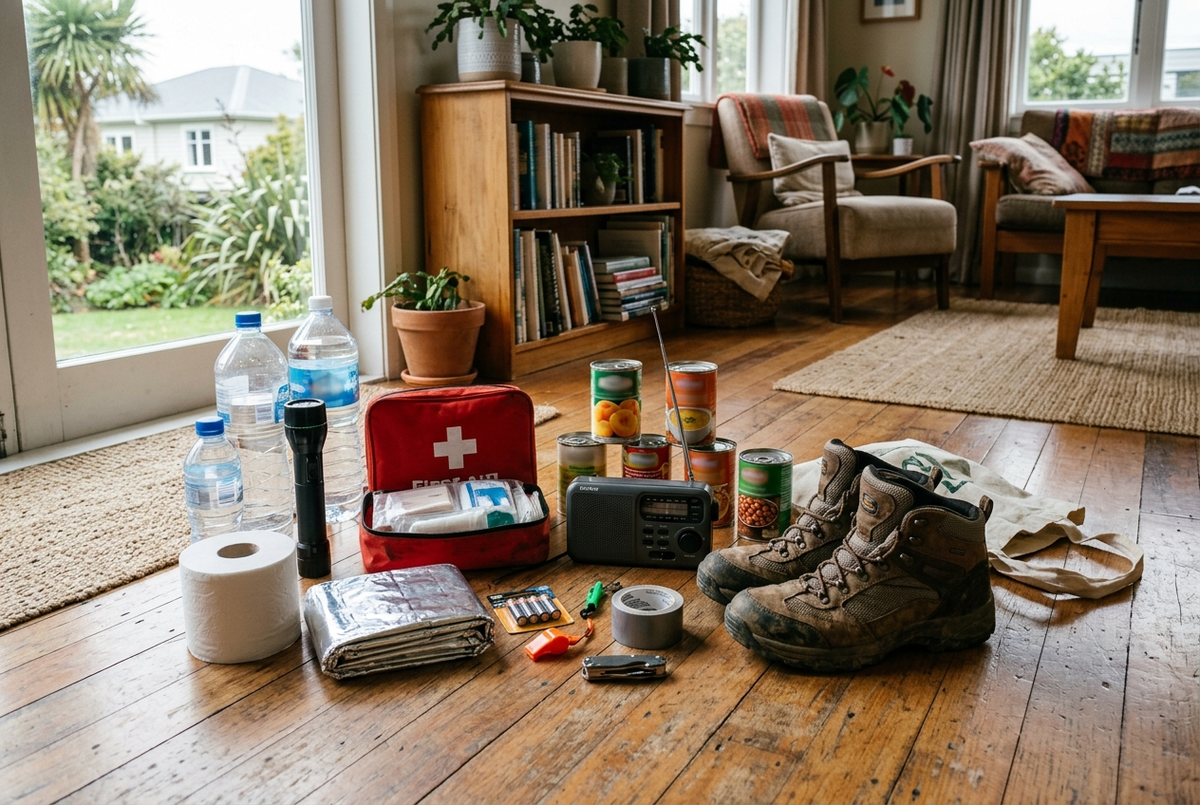
Like Japan, New Zealand is a genuinely earthquake-prone country. Sitting on the boundary between the Pacific Plate and the Indo-Australian Plate, NZ records around 15,000 to 20,000 earthquakes every year. The vast majority are microquakes too small to feel, but significant quakes do strike regularly — so if you're living in or traveling around New Zealand, it pays to know the basics of earthquake preparedness.
New Zealand's Earthquake History
Some of the major earthquakes NZ has experienced in recent years:
- 2011 Christchurch earthquake (magnitude 6.3): 185 people died, with devastating damage to the central city
- 2016 Kaikoura earthquake (magnitude 7.8): Massive landslides and a tsunami; the main road and rail links between the North and South Islands were severed
- 2023 earthquakes around Wellington: Multiple quakes strong enough to be felt
Wellington in particular is known as one of the country's higher-risk areas — a major fault line (the Wellington Fault) runs right through the city, and preparations for "the next big one" are a citywide priority.
How New Zealand Prepares
The upside is that NZ is also one of the world's best-prepared countries when it comes to earthquakes:
- Building codes: Seismic standards are strict, and virtually all new buildings are engineered to withstand earthquakes
- Public buildings: Schools, hospitals, and other public facilities are held to especially high seismic standards
- Retrofitting older buildings: Since the Christchurch earthquake, seismic strengthening of older buildings has accelerated
- Public education: Disaster preparedness is taught thoroughly in schools, and "Drop, Cover, Hold" is widely known as the standard response
What to Do in an Earthquake: Drop, Cover, Hold
The standard response in New Zealand differs slightly from what's taught in some other countries:
- DROP: Get down low to the floor
- COVER: Get under a table, or protect your head and neck with your hands and arms
- HOLD: Stay in that position until the shaking stops
The advice common in Japan to "secure an exit by opening a door" is not recommended in NZ. Protecting yourself takes priority over dealing with doors.
Tsunami Awareness
Along New Zealand's coastline, a major earthquake can bring tsunami risk — especially on coasts facing the Pacific Ocean.
- If you feel strong shaking while on the coast, move to higher ground immediately
- Remember the rule: "long or strong, get gone" — a long or strong quake is a tsunami warning sign
- Tsunami evacuation routes (marked with blue signs) are installed along NZ's coastal areas
- Don't wait for an official Civil Defence warning — evacuate early on your own judgment
Check Earthquake Information on GeoNet
GeoNet is New Zealand's earthquake information service, giving you real-time quake data on your phone or computer.
- Website: geonet.org.nz
- App: GeoNet app (iOS/Android)
Magnitude, epicenter, and depth are published within minutes of a quake. Practically everyone living in NZ knows and uses this service.
Living Through Quakes in Wellington
Living in Wellington, you'll actually feel small earthquakes several times a month. At first it's startling — "wait, is that an earthquake?!" — but before long it becomes just another "oh, there's another one." That said, whenever you feel a strong shake, always check GeoNet and act according to the situation.
In Wellington's CBD, you may notice buildings displaying an "IEP" (building performance rating). This indicates a building's seismic performance and is a useful reference before entering older buildings.
What Travelers and Short-Term Visitors Should Do
- Check the emergency exits and evacuation routes at your hotel or guesthouse
- Install the GeoNet app
- If staying near the coast, learn the tsunami evacuation routes
- Memorize the "Drop, Cover, Hold" response
Earthquake and Travel Insurance
New Zealand has a public insurance scheme for earthquake damage (EQC: Earthquake Commission). If you're a traveler, it's worth checking whether your travel insurance includes natural disaster cover for extra peace of mind.
Earthquakes are frightening, but New Zealand is a country that takes preparedness seriously. With the right knowledge and a few simple precautions, there's no need to be overly anxious. A little preparation goes a long way toward a safe and enjoyable trip.