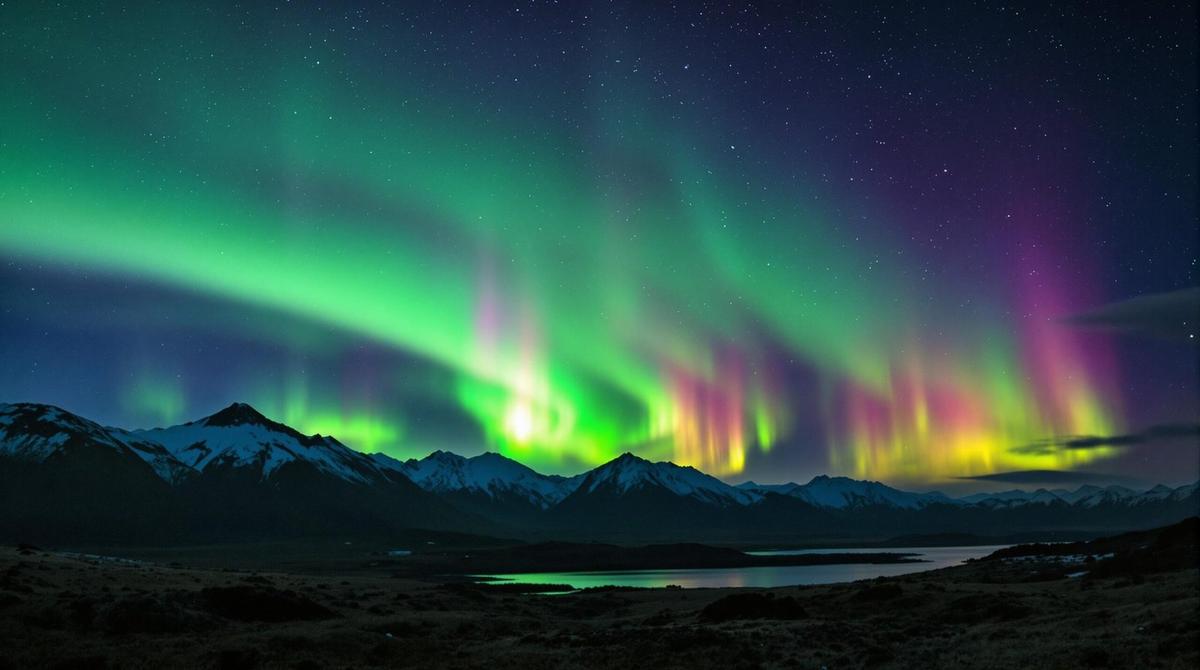
New Zealand is famous for its epic landscapes and adventure activities — but did you know you can also witness one of nature's most mesmerizing spectacles here: the aurora, dancing across the night sky?
This article is a deep dive into New Zealand's aurora, better known as the Southern Lights or Aurora Australis. Whether you're an international student, a working holidaymaker, a new resident, or simply visiting as a tourist, this complete guide covers everything you need for a once-in-a-lifetime experience — from the best viewing season and locations to tips for capturing stunning photos. Ready to plan your encounter with the curtains of light that grace the southern night sky, a very different show from the northern hemisphere's aurora?
Chasing the Southern Lights in New Zealand: A Guide to Aurora Viewing in the Southern Hemisphere
When most people hear "aurora," they picture the Arctic regions — Canada or Scandinavia. But right here in New Zealand, you have a chance to see the southern hemisphere's own version: the Southern Lights. Before we get into the where and when of viewing the aurora, let's start with the basics of what one actually is.
What Is an Aurora?
An aurora is a glow in the upper atmosphere caused by the interaction between Earth's magnetic field and the solar wind. Electrically charged particles (plasma) released by the sun are drawn along Earth's magnetic field lines toward the polar regions, where they collide with atoms and molecules in the atmosphere. Those collisions release energy — which we see as light.
How Does an Aurora Form?
- Solar activity: Eruptions on the sun's surface (solar flares) release high-speed streams of plasma particles — the solar wind — into space.
- Arrival at Earth's magnetosphere: When the solar wind reaches Earth, it collides with our planet's magnetic field (the magnetosphere).
- Travel along magnetic field lines: Plasma particles captured by the magnetosphere are funneled along Earth's magnetic field lines toward the regions around the North and South Poles.
- Collision with the atmosphere: At altitudes of roughly 100 km to 500 km above the poles, charged solar particles collide with oxygen atoms and nitrogen molecules in the atmosphere at high speed.
- Light emission: The collisions energize the atoms and molecules, which then release that energy as light — creating the aurora. The mechanism is identical for both the Northern Lights and the Southern Lights.
🌌 How an Aurora Forms ☀️🌍
1. Solar Activity
Solar flares and other events release the solar wind (plasma particles).
2. Arrival at Earth
The solar wind reaches and collides with Earth's magnetosphere.
3. Travel Along Field Lines
Particles follow the magnetic field lines toward the poles.
4&5. Collision & Glow
Particles collide with atoms and molecules in the upper atmosphere, releasing energy as light — the aurora we see.
Aurora Types and Colors
Auroras come in many shapes — curtains, bands, coronas, and more. Their color depends on which atmospheric gases the particles collide with, and at what altitude.
- Green: The most common color, produced when particles collide with oxygen atoms at altitudes of 100 km to 200 km.
- Red: Produced by collisions with oxygen atoms at higher altitudes, above 200 km. Seen during periods of strong activity.
- Pink/Purple: Produced by collisions with nitrogen molecules at around 100 km. Sometimes visible when aurora activity is especially intense.
- Blue: A rare color, produced by collisions with nitrogen ions.
New Zealand's Southern Lights are typically dominated by green, with pink and reddish hues often appearing when activity ramps up.
What the Aurora Looks Like to the Naked Eye
This is the part most guides skip, and it's the reason a lot of first-timers come away disappointed. To the naked eye, a moderate Southern Lights display usually looks like a pale grey-white glow low on the southern horizon — something you might mistake for the lights of a distant town, or for thin cloud that refuses to drift. Faint beams may pulse upward from it. The vivid greens and magentas you've seen online come from a camera sensor gathering light over several seconds; your eye simply can't accumulate light that way.
That doesn't make it a letdown. Two things change the viewing experience completely. First, give your eyes a full 20 to 30 minutes to adapt to the dark — no phone screens, no white torch light — and structure you couldn't see at first begins to separate out of the glow. Second, during a strong geomagnetic storm the display outruns your camera entirely: on the night of 10–11 May 2024, when one of the most powerful solar storms in two decades hit Earth, people across the South Island — and even in Auckland and Northland — watched red and green light climb overhead in color they could see unaided. Nights like that are rare. Most of the time, the honest expectation is a glow to the eye and a spectacular photo on the screen, and knowing that in advance is what turns the night into an unforgettable experience rather than a shrug.
The Best Time to See the Southern Lights
The wider aurora season runs from March to September, and the best time to see the Southern Lights within it is winter — roughly May through September, when nights are long and the air is crisp. June through August offers the highest chances, and timing your outing around the new moon — when moonlight interference is minimal — greatly improves your odds of seeing a vivid display.
Don't write off the shoulder months, though. The weeks around the March and September equinoxes have a long-documented tendency to produce more geomagnetic activity than the months either side of them, because of how Earth's magnetic field lines up with the solar wind at those times of year. Nights are shorter than in midwinter, but the storms are more frequent — and the temperatures are a good deal easier to stand for three hours in a field.
Aurora activity also depends heavily on how active the sun is, so checking daily aurora forecasts is essential. Use a space weather website or app to monitor the Kp index (a measure of geomagnetic activity) and aim for high-Kp days — generally Kp 5 or above.
- Geomagnetism – GNS Science: Geomagnetic data for New Zealand.
- SpaceWeatherLive: A global space weather forecasting site.
When Is the Aurora Out Tonight? Real Time Alerts, Apps and Websites
Season and location get you into position. What decides whether you actually see anything is the sun, and that changes hour to hour. Aurora hunters in New Zealand don't wait for the news — they watch a handful of numbers and a couple of alert feeds, and they drive when those numbers move.
Reading an Aurora Forecast: Kp Index and Bz
Two figures do most of the work in any aurora forecast:
- Kp index (0–9): A global measure of geomagnetic disturbance. Kp 5 and above is an official geomagnetic storm and puts the aurora within reach of Christchurch and much of the South Island. From the far south — Southland, the Catlins, Rakiura — a camera can pick up the glow at Kp 3 or 4 on a dark night, so don't dismiss a quiet forecast if you're already down there. High Kp readings of 7 or more are when the display pushes north and becomes visible to the eye.
- Bz: The north–south direction of the magnetic field carried by the solar wind, measured in nanotesla. When Bz turns southward (negative), the solar wind couples efficiently with Earth's magnetic field and energy pours into the polar regions. A sustained Bz of −10 nT or lower is a far better sign for tonight than a hopeful three-day outlook. When Bz sits north, even a fast solar wind often produces nothing.
These numbers spike after coronal mass ejections — vast clouds of plasma thrown off the sun that take one to three days to reach Earth. Solar flares and solar storms are what forecasters watch to predict them, which is why aurora forecasts get useful roughly 24 to 48 hours out and genuinely reliable only in the last hour or two.
One planning note for 2026: solar cycle 25 peaked around 2024–2025, and the years just after a peak historically produce some of the strongest storms of the whole cycle. Aurora visibility from New Zealand should stay well above the long-run average for the next few seasons.
Real Time Alerts: The Apps and Websites Aurora Hunters Use
- SpaceWeatherLive: Live solar wind speed, Bz and Kp, with push alerts when a storm threshold is crossed. The single most useful page to keep open.
- Aurora Alert (University of Otago): A New Zealand-specific alert service built around local magnetometer data, so its thresholds are set for southern latitudes rather than the northern hemisphere.
- NOAA Space Weather Prediction Center: The source most forecasts are ultimately drawing on, including the 30-minute aurora forecast model.
- Community groups: New Zealand has an unusually active online aurora community, and a confirmed sighting posted from Invercargill or Dunedin is often the fastest signal that something is happening. Aurora sightings tend to appear in these groups before any alert lands in your inbox.
Check the Weather Too — Clear Skies Decide the Night
A Kp 7 storm under thick cloud shows you nothing at all. Before committing to a two-hour drive, check local weather forecasts and cloud-cover maps for the specific spot you're heading to, not just the nearest town — in Otago and the Mackenzie, cloud can sit over one valley while the next one over stays clear. MetService's rain-radar and cloud forecasts, and the hourly cloud layer on any satellite-based forecast app, are worth as much as the Kp number.
Two more things to line up: the moon phase (a full moon washes out a faint aurora much as light pollution does) and the hours either side of local midnight, when activity most often peaks. Get a clear view to the south, clear skies and a dark moonless night on the same evening as a southward Bz, and you have the best possible odds New Zealand can offer.
Where to See the Southern Lights in New Zealand: The Best Places
To catch the New Zealand aurora, head to the South Island of New Zealand — the farther south and the darker the skies (away from light pollution), the better. Auroras are occasionally visible from the North Island, but your chances are far higher down south. Choosing the right location for aurora watching matters more than any piece of equipment you can buy.
Lake Tekapo: The Star Attraction
Lake Tekapo sits at the heart of the Aoraki Mackenzie International Dark Sky Reserve, one of the finest stargazing regions on the planet. With minimal light pollution and a high rate of clear nights, it's a prime location not just for stargazing but for aurora hunting too.
- Church of the Good Shepherd: This small stone church on the lakeshore is the classic foreground for star and aurora photos. Visitor numbers have surged in recent years, so follow the rules — including restrictions on tripod use — and keep the peace while you watch the sky.
- Mt John Observatory: An observatory perched on a 1,029 m summit. By day, the café serves up spectacular views; by night, guided stargazing tours are popular. Even without a tour, you can find open-sky spots along the surrounding roads.
- Around the lakeshore: Beyond the church area, plenty of spots along the lake offer wide-open skies. With a rental car, it's easy to escape the town lights and find your own dark corner.
The Tekapo area is New Zealand's most popular aurora-viewing destination, with a relatively good range of accommodation and tours.
Best Aurora Spots Across the South Island
Beyond Tekapo, the South Island is dotted with excellent aurora-viewing locations.
- Around Queenstown: Famous for its adrenaline activities, Queenstown also offers dark night skies just a short drive out of town. The southern shores of Lake Wakatipu and ski-field car parks (in the off-season) are good candidates.
- Wanaka: A more laid-back town than Queenstown. The shores of Lake Wanaka and the surrounding hills have little light pollution and are well suited to aurora watching.
- Stewart Island / Rakiura: New Zealand's southernmost inhabited island. Its Maori name, Rakiura, means "glowing skies" — and it lives up to it as a superb aurora-viewing destination. Getting there takes a little effort, but watching the Southern Lights amid untouched wilderness is something special. Rakiura National Park is also a certified Dark Sky Sanctuary.
- The Catlins: A region along the South Island's southeastern coast, with rugged coastline, forests, and waterfalls. Its low population density means minimal light pollution. The lighthouse at Nugget Point makes an unforgettable foreground for the aurora.
- Around Dunedin: Head a short distance out of the city — to the Otago Peninsula, for example — and you'll find viable viewing spots.
- Invercargill and Southland: The southernmost city on the mainland, and the most reliable base of all. Oreti Beach and the coast road toward Bluff give you a flat, open horizon over the sea with almost nothing behind it — the single most important feature of any aurora site. A camera here will register a glow on nights when Christchurch sees nothing.
- Canterbury, near Christchurch: You don't have to leave the region to get a clear view. Birdlings Flat and the shores of Lake Ellesmere / Te Waihora, about 45 minutes from the city, face straight south across open water with low light pollution, and they are where most Christchurch aurora hunters go on short notice.
- Kaikoura: Farther north, so the aurora has to be strong to reach here — but when it is, the coastline south of the peninsula offers open landscapes and a clean sea horizon, with the Kaikoura Ranges keeping town lights off your southern view.
The pattern across all of these best places is the same: get as far south as you can, find open landscapes with a clear view to the southern horizon, and choose somewhere with low light pollution. High vantage points help only if nothing blocks the south — a lakeshore at sea level beats a hilltop with a ridge in the way. Coastal spots and lake edges are favorites among aurora hunters for one more reason: still water gives you stunning reflections that double the display in a photograph.
🗺️ South Island Aurora Viewing Spots ✨
📍 Lake Tekapo
🌟
- Highlights: International Dark Sky Reserve, minimal light pollution, high rate of clear nights
- Viewing spots: Church of the Good Shepherd, around Mt John Observatory
- Access: About a 3-hour drive from Christchurch
📍 Stewart Island / Rakiura
🌠
- Highlights: Southernmost inhabited island, Dark Sky Sanctuary
- Viewing spots: The whole island works
- Access: Ferry from Bluff or flight from Invercargill
📍 The Catlins
🌊
- Highlights: Southeast coast, sparsely populated, rich in nature
- Viewing spots: Around Nugget Point lighthouse
- Access: Drive from Dunedin or Invercargill
📍 Queenstown / Wanaka area
🏞️
- Highlights: Dark skies just outside of town
- Viewing spots: Lakeshores and open areas on the outskirts
- Access: Major tourist hubs, easy to reach
Tip: choose a spot with minimal light pollution and an unobstructed view to the south.
Stargazing and Auroras Around Aoraki / Mt Cook
Aoraki / Mount Cook National Park — home to New Zealand's highest peak — is part of the same International Dark Sky Reserve as Lake Tekapo. At high altitude with exceptionally clear air, the star-filled skies here are breathtaking. If the aurora appears, you can expect an otherworldly scene set against snow-capped mountains.
Good viewing spots include the area around Mount Cook Village and the easily accessible end of the Kea Point Track. Keep in mind this is alpine terrain: the weather changes fast, and in winter you'll need to watch for snow and icy roads.
Planning Your Southern Lights Trip
A successful aurora-hunting trip to New Zealand comes down to good planning.
Choosing an Aurora Tour
If you're not confident finding viewing spots on your own, or you want to maximize your chances, joining a guided tour is a great option.
- Expert guides: Knowledgeable aurora guides take you to the best viewing spots, and often explain the science behind the lights — and the legends, too.
- Transport included: No driving unfamiliar roads at night — a real plus on winter mountain roads.
- Cold-weather gear rental: Some tours lend out specialized cold-weather clothing for those long, freezing viewing sessions.
- Photography support: Some operators help you dial in your camera settings or take souvenir photos for you.
Tekapo and Queenstown both offer tours that combine stargazing with aurora watching. Compare prices, inclusions, and operating seasons to find the one that fits your plans.
Best Season to Visit New Zealand
If seeing the aurora is your main goal, May through September is the best window, as noted above. Bear in mind this is New Zealand's winter: daylight hours are short, and some regions get snow and serious cold.
If you also want to enjoy hiking and other activities alongside aurora hunting, spring (September–November) or autumn (March–May) are worth considering. The weather in these seasons is relatively mild and great for sightseeing, while the nights are still long enough for aurora watching — though your odds are somewhat lower than in midwinter.
Summer (December–February) brings long daylight hours, making it the least suitable season for aurora viewing.
What to Pack for Aurora Watching
Winter nights in New Zealand get seriously cold, and aurora watching means hours outdoors — so thorough cold-weather preparation is a must.
🎒 Aurora Watching Packing List 🥶
🧥 Warm Clothing (Top Priority!)
- Waterproof, windproof outer layer: Ski wear is ideal.
- Thermal base layers: Merino or synthetic thermals you can layer up.
- Mid layer: A fleece or down jacket.
- Insulated pants: Snow pants or other warm trousers.
- Hat and ear covers: To prevent heat loss from your head.
- Gloves: Waterproof and well insulated. Glove liners are a bonus.
- Neck warmer or scarf: Keep your neck warm.
- Thick socks: Wool is best.
- Waterproof, non-slip boots: Something that handles snow and ice.
🔦 Other Essentials
- Headlamp/flashlight: A red-light mode is handy (it preserves your night vision).
- Spare batteries: For your camera and phone (cold drains them fast).
- Camera and tripod: Essential for aurora photography (details below).
- Hot drinks: Bring a thermos.
- Hand warmers: Great for warming yourself and your gear.
- Folding chair: For those long waits.
- Snacks: Keep your energy up.
Tip: dress in layers so you can regulate your body temperature.
Capturing the Aurora: Photography Techniques That Work
If you're lucky enough to witness New Zealand's aurora, you'll want to capture it. Aurora photography takes a little know-how, but with the basics down, even beginners can get great shots.
Basic Night-Sky Camera Settings
You'll need a camera with manual controls (a DSLR, mirrorless camera, or some high-end compacts and smartphones) plus a sturdy tripod to keep it steady.
Baseline settings:
- Shooting mode: Manual (M)
- Lens: Wide-angle (roughly 14mm–24mm focal length is ideal)
- Aperture (f-stop): Open the lens wide (around f/1.8–f/4) to let in as much light as possible.
- Shutter speed: Roughly 5–20 seconds, adjusted for the aurora's brightness and how fast it's moving. Too long and stars turn into trails while the aurora's movement blurs.
- ISO: Around ISO 1600–6400, depending on your camera's capability and the aurora's brightness. Higher ISO means more noise, so find the balance.
- Focus: Switch to manual focus (MF) and set it to infinity (∞). The most reliable method: use live view to magnify a bright star and fine-tune until it's tack sharp.
- White balance: Auto (AWB) works, but for more control try "fluorescent" or a set color temperature (around 3500K–4500K).
- Other settings:
- Image stabilization: Turn it OFF (it can backfire on a tripod).
- Long-exposure noise reduction: Turn it OFF (it doubles your shooting time). High-ISO noise reduction is a matter of preference.
- RAW format: Shoot RAW if possible — it gives you far more flexibility in post-processing.
- Self-timer/remote release: Use a 2-second timer or a remote release to avoid camera shake when pressing the shutter.
Tips for Beautiful Aurora Photos
- Take test shots: Start with the settings above, check exposure and focus, then fine-tune.
- Think about composition: Including landscape elements — mountains, lakes, trees, buildings — adds a sense of scale and makes your shots far more striking.
- Spare batteries and memory cards: Cold drains batteries fast, so carry several spares and keep them somewhere warm (like a pocket). Make sure you have plenty of memory card capacity too.
- Bring a headlamp with a red light: A red light lets you see your camera controls without ruining your dark-adapted vision — and without ruining everyone else's at a popular spot. White torch light is the fastest way to make yourself unpopular at a viewing site.
- Match the exposure to the display: Long exposures of 15 to 25 seconds pull the most out of a faint glow, but they smear the structure of a fast-moving display into mush. When the aurora is dancing, drop to 5 to 8 seconds and raise the ISO instead — night photography in low light is always this trade, and the aurora moves faster than most beginners expect.
- Focus before dark: Autofocus will hunt uselessly at night. Set focus to infinity manually while there's still light, or focus on a bright star in live view at maximum magnification, then tape the focus ring so it can't drift.
- Stay warm: Protect yourself as well as your gear — numb fingers make camera operation nearly impossible.
- Watch the aurora's movement: The lights are constantly shifting shape. Experiment with shutter speeds to capture everything from fast-moving curtains to slowly spreading glows.
Capturing the Southern Lights and the Stars Together
The South Island's skies deliver not just auroras but spectacular starscapes. The baseline settings above will handle capturing both in one frame.
- Go wide: A wide-angle lens makes it easy to fit both the aurora and the stars in a single frame.
- The Milky Way bonus: In the southern hemisphere winter, the bright core of the Milky Way climbs high in the sky. If you get the aurora and the Milky Way at once, you're in for a truly spectacular shot.
- The moon factor: Moonlight washes out the stars, but it also illuminates the landscape — which can help when you're combining the aurora with foreground scenery. Rather than only chasing the new moon, factor the lunar phase into your shooting plans.
The Aurora in Maori Culture
For the Maori, New Zealand's indigenous people, natural phenomena are far more than scientific events — they're woven deeply into myth and legend. The aurora is no exception.
Maori Legends of the Aurora
In the Maori language, the aurora is sometimes called Tahunui-a-rangi. Interpretations vary, but it's generally understood to mean something like "the great burning fires of the sky" or "the glow of the heavens."
Some tribes tell of the lights as the spirits of ancestors tending great bonfires in the southern seas. In other regions, they were believed to be the voyaging lights of a great chief traveling across the night sky. These legends show how closely the Maori observed the night sky and how they wove its phenomena into their worldview.
Where to Experience Maori Culture
Engaging with Maori culture is one of the great rewards of traveling in New Zealand.
- Te Puia / Rotorua: Home to geysers and a traditional Maori arts school, with cultural performances (including the haka). It's on the North Island, but it's a heartland of Maori culture.
- Waitangi Treaty Grounds / Paihia: A pivotal site in New Zealand's founding history, featuring a Maori meeting house (marae) and cultural performances. Also on the North Island.
- Museums: Auckland War Memorial Museum, Te Papa Tongarewa in Wellington, and other major city museums hold rich collections on Maori history and culture.
- Marae stays: For a deeper cultural experience, some marae (Maori meeting grounds) offer overnight stay programs (advance booking and an understanding of protocol are required).
Visiting these places offers a glimpse of the deep respect Maori hold for the natural world — and their unique perspective on phenomena like the aurora.
Nature's Beauty Through a Maori Lens
In the traditional Maori worldview, people and nature are deeply interconnected: mountains, rivers, lakes, sky, and stars all carry a life force (mauri). Nature is not simply a resource to be used, but a presence to be respected and lived alongside.
A grand natural phenomenon like the aurora carries special meaning in this worldview — a manifestation of gods and ancestors, and a sign of the balance and cycles of the natural world. When you watch the Southern Lights, keeping this Maori perspective in mind can transform the experience from merely a beautiful sight into a sense of the deep spirituality of the land itself.
How New Zealand Compares to Other Aurora Destinations
So how do New Zealand's Southern Lights stack up against the world's other aurora-viewing destinations?
How It Differs from Canada and Alaska
- What you're watching: Canada (Yellowknife, etc.) and Alaska (Fairbanks, etc.) offer the northern hemisphere's aurora — the Northern Lights.
- Viewing season: The northern hemisphere's best season runs mainly autumn through spring (roughly September–April) — the opposite of New Zealand's.
- Climate: Winters in Canada and Alaska are brutally cold, with temperatures below -30°C not uncommon. The South Island's winters are cold, but rarely that severe.
- Aurora patterns: The underlying mechanism is identical, but differences in viewing direction (in the southern hemisphere you mostly look south) and in the shape of the geomagnetic field can produce subtle differences in how the lights appear.
- Accessibility: Many of New Zealand's viewing spots are relatively easy to reach from populated areas, whereas the famous sites in Canada and Alaska tend to be far more remote.
Southern vs. Northern Hemisphere Auroras
| Category | Southern Hemisphere Aurora (Southern Lights) | Northern Hemisphere Aurora (Northern Lights) |
|---|---|---|
| Formal name | Aurora Australis | Aurora Borealis |
| Main viewing regions | New Zealand, Australia (Tasmania), Antarctica | Canada, Alaska, Scandinavia, Iceland, northern Russia, etc. |
| Best viewing season | In New Zealand, mainly winter (May–September) | Mainly autumn through spring (September–April) |
| Accessible land | Less land at viewing latitudes than the north, so viewing locations are limited | Plenty of well-placed land, with many easily accessible locations |
| Appearance | Fundamentally the same colors and forms, though viewing direction and geomagnetic differences can cause subtle variations | Same as left |
| Difficulty | Generally considered somewhat harder than the north in terms of access and available information | Many famous destinations with abundant tours and infrastructure |
Because there's so little land at the right latitudes in the southern hemisphere, the Southern Lights are sometimes called the "rare" aurora. Outside of Antarctica, New Zealand is one of the few relatively accessible places on Earth where you can see them.
The World's Top Aurora Destinations
A definitive ranking is tricky, but these are generally considered the most popular aurora destinations worldwide.
- Scandinavia (Norway, Finland, Sweden): Easy to reach, with excellent tours and infrastructure. Tromso in Norway is especially famous.
- Iceland: Beyond the aurora, you can enjoy a landscape of glaciers and volcanoes unlike anywhere else.
- Canada (Yellowknife, etc.): Sits directly beneath the auroral oval, boasting high sighting rates. Facilities like Aurora Village are well known.
- Alaska (Fairbanks, etc.): Like Canada, an area with high aurora frequency.
- New Zealand: The southern hemisphere's flagship destination, with exceptional stargazing to match.
New Zealand may see less frequent or less intense auroras than the famous northern destinations, but it offers a set of attractions all its own: world-class dark skies like those over Lake Tekapo, a comparatively mild climate (at least compared to the Arctic), and the depth of Maori culture. If you're after an aurora experience that's genuinely different, New Zealand delivers.
Summary
The Southern Lights over New Zealand are a mystical spectacle unique to the southern hemisphere. This guide has covered the New Zealand aurora from every angle — the basics, the best time to see the Southern Lights, where to go, what to prepare, how to photograph it, and its place in Maori culture.
- Best season: May–September (especially June–August), timed around the new moon.
- Top locations: Dark-sky spots on the South Island — Lake Tekapo, Stewart Island, the Catlins, and around Queenstown.
- Preparation: Serious cold-weather gear, real time alerts on your phone, and regular checks of the aurora forecast and the local cloud cover.
- Photography: Bring a camera with manual controls plus a tripod, and master the baseline settings.
- The magic: The aurora sharing the sky with world-class stars, and a connection to Maori culture.
Witnessing the Southern Lights glowing beneath the Southern Cross offers something the northern aurora can't. If you're planning a trip, a study stint, a working holiday, or a move to New Zealand, add this extraordinary experience to your itinerary — it's one you won't forget.
For further research, these sites are also useful.
- Tourism New Zealand: The official Tourism New Zealand website, packed with regional travel information.
- MetService: New Zealand's weather forecast site — check cloud cover before heading out.
Disclaimer: This article was created with the help of AI-generated information. While we strive to provide the most current and accurate information possible, details may become outdated or change. For information that changes frequently — such as prices and opening hours — always check official websites for the latest details. This article is intended as general information only and does not constitute advice for individual circumstances. Its content may be updated in the future based on personal experience and additional information.