If you're planning to study, do a working holiday, move, or stay long-term in New Zealand, one of the essential first steps for settling in smoothly is opening a local bank account. It becomes the foundation of your day-to-day finances — receiving wages, paying rent, and covering everyday shopping. But you may well be wondering: which bank should I choose? What's the process like? What documents do I need?
This article covers everything you need to know about opening a bank account in New Zealand: a comparison of major banks like ANZ and BNZ, how accounts fit into student and working holiday life, the documents and steps involved, and what you can prepare before you even leave home. Do your homework in advance, choose the account that suits you best, and get your New Zealand life off to a smooth start.
Why You Need a New Zealand Bank Account
When you live in New Zealand, a local bank account is far more than just a place to keep your money. Here's why opening one is strongly recommended.
- Getting paid and paying bills: If you take a part-time or full-time job, your wages will almost always be paid into a local bank account. Paying rent, power, and other bills is also far easier with direct debits and online banking from a local account.
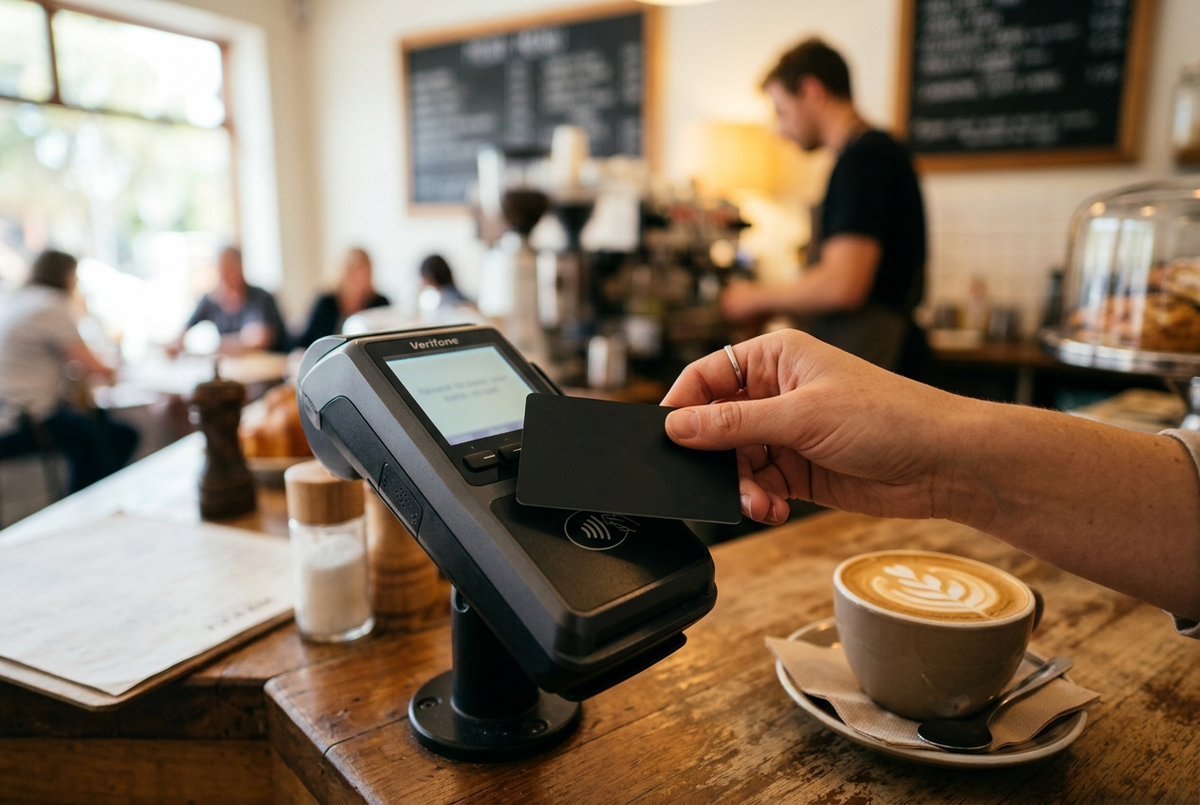
- The convenience of an EFTPOS card: New Zealand runs on EFTPOS — a debit-style card linked directly to your bank account. Supermarkets, cafes, retail shops — you can pay almost anywhere without carrying cash, making it essential for daily life. To use an EFTPOS card, you need a local bank account.
- Keeping your money safe: Carrying large amounts of cash is risky. Keeping your money in a bank account dramatically reduces the risk of theft or loss, and online banking and mobile apps let you check your balance and transaction history anytime.
- Building a base for life in NZ: A bank account can contribute to your local financial footprint, which may work in your favour later when signing a mobile phone contract or a tenancy agreement.
In short, a local bank account is a must-have for living smoothly and safely in New Zealand.
Banks in New Zealand: ANZ, ASB, BNZ, Westpac and Kiwibank
New Zealand has several banks, but the big names below are the most popular and widely used among international students and working holidaymakers. Get to know each bank's character and pick the one that suits you.
- ANZ (Australia and New Zealand Banking Group Limited): One of the largest banks in the country. It has an extensive network of branches and ATMs, making it highly convenient, and offers well-developed packages and services for international students. Its online banking and mobile app also have a strong reputation for usability.
- BNZ (Bank of New Zealand): Another major domestic bank with a long history. Like ANZ, it has a nationwide network of branches and ATMs and provides reliable services. It's especially strong in business banking, but its personal accounts are comprehensive too, with easy-to-use online features.
- Kiwibank: A relatively young bank born out of NZ Post, with service counters inside many post shops. It has a community-focused feel, and some of its plans come with lower fees than the other big banks. It also enjoys strong support among New Zealanders.
- Westpac: A major bank of Australian origin that is widely used in New Zealand as well. Comparable in scale to ANZ and BNZ, it offers a full range of services and a broad network, and is also known for its sustainability initiatives.
All of these major banks operate branches and ATMs nationwide, so you'll have reasonable access in regional areas as well as the cities. That said, smaller towns may only have a branch or ATM for one particular bank, so it's worth factoring in where you plan to live.
Opening an Account Before You Arrive in New Zealand
If you are about to move to New Zealand, you can usually start the process from your home country. ANZ, BNZ (the Bank of New Zealand) and Westpac all run migrant banking services that let you start the process online and open a New Zealand bank account from overseas before you fly, deposit funds, and then activate the account once you land and show your passport in a branch.
It is worth doing for three reasons:
- Your money is waiting when you arrive in New Zealand, rather than sitting in an overseas account while you queue for an appointment.
- Landlords and employers ask for a local account number early — often before you have a permanent address.
- It removes the proof-of-address problem. Applying as a migrant before you arrive sidesteps the awkward first weeks when you have no power bill in your name.
Eligibility criteria vary a little by bank, but you will need the same things either way: your passport, your visa details, an address in New Zealand once you have one, and an IRD number. Without an IRD number the bank must deduct tax on any interest at the highest rate, so apply for one as soon as you are eligible. A joint account can usually be opened at the same time if you are arriving as a couple, and the online form takes about fifteen minutes. Opening a bank account before you arrive is the single most useful piece of relocation admin you can do early.
How to Open a Bank Account in New Zealand, Step by Step
Opening a bank account in New Zealand is not difficult at all once you know how the process works. Here's a detailed walkthrough of each step.
🏦 How to Open a Bank Account in New Zealand 🗺️
Research and Compare
- Compare the features, fees, and services of each bank (ANZ, BNZ, Kiwibank, etc.).
- Check which account type fits your reason for staying (study, working holiday, etc.).
- List the documents you'll need.
Apply Online (Recommended)
- Apply through your chosen bank's website.
- Enter your personal details and information about your stay.
- In many cases you can apply from overseas — ideally before you fly.
Prepare Your Documents
- Passport
- Visa
- Proof of Address
- Home-country tax number, e.g. Japan's My Number (if required)
- IRD number (if you plan to work)
Visit a Branch & Verify Your Identity
- After arriving in New Zealand, go to the bank branch at your booked appointment time.
- Present your original passport, visa, proof of address, and other required documents.
- A staff member will verify your identity and complete the paperwork.
Account Activated & Card Received
- Once the process is complete, your account is activated.
- Your EFTPOS (debit) card arrives by post or can be collected at the branch.
- Set up your online banking.
You're All Set!
Before You Fly or After You Land? Timing Your Application
You can start the bank account application process either before you leave home or after you arrive in New Zealand — each approach has pros and cons.
- Applying online from overseas:
- Pros: Getting the paperwork moving before you travel means you can activate your account soon after landing, making it much easier to get set up. ANZ and BNZ in particular let you start an online application from overseas before you arrive.
- Cons: The online application alone doesn't finish the job — you'll still need to visit a branch after arriving in New Zealand to present your original passport and complete identity verification. Proof of address may also have to wait until after you arrive.
- Applying after you arrive in New Zealand:
- Pros: Since you apply once you have a local address, sorting out proof of address can be easier. You can also go through the process face-to-face at a branch and ask questions as you go.
- Cons: You won't have a working bank account immediately after arrival, which can delay receiving wages or paying rent. Branch appointments can also book out.
Our recommendation: start your online application before you leave home. Getting the groundwork done in advance takes a load off once you're in the country. Note that most banks require you to complete the in-person identity verification within a set period — often 90 days — of applying online.
The Complete Document Checklist for Opening an Account
You'll generally need the documents below to open a bank account. Requirements vary slightly by bank and account type, so always check the latest details on your chosen bank's official website beforehand.
This is usually the trickiest document to arrange, and in most cases you can't obtain it until after you arrive in New Zealand.
- An official letter from your school showing your homestay or student accommodation address
- A tenancy agreement for your flat (apartment)
- A utility bill (power, gas, internet, etc.) in your name and address, issued within the last 1–3 months
- Mail from a government agency
The document that needs the most attention is **Proof of Address**. This is an official document verifying your current address within New Zealand, and you normally can't obtain it before you arrive. If you're staying in a homestay or student accommodation, the standard approach is to ask your school to issue an official letter showing your address. If you rent a flat, your tenancy agreement works; if you sign up for utilities in your own name, those bills can be used too. Since each bank has its own criteria for which documents it accepts, confirm this when you apply online or before your branch appointment.
If you plan to work in New Zealand, you'll also need an **IRD number (Inland Revenue Department number — New Zealand's taxpayer number)**. It isn't always mandatory for opening a bank account, but you'll need it to get paid, so it pays to apply early. You can apply for an IRD number online — see the Inland Revenue (IRD) website for details.
Online Application vs In-Branch Application
- Online application: Most banks let you start your application on their website. You enter your details and may be asked to upload documents, then complete identity verification at a branch after arriving in New Zealand. The big advantage is that you can apply anytime, anywhere.
- In-branch application: You apply directly at a branch counter. Most banks require you to book an appointment online in advance (especially since the pandemic). Speaking with a staff member face-to-face gives you the reassurance of getting questions answered on the spot — though you'll need to communicate in English.
Either way, you'll eventually need to visit a branch for final identity verification and document submission. Completing the online application first tends to shorten your time at the branch.
How long does it take? From online application through in-person verification to receiving your card, the whole process takes about a week if everything goes smoothly — but incomplete documents or busy branches can stretch it to several weeks. Sorting out proof of address is the most common bottleneck, so allow plenty of time.
Head-to-Head: ANZ vs BNZ — Which Bank Suits You?
ANZ and BNZ are two of the most popular choices in New Zealand. Let's compare their features to help you decide. (Kiwibank and Westpac are strong contenders too.)
Account Types and How to Choose
First, decide which type of bank account to open. You'll generally want the following two:
- Everyday account (transaction account): Your main account for day-to-day deposits and withdrawals, EFTPOS payments, and direct debits. ANZ offers the "Go Account" and BNZ offers "YouMoney" in this category.
- Savings account: An account for building up savings, usually with a slightly higher interest rate than an everyday account. Some come with goal-setting features. Examples include ANZ's "Online Account" and BNZ's "Rapid Save".
Some banks offer dedicated packages for international students and working holidaymakers — waiving monthly account fees for a set period or adding perks (for example, ANZ's "Student Package" and BNZ's "International Student Account"). Choose a plan that matches your visa type and reason for being in NZ.
Check the Fees!
Fees are a key factor when choosing a bank. The main ones to watch are:
- Monthly account fee: The monthly charge for maintaining your account. It's often waived if you meet certain conditions, such as depositing a minimum amount each month or being a student.
- ATM fees: Using your own bank's ATMs is usually free, but withdrawing from another bank's ATM may incur a fee.
- EFTPOS fees: Normally free, but check whether any particular transactions carry charges.
- International transfer fees: Charged when sending money overseas or receiving money from abroad; the amount varies by transfer method.
- Other fees: Card replacement fees, balance certificate fees, and so on.
The table below compares typical fees (indicative) at the major banks. Always confirm the latest, accurate figures on each bank's official website. (As of August 2026)
| Item | ANZ (e.g. Go Account) | BNZ (e.g. YouMoney) | Kiwibank (e.g. Free Up) | Westpac (e.g. Everyday Account) |
|---|---|---|---|---|
| Monthly account fee | Around $5/month (waivers available) | Around $5/month (waivers available) | Free plans available | Around $5/month (waivers available) |
| Own-bank ATM use | Free | Free | Free | Free |
| Other-bank ATM use | May incur a fee (around $1) | May incur a fee (around $1) | May incur a fee (around $1) | May incur a fee (around $1) |
| EFTPOS use | Free | Free | Free | Free |
| Online banking | Free | Free | Free | Free |
| Student/youth perks | Fee waivers, extra perks | Fee waivers, extra perks | Fee-free plans available | Fee waivers, extra perks |
| International transfer fee (receiving) | Around $15 NZD | Around $15 NZD | Around $12 NZD | Around $15 NZD |
| International transfer fee (sending) | Around $9 NZD online, more in branch | Around $0–5 NZD online, more in branch | Around $20 NZD online, more in branch | Around $10 NZD online, more in branch |
(Note) The above shows examples of typical personal accounts; details vary by plan and conditions, and fees are subject to change. Student packages often waive many of these fees.
- 1 NZD = approx. ¥93 (indicative rate as of August 2026)
Services and Convenience
Fees aren't everything — how easy the bank is to use matters just as much.
- Online banking / mobile app: Can you easily check balances, transfer money, and pay bills from your phone or computer? Compare app ratings and features — both ANZ and BNZ offer highly capable apps.
- Customer support: Check what support is available when you run into trouble — phone, email, chat, and so on. Support in languages other than English is rare, though some banks provide multilingual information pages.
- Debit card functionality: An EFTPOS card with a Visa or Mastercard debit function is handy for online shopping and for use overseas (such as trips back home). Most major banks offer this.
- Student and working holiday perks: Beyond fee waivers, some accounts come with extras such as insurance discounts or deals at certain retailers.
ATM Networks and Accessibility
Across New Zealand you'll find each bank's ATMs at major shopping centres, supermarkets, and on the street. ANZ and BNZ have particularly extensive ATM networks, making them very convenient. Kiwibank ATMs are often located inside post shops, and Westpac also has broad ATM coverage.
Whether there's an ATM for your bank near where you live, study, or work is another good deciding factor. Remember that using another bank's ATM may incur a fee.
Fees, Cards and What Else the Account Gives You
New Zealand's banking system is straightforward once you are inside it. A few things worth knowing about fees and charges before you choose where to open a new account:
- Monthly service fees are small or nil on everyday transaction accounts, and transaction fees on EFTPOS are generally free. Compare NZ banks on the account-keeping fee rather than the interest rate.
- You get a Visa Debit card with most accounts, which works online and overseas — not just an EFTPOS card. Ask, because the default is sometimes the cheaper EFTPOS-only card.
- Automatic payments and bill payments are set up through internet banking in a couple of minutes, and rent is almost always paid this way.
- Savings accounts and term deposits sit alongside the transaction account. If you are staying long enough to work, KiwiSaver — the national retirement scheme — is worth asking about at the same appointment.
- International payments cost more than you expect. An international bank transfer through a bank typically loses you money twice, on the fee and on the foreign exchange margin. For moving your own money into local currency, a specialist transfer service is usually cheaper.
- A home loan is a different conversation and generally needs residency plus a New Zealand credit history, so it is not a first-month task.
Once the account is live you have instant access through the app, and managing your money in Aotearoa becomes much like anywhere else — just with fewer cheques and no cash.
Using Your Account: Debit Cards, Online Banking and ATMs
Once your account is open, put it to work. Here are some tips for making your student or working holiday life more comfortable.
- Use your EFTPOS card for everyday payments; keep cash to a minimum.
- At the terminal, choose "Cheque (CHQ)" or "Savings (SAV)" — usually CHQ.
- You can also get cash out at supermarket checkouts.
- Check your balance and transactions regularly.
- Set up rent and utility payments online.
- Split bills with friends easily via the app.
- Compare fees and exchange rates when sending money to or from home.
- Consider services like Wise for international transfers.
- Check the fees if transferring via your bank.
- Guard your card and PIN carefully.
- Watch out for suspicious emails and texts (phishing scams).
- Change your online banking password regularly.
- Use your banking app's spending tracker features.
- Review income and expenses regularly to avoid overspending.
- Build the habit of moving money into your savings account.
- Don't forget to close your account when you no longer need it.
- Bring the balance to zero and transfer any remaining funds home.
- Some banks don't allow closing accounts online.
EFTPOS Is King for Everyday Payments
New Zealand is largely cashless, and you can pay with an EFTPOS card almost everywhere. When in Rome — get comfortable with EFTPOS. At the checkout, you either insert your card and enter your PIN, or, if your card supports contactless payment (PayWave / Tap and Go), simply tap it on the terminal.
At most supermarkets, you can also ask for "Cash Out" when paying by EFTPOS and withdraw cash right at the checkout — a handy way to skip hunting for an ATM.
That said, there are still situations where cash is needed: farmers' markets, some small independent shops, and bus fares in certain regions. It's reassuring to keep a small amount of cash on hand.
Sending Money to and from Home
Whether you're transferring funds from home to cover tuition and living costs, or sending money you've earned in New Zealand back home, you have a few options.
- Bank-to-bank international transfers: Sending money between a bank at home and your New Zealand account. Fees tend to be higher, the exchange rate is usually the bank's own (less favourable) rate, and transfers can take several days.
- Online money transfer services: Services like Wise (formerly TransferWise). These typically charge lower fees than banks and use rates close to the mid-market exchange rate. Everything is handled online and transfers are often fast — a strong option worth considering.
Whichever route you choose, compare the fees, the exchange rate, and how long the transfer takes.
Managing Your Account: Things to Watch
- Avoid insufficient funds: Making a payment without enough money in your account can trigger penalty fees. Check your balance regularly.
- Review your statements: Make a habit of checking your transaction history in online banking so you can spot any transactions you don't recognise — the key to catching fraud early.
- Lost or stolen card: Contact your bank immediately to have the card blocked. Keep the emergency contact number saved somewhere handy.
- Close your account before leaving: When you leave New Zealand, don't forget to close any accounts you no longer need. Bring the balance to zero and transfer remaining funds home if necessary. Closing in person at a branch is the most reliable method, though some banks allow it online or by phone. If you leave an account open, monthly fees can keep accruing and it can become a headache later.
Summary: Opening a Bank Account in NZ Without a Hitch
Opening a bank account is a crucial step in starting your life in New Zealand. Here's a recap of the points that make it go smoothly.
- Choose the bank that fits you: Compare ANZ, BNZ, Kiwibank, Westpac and others on features, fees, services, and branch/ATM convenience, and choose based on your purpose and lifestyle. Be sure to check the student and working holiday packages too.
- Prepare early and do your research: Start gathering information before you travel, and ideally begin your online application from home. Confirm the required documents in advance — especially your plan for obtaining proof of address.
- Double-check your documents: List out everything you need — passport, visa, proof of address, home-country tax number — and make sure nothing is missing. Apply early for an IRD number if you plan to work.
- Make the most of online tools: Online banking and mobile apps are incredibly convenient for checking balances, transferring money, and paying bills. Consider online money transfer services as well.
- Ask when in doubt: If anything about the process is unclear, don't hesitate to ask the bank's customer support or branch staff.
With the right bank account and a well-planned approach, you can start your new life in New Zealand with confidence. We hope this guide helps you get your account sorted.
For more details and the latest fees, check each bank's official website.
Disclaimer: This article was created using AI-generated information. While we strive to provide the most current and accurate information possible, details may become outdated or change over time. For information that changes frequently — such as fees and opening hours — always confirm the latest details on official websites. This article is intended as general information only and does not constitute advice for individual circumstances. Its content may be updated in the future based on personal experience and additional information.