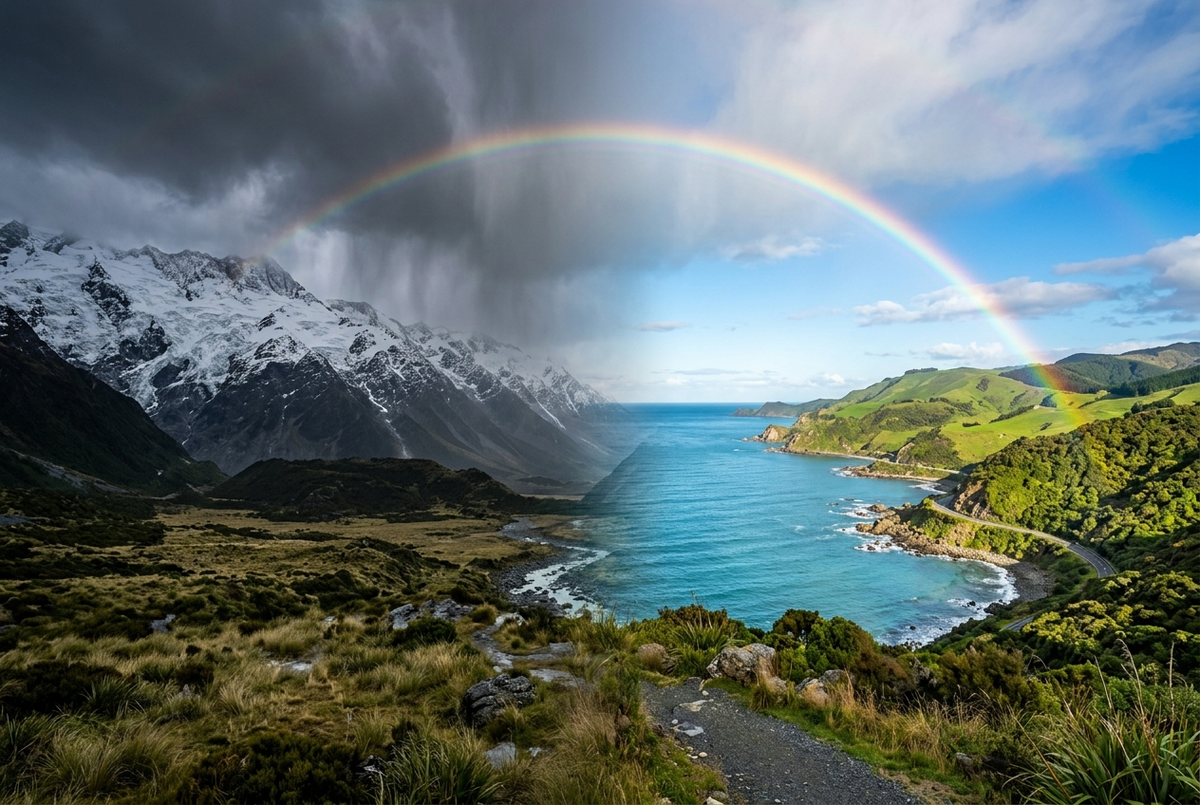
Before you travel to — or settle in — New Zealand, it pays to understand the country's climate and its famously changeable weather. NZ does have four distinct seasons, but the weather patterns are quite different from what many Northern Hemisphere visitors expect. Wellington in particular is famous as a "windy city," and the speed at which conditions change there can catch anyone off guard. This guide breaks down the climate region by region, with practical advice on what to wear and pack.
Southern Hemisphere Seasons Are Reversed
First, the basics: New Zealand is in the Southern Hemisphere, so the seasons are the opposite of those in the Northern Hemisphere:
- Summer: December–February (the hottest months)
- Autumn: March–May
- Winter: June–August (the coldest months)
- Spring: September–November
December and January are the height of the Kiwi summer. Christmas here means barbecues and trips to the beach — that's the New Zealand way.
Climate by Region
Wellington
New Zealand's capital is known as the windiest city in the country — it's sometimes called the windiest capital in the world. Strong gusts blow in year-round off Cook Strait (the channel between the North and South Islands), and spring (September–November) is especially blustery.
- Summer (Dec–Feb): highs of 20–24°C, though the wind makes it feel cooler
- Winter (Jun–Aug): highs of 10–13°C. Snow is rare, but the wind bites
- Annual rainfall: about 1,250mm (less than Tokyo)
- What to know: locals say you can experience "four seasons in one day" in Wellington — the weather really is that changeable
Auckland
New Zealand's largest city has a subtropical climate — mild overall, with fairly high humidity. It rains so often that it's earned the nickname "Rainy City."
- Summer: highs of 24–28°C, with a muggy warmth similar to a Japanese summer
- Winter: highs of 13–16°C. Snow is almost unheard of
- What to know: annual rainfall is high (about 1,200mm), and sudden showers are common — a raincoat is essential
Christchurch
The South Island's largest city has a continental climate with big temperature swings. Summers are relatively hot and dry; winters are cold, with occasional frost.
- Summer: highs of 22–26°C — dry and very pleasant
- Winter: highs of 8–12°C, with mornings and evenings sometimes dipping below freezing
- What to know: rainfall is low (640mm per year) and sunny days are frequent. The Southern Alps west of the Canterbury Plains act as a weather barrier
Queenstown
The South Island resort town of Queenstown has an alpine climate, and it buzzes as a ski destination in winter.
- Summer: highs of 20–25°C — the off-season for the ski fields
- Winter: highs of 6–10°C, with snowfall and great skiing and snowboarding
- What to know: the high altitude means crystal-clear air, and the changing colors of the seasons are stunning
What Makes NZ Weather Distinctive
A few traits that apply across the whole country:
- It changes fast: a clear sky can cloud over and turn to rain in no time. "Four seasons in one day" applies to all of New Zealand
- The UV is intense: because NZ sits close to Antarctica where the ozone layer is thinner, UV levels are extremely high. Don't let a cloudy day fool you — sunscreen of SPF 30 or higher is a must
- It's windy: the South Island and Wellington in particular get strong winds year-round
- Regional differences are huge: the North Island is mild, while the southern South Island gets cold. The country stretches 1,600km from north to south, so the climate varies dramatically
What to Wear
Tips for dressing for New Zealand's ever-shifting weather:
- Layers are everything: the temperature can swing by more than 10°C in a single day, so layers you can easily add and remove are your best strategy
- Always carry a raincoat: keep a packable raincoat in your bag, especially if you're staying in Wellington or Auckland
- A windbreaker: for the wind — a thin one that folds into a pouch is ideal
- Sunscreen: use SPF 30+ daily. New Zealand's UV levels are said to be roughly 1.5 to 2 times stronger than Japan's
- Sunglasses: for the strong glare — look for UV400 protection
- Comfortable walking shoes: NZ is an outdoor country, so shoes you can walk in are essential
Weather Forecast Services
These are the most useful forecast services in New Zealand:
- MetService (metservice.com): New Zealand's official weather service, and the most accurate forecasts
- Weather.com / AccuWeather: international forecast services also work fine here
- MetService App: the smartphone app gives hour-by-hour forecasts
Travel Tips by Season
- Summer travel (Dec–Feb): the best season for sightseeing. It's busy, but the weather is stable. Pack short sleeves plus a light layer
- Winter travel (Jun–Aug): fewer tourists and often cheaper hotels. Pack proper cold-weather gear — and it's the perfect time for a ski trip
- Spring and autumn: changeable weather with more rain, but you're rewarded with spring blossoms and autumn foliage
The trick to enjoying life or travel in New Zealand is to embrace the unpredictability — make "I wonder what the weather will do today" part of the fun. Come prepared, and every season here has something to offer.