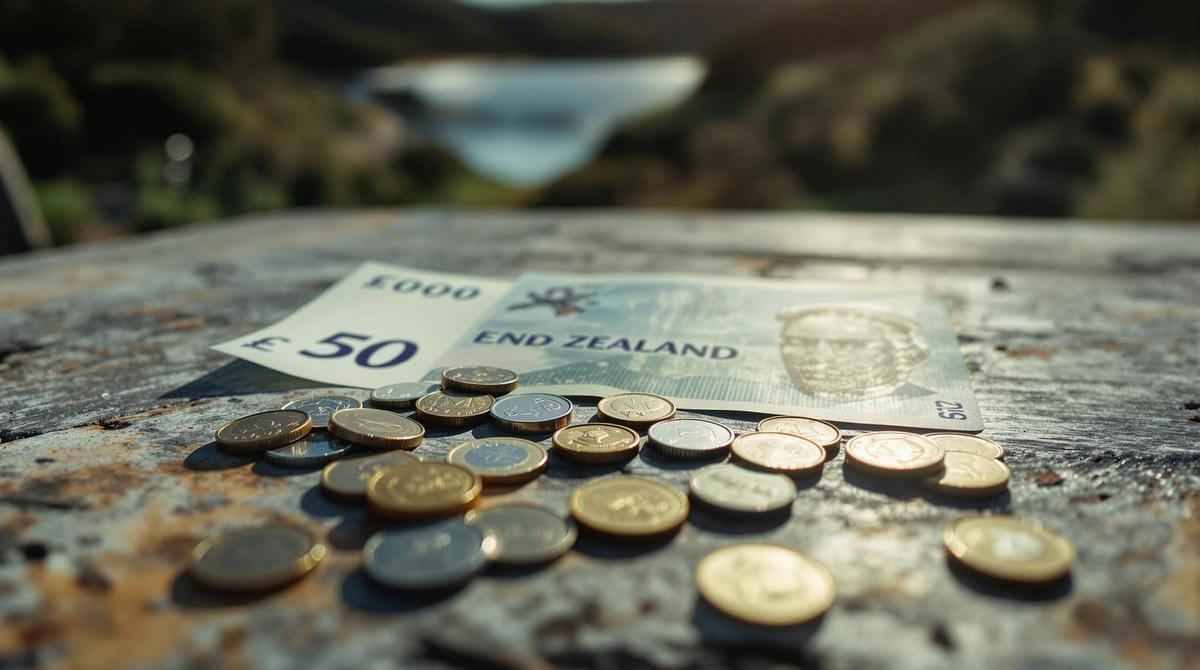
To make the most of your time in New Zealand, it pays to get comfortable with the local currency, the New Zealand dollar (NZD). From timing your currency exchange to knowing when to use cash versus card — and whether you need to tip at all — there are more money pitfalls than you might expect. This article covers everything you should know about payments, currency exchange, and managing your money before you arrive.
We'll walk you through the official currency of New Zealand, the New Zealand dollar (NZD) — from the basics to smart ways to spend during your studies or travels, plus the most cost-effective ways to exchange money.
If you're feeling unsure about managing money overseas, or you want to squeeze the best value out of every exchange, read on. You'll find plenty of tips to make your stay in New Zealand smoother and more rewarding.
The Best Way to Pay in New Zealand: Card First, a Little Cash
The short answer: bring a card and use it for almost everything. New Zealand is close to cashless. EFTPOS terminals are in every shop, café and petrol station in the country, contactless is standard, and Visa and Mastercard are widely accepted. Apple Pay and Google Pay work in most places that take contactless.
What that means in practice for a trip to New Zealand:
- A debit card is the cheapest way to pay for things. A travel card or multi-currency debit card loaded with New Zealand dollars avoids both foreign transaction fees and the poor exchange rate you get changing foreign currency at an airport counter.
- A credit card is the useful backup — and necessary for rental car and campervan deposits, where a debit card is often refused.
- Carry NZ$100–200 in cash, no more. You will need cash in New Zealand only occasionally: farmers' markets, some rural campsites and honesty boxes, small backcountry operators, and the odd coffee cart.
- Watch for surcharges. Many businesses add a percentage for credit and contactless payments. It is usually shown at the till, and paying by EFTPOS with a local debit card avoids it.
- Tipping is not part of the picture. There is no tip line to worry about; the price on the menu is the price you pay.
Cards in New Zealand are so dominant that many New Zealanders go weeks without touching a note. The rest of this guide covers the New Zealand currency itself, how to get cash and withdraw cash from ATMs, exchange rates, and the extra steps if you are staying long enough to open a bank account.
What Is the New Zealand Dollar? The Basics
Let's start with the fundamentals of money in New Zealand. Knowing the currency units, denominations, and their distinctive features is the first step to a smooth trip or stay.
What Makes the NZ Dollar Special: Colourful, Unique Design
New Zealand's currency unit is the dollar ($), with the cent (c) as its subunit — one dollar equals 100 cents. It's often affectionately called the "Kiwi dollar," named after the country's national bird, the kiwi.
One of the most striking things about New Zealand money is its colourful, beautiful design. The banknotes are made of polymer (plastic), making them durable and waterproof, with sophisticated anti-counterfeiting features built in. Each note features a notable New Zealander alongside native birds, reflecting the country's history and natural heritage. The coins likewise showcase native flora and fauna and Māori cultural designs — even handling your change can be a small discovery.
Banknotes and Coins: Know Your Denominations and Designs
Here's a rundown of the banknotes and coins currently in circulation. Learning the denominations and designs will save you fumbling at the checkout.
New Zealand Banknotes & Coins at a Glance
Banknotes (Polymer)
- $100: Red tones. Front: Lord Ernest Rutherford / Back: Mohua (bird) and a native South Island plant
- $50: Purple tones. Front: Sir Āpirana Ngata / Back: Kōkako (bird) and the sky-blue mushroom (fungus)
- $20: Green tones. Front: Queen Elizabeth II / Back: Kārearea (NZ falcon) and the Marlborough rock daisy (plant)
- $10: Blue tones. Front: Kate Sheppard / Back: Whio (blue duck) and parahebe (a daisy-family native plant)
- $5: Orange tones. Front: Sir Edmund Hillary / Back: Hoiho (yellow-eyed penguin) and the Campbell Island daisy
Coins
- $2: Gold-coloured. Front: Queen Elizabeth II / Back: Kōtuku (white heron)
- $1: Gold-coloured. Front: Queen Elizabeth II / Back: Kiwi (bird) and ferns
- 50 cents: Silver-coloured. Front: Queen Elizabeth II / Back: The sailing ship Endeavour
- 20 cents: Silver-coloured. Front: Queen Elizabeth II / Back: Pukaki (Māori carving)
- 10 cents: Silver-coloured (copper-toned). Front: Queen Elizabeth II / Back: Koruru (Māori carving)
*Note: The 1, 2, and 5 cent coins that used to circulate have been withdrawn. Cash payments are rounded up or down to the nearest 10 cents (Swedish rounding).
For those who want more detail, here's a table summarising the banknotes and coins currently in circulation.
| Type | Denomination | Main colour | Material | Key design (front / back) |
|---|---|---|---|---|
| Banknote | $100 | Red tones | Polymer | Lord Rutherford / Mohua |
| Banknote | $50 | Purple tones | Polymer | Sir Āpirana Ngata / Kōkako |
| Banknote | $20 | Green tones | Polymer | Queen Elizabeth II / Kārearea |
| Banknote | $10 | Blue tones | Polymer | Kate Sheppard / Whio |
| Banknote | $5 | Orange tones | Polymer | Sir Edmund Hillary / Hoiho |
| Coin | $2 | Gold-coloured | Aluminium bronze | Queen Elizabeth II / Kōtuku |
| Coin | $1 | Gold-coloured | Aluminium bronze | Queen Elizabeth II / Kiwi |
| Coin | 50 cents | Silver-coloured | Cupronickel | Queen Elizabeth II / Endeavour |
| Coin | 20 cents | Silver-coloured | Cupronickel | Queen Elizabeth II / Pukaki |
| Coin | 10 cents | Copper-toned | Copper-plated steel | Queen Elizabeth II / Koruru |
Who Issues the Currency: The Reserve Bank of New Zealand
The New Zealand dollar is issued and managed by the country's central bank, the Reserve Bank of New Zealand – Te Pūtea Matua. With the goals of price stability and a sound financial system, the Reserve Bank handles monetary policy, issues banknotes and coins, and supervises the banking system. It's the key institution safeguarding the currency's credibility.
The Reserve Bank of New Zealand's official website has the latest information on currency and monetary policy.
Preparing and Using NZ Dollars for Study Abroad and Working Holidays
If you're heading to New Zealand for study or a working holiday, managing your money well is essential. How should you convert your home currency into New Zealand dollars, and what's the smartest way to spend once you're there? Here are the practical methods and things to watch out for.
Cash or Card: Which Payment Method in New Zealand?
New Zealand is well down the cashless path, and most shops accept credit cards and debit cards (locally, debit cards are usually called EFTPOS cards). That said, you'll still need cash at some small shops, farmers' markets, and on certain public transport.
- Cards (Credit / EFTPOS):
- Pros: No need to carry large amounts of cash, transaction history makes budgeting easier, and you may earn rewards points. EFTPOS is linked directly to your bank account with instant debiting.
- Cons: Some shops don't accept cards, some cards charge international transaction fees, and there's a risk of loss or theft (though cards can be cancelled).
- Cash:
- Pros: Accepted everywhere (especially for small purchases), easier to stick to a budget, no fees.
- Cons: Higher risk of loss or theft; carrying large sums is risky.
Our recommended approach:
Use a card for everyday shopping, restaurant bills, and accommodation, and keep a small amount of cash (say, NZ$50–100) on hand for bus fares, small cafés, and markets. Right after arrival, having some cash makes life easier for the trip from the airport into town and grabbing a snack.
🇳🇿 Smart Money Habits for Students & Working Holidaymakers 💡
💳 Card (Credit/EFTPOS)
👍 Pros:
- Safer than carrying cash
- Transaction history makes tracking spending easy
- May earn points or airline miles
- EFTPOS debits your account instantly
👎 Cons:
- Not accepted at some shops
- Watch out for international transaction fees
- Risk of loss or fraudulent use
Typical uses: Supermarkets, restaurants, accommodation, online shopping, utility bills
💵 Cash
👍 Pros:
- Works everywhere, guaranteed
- Keeps you conscious of your budget
- No fees
👎 Cons:
- Higher risk of loss or theft
- Carrying large amounts is risky
- You have to manage your change
Typical uses: Small shops, markets, bus fares, vending machines, tips (not customary here)
Where to Exchange Money: Which Option Gives the Best Value?
There are several ways to convert your home currency into New Zealand dollars. Each has pros and cons, so choose the one that fits your situation.
- Banks and airport exchange counters in your home country:
- Pros: Peace of mind of sorting it out before departure.
- Cons: Exchange rates are often poor (high margins).
- Recommendation: Low. Only for a small amount to tide you over on arrival.
- Airport exchange counters in New Zealand:
- Pros: You can exchange money as soon as you land.
- Cons: Rates are usually worse than city exchange bureaus or banks.
- Recommendation: Medium. Keep it to the bare minimum you need.
- Banks in New Zealand cities:
- Pros: Rates tend to be better than at the airport; relatively trustworthy.
- Cons: Limited opening hours and locations. Some banks won't exchange money unless you hold an account.
- Recommendation: Medium.
- Dedicated currency exchange bureaus in the city:
- Pros: Sometimes offer better rates than banks, since competition keeps them sharp.
- Cons: Rates and fees vary by location; you need to pick a reputable operator.
- Recommendation: High. Worth shopping around and comparing rates.
- ATM cash advances (using your home-country credit card):
- Pros: Withdraw New Zealand dollars directly from local ATMs — only what you need, when you need it. Rates are often relatively good.
- Cons: ATM fees and interest apply (since it's treated as a cash advance). You'll need to check your card settings and ATM locations, and pay the balance off early to keep interest down.
- Recommendation: High. Even factoring in interest, it often works out cheaper overall.
- International money transfer services and travel money cards (Wise and similar):
- Pros: Excellent exchange rates for both conversion and transfers, everything handled online, and a linked debit card for local ATM withdrawals and everyday payments.
- Cons: You need to open an account and order the card in advance, and transfers can take a few days.
- Recommendation: Very high. Ideal for long-term stays in particular.
Things to watch out for:
- Always check the fees, not just the rate. Many places advertising "no fees" simply build their margin into a worse exchange rate.
- You may need ID such as your passport when exchanging money.
- Avoid carrying large amounts of cash — exchange only what you need, when you need it.
Opening a Bank Account as a Student or Working Holidaymaker
If you're staying long term as a student or working holidaymaker, opening a local bank account is the norm — and extremely convenient. It makes receiving wages, paying rent, and everyday shopping (with your EFTPOS card) far smoother.
The main banks: ANZ, ASB, BNZ, Kiwibank, and Westpac. Most offer packages tailored to international students.
What you'll typically need to open an account:
- Passport
- Proof of your visa (student visa, working holiday visa, etc.)
- Tax identification number from your home country (for example, the My Number for Japanese citizens)
- Proof of a New Zealand address (homestay agreement, tenancy agreement, utility bill, etc.)
- Offer of place / enrolment confirmation (for students)
- IRD number (your New Zealand tax number, if you'll be working)
How it works:
- Choose a bank and apply online or at a branch.
- Submit the required documents.
- Complete identity verification (a branch visit is often required).
- Account opened — collect your card.
Some banks let you pre-apply online from overseas before you travel. Complete your identity verification at a branch after arrival, and you can start using your account without delay. Get the process moving early.
Which Cards Are Accepted in New Zealand?
Credit and debit cards are the most common payment method in New Zealand, and international credit cards work almost everywhere. A few practical notes on card options before you travel:
- Visa and Mastercard are accepted throughout the country — hotels and restaurants, supermarkets, museums, online purchases. American Express is accepted less widely and Diners rarely.
- Contactless payments are widely available, including wallets like Apple Pay and Google Pay. Tap is the normal way New Zealanders use their cards.
- A credit or debit card both work at the terminal, but they are not the same at the till: card surcharges are usually applied to credit and contactless, not to a local EFTPOS debit transaction.
- Multi-currency travel cards — a Wise card or similar — convert at close to the mid-market exchange rate and are the best payment option for most visitors. Check what your card issuer charges for a foreign purchase before you decide.
- Tell your bank you are travelling. Card security systems can block an unexpected charge from the other side of the world, and sorting it out through online banking from a campsite is nobody's idea of a holiday in New Zealand.
The one thing worth carrying cash for: places without a terminal. Rural honesty boxes for fresh produce, some market stalls, and a handful of small operators still ask for it. The easiest way to get cash is an ATM at a bank branch or supermarket.
Exchange Rates and Fees: Getting the Best Value for Your Currency
The exchange rate is one of the biggest money concerns for anyone heading overseas. Even a slightly better rate means more money to spend on the ground.
How to Check the Current Exchange Rate
Exchange rates move constantly. Always check the latest rate before you exchange.
- Online currency converters: A quick Google search, or specialist sites like XE.com and OANDA, will show you near-real-time rates.
- Bank websites: You can check the rates each bank publishes (note that these are often interbank rates, which can differ from what you'll actually get).
- Exchange bureau and transfer service websites: Services like Wise clearly display the actual exchange rate and their fees.
Indicative rate as of August 2026:
For example, assume 1 New Zealand dollar (NZD) is trading at around approx. ¥93. (This is a rough guide only — the actual rate is always moving, so be sure to check the latest figures.)
At that rate, 100 NZD is approx. ¥9,000 and 1,000 NZD is approx. ¥90,000.
How to Avoid High Fees: Save Smart!
On top of the exchange rate itself, fees are usually added to every transaction. Keeping those fees down is the key to saving money.
- Pick a method with a good rate: As the comparison above shows, local exchange bureaus, ATM cash advances, and international transfer services generally offer better rates than airports or banks back home.
- Compare multiple exchange bureaus: If you can, compare rates and fees across several providers before committing.
- Check your credit card's international transaction fee: Paying by credit card is convenient, but many issuers charge an international transaction fee (typically around 1.5%–2.5%). Choose a low-fee card, or at least know what you're paying.
- Watch ATM fees: Cash advances and debit card withdrawals are handy, but some ATMs charge their own fees on top. Using partner-bank ATMs is one way to keep costs down.
- Exchange or transfer in fewer, larger batches: Lots of small exchanges or transfers can mean paying fees each time. Handling a larger amount in one go can save on fees (balanced, of course, against the risk of carrying large sums of cash).
- Use an international transfer service like Wise: Especially for long-term stays or regular transfers, services like Wise offer rates close to the mid-market rate with low fees — potentially saving you a significant amount.
💸 Top 5 Money-Saving Exchange Tips 💰
Airports and banks back home tend to be expensive. Compare local exchange bureaus, ATM cash advances, and transfer services.
Check the fees (flat and percentage), not just the rate. Don't be fooled by "commission-free" claims.
Withdraw local currency from ATMs. The rate is often good, but watch out for interest and ATM fees — pay the balance off early to save on interest.
Wise and similar services offer great rates and low fees. Worth opening an account for a long-term stay.
Look up your credit card's international transaction fee and choose a low-fee card.
Put these tips into practice and cut out the wasted spending!
Using NZ Dollars While Travelling: For a Hassle-Free Trip
If you're visiting New Zealand on a short trip, managing your money looks a little different from a long-term stay. Here's what you need to know for a smooth, safe holiday.
How Much Cash Do You Need? Using ATMs in New Zealand
As mentioned, New Zealand runs on cards — but even on a short trip, it's reassuring to carry a small amount of cash. In rural areas, small-town shops, and markets, you may well hit places that only take cash.
- How much cash: It depends on your itinerary and travel style, but somewhere between a few dozen and 100 New Zealand dollars per day (approx. ¥3,000–¥10,000) will cover you in almost every situation.
- Using ATMs: If you run low on cash, you can withdraw New Zealand dollars at ATMs around town using a credit card cash advance, an international cash card, or a debit card (such as Wise). ATMs are found at banks, shopping malls, and supermarkets. Any ATM displaying the "PLUS" or "Cirrus" international network logos will work. Note that ATM fees may apply.
Paying for Things in New Zealand: EFTPOS, Credit Cards and Contactless
Almost all shops, restaurants, hotels, and attractions accept credit cards (Visa and Mastercard are the standard; Amex and Diners aren't always accepted) as well as EFTPOS cards.
- At the checkout:
- When paying by card, you may be asked to choose between "Credit," "Cheque," or "Savings."
- If you're using an overseas credit card, choose "Credit."
- If you're using a local bank's EFTPOS card, choose "Cheque" or "Savings" (depending on your account type).
- You'll usually need to enter your PIN, so make sure you know it before you travel.
- Contactless payment (PayWave, PayPass, and the like) is widespread — with a compatible card or smartphone, just tap and go.
- When paying by card, you may be asked to choose between "Credit," "Cheque," or "Savings."
Where Else the NZ Dollar Is Used
The New Zealand dollar isn't just used in New Zealand — it's the official or widely circulated currency in these places too:
- Cook Islands
- Niue
- Tokelau
- Pitcairn Islands (a British territory)
If you travel to any of these destinations, your New Zealand dollars will work as-is.
FAQ: Paying in New Zealand
Finally, here are answers to the questions we hear most often about money in New Zealand.
Q1: Where can I exchange money for New Zealand dollars?
A1: Before you leave, at major banks and airport exchange counters in your home country; in New Zealand, at airports, city banks, dedicated exchange bureaus, and some hotels. Rates and fees vary by location, so it pays to compare. ATM cash advances and international transfer services like Wise are also efficient options.
Q2: What money matters should I know about as an international student?
A2: Opening a local bank account makes managing living costs and receiving part-time wages much easier — get comfortable with your EFTPOS (debit) card. Keep a proper budget and avoid unnecessary spending. And just in case, note down the emergency contact numbers for reporting a lost or stolen credit card.
Q3: Are the coins confusing to use?
A3: New Zealand has just five coins: $2, $1, 50c, 20c, and 10c. You'll get used to them quickly. The $1 and $2 coins are gold-coloured while the 50, 20, and 10 cent coins are silver-coloured (the 10 cent is copper-toned), so they're easy to tell apart. At supermarket self-checkouts, you can even pour a handful of coins into the slot and the machine counts them for you. Just remember that cash payments are rounded to the nearest 10 cents (Swedish rounding).
Q4: What about tipping on card payments?
A4: Tipping is not customary in New Zealand. It's only done voluntarily, to show appreciation for exceptional service. If a tip screen appears when paying by card at a restaurant, selecting "No Tip" or "0" is perfectly acceptable and not rude at all.
Q5: What should I do with leftover New Zealand dollars?
A5: Ideally, spend them before you leave. If you do end up with leftover notes, you can convert them back to your home currency at airports or banks back home — though the rate is usually poor. Coins generally can't be exchanged at all, so spend them in New Zealand or keep them as souvenirs. Saving them for your next trip is another option.
Wrap-Up: Manage Your Money Wisely and Make the Most of New Zealand!
In this article, we've covered the New Zealand dollar from the ground up — the basics, how to use it as a student, working holidaymaker, or traveller, and the most cost-effective ways to exchange money.
- The basics: The currency is the New Zealand dollar (NZD). Notes are colourful polymer; there are five coins.
- Spending: It's a card society, but you'll still want a little cash. EFTPOS is your friend.
- Exchanging: Airports and banks back home offer poor rates. Local exchange bureaus, ATM cash advances, and transfer services like Wise offer better value — and always check the fees.
- Study / working holiday: Open a local bank account.
- Travel: Card as your main method, plus a small cash float. Make use of ATMs.
Money management is the foundation of any overseas trip or stay. Doing your research and preparing in advance reduces stress on the ground and lets you get more out of your time. In particular, a little care with exchange methods and card choices can add up to serious savings.
We hope everyone heading to New Zealand can enjoy an amazing experience without money worries. For more detail, check out these resources:
Get your preparations sorted, and enjoy your new life or adventure in New Zealand to the fullest!
Disclaimer: This article was created with the help of AI-generated information. While we strive to provide the most up-to-date and accurate information possible, details may change or become outdated over time. For information that changes frequently — such as fees and opening hours — always confirm the latest details on official websites. This article is intended as general information only and does not constitute advice for individual circumstances. Its content may be updated in the future based on personal experience and additional information.