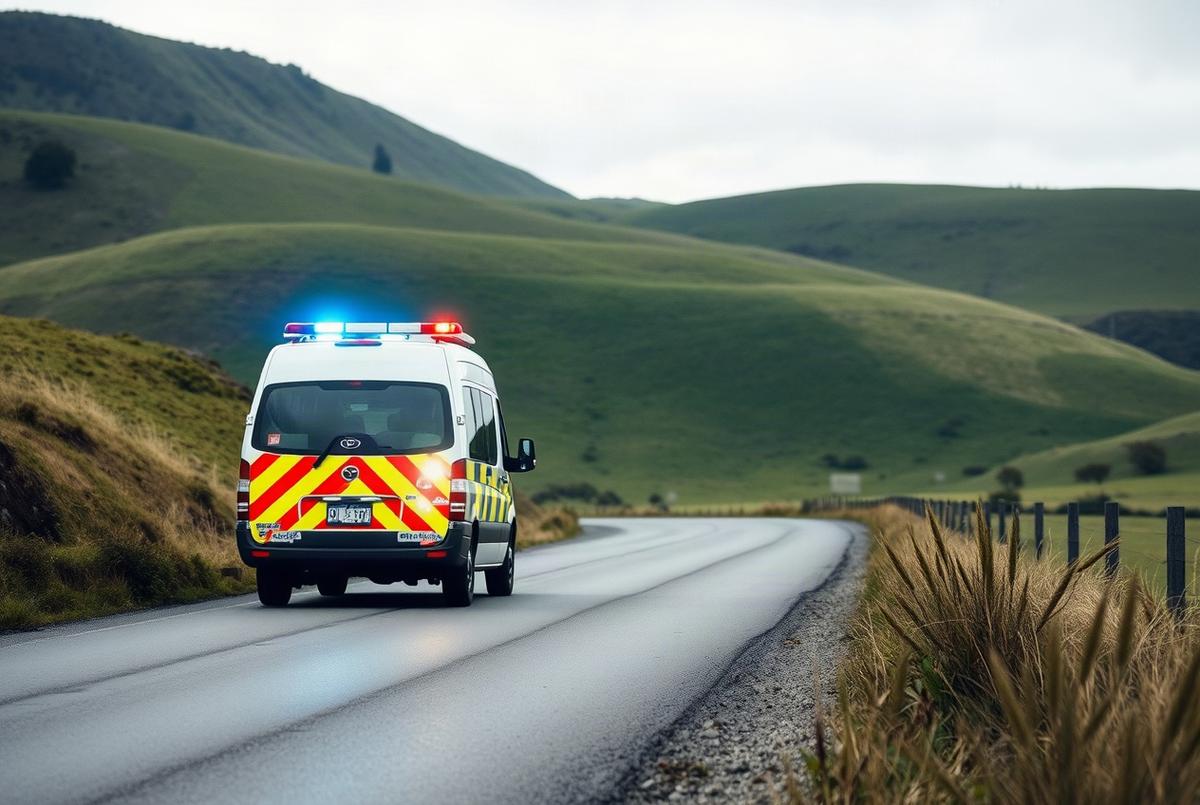
Of all the things that can go wrong while you're overseas, genuine emergencies — sudden illness, an accident, a theft — are the hardest to deal with. New Zealand is generally considered a safe country, but if you don't know who to call or what to do when something happens, it's easy to panic in an unfamiliar place. This guide covers what you should know before you arrive: how to call for help, how the medical system works, and what to do if something is lost or stolen.
Knowing in advance who to contact and how to respond if you're in an accident, fall ill, get injured or become the victim of theft is one of the most important preparations you can make for a worry-free stay.
In this article we walk through the emergency numbers, support services and practical steps for handling the most common kinds of trouble in New Zealand — whether you're a tourist, an international student, a working-holiday maker or a new resident. A little preparation goes a long way, so read on and set yourself up to enjoy your time in New Zealand with real peace of mind.
How a 111 Emergency Call Works
Dial 111 from any phone in New Zealand. 111 calls are free from any New Zealand phone, work from a mobile with no credit, and reach the same emergency operator whether you are in one of the towns and cities or somewhere rural.
- The operator asks which service you need — Fire, Ambulance or Police. Say one. If you are not sure, say what has happened and let them decide.
- You are connected to the fire service (Fire and Emergency New Zealand), the ambulance services — St John covers most of the country — or the New Zealand Police.
- Give your location first. A road name and the nearest town or intersection is enough; on a highway, look for the nearest kilometre marker or landmark.
- Stay on the line until the operator tells you it is fine to hang up.
Two things worth knowing before you need them:
- 111 is for a real emergency only — someone is badly hurt or having a stroke, someone is in danger, or a crime is happening now. Misuse takes the 111 service away from a caller who needs help. For anything else, use the numbers below.
- A 111 TXT service exists for people who are deaf or hearing-impaired, but it requires registration in advance. If you are unsure what to say, ask the operator — that is what they are there for.
When It Is Not an Emergency: Other Numbers to Contact
- 105 — the New Zealand Police non-emergency number. Reporting a theft after the fact, a lost item, or something suspicious that is not happening right now.
- Healthline: 0800 611 116 — free health advice from a registered nurse, 24 hours a day. This is the number to call at 2am when you are not sure whether it is serious.
- *555 from a mobile — non-urgent traffic incidents: a breakdown blocking a lane, a damaged road, or careless driving.
- Out in the backcountry, a personal locator beacon is what summons search and rescue. Mobile coverage stops well before the tracks do, and much of the response in rural areas is run by volunteer firefighters and volunteer ambulance staff.
Save 111, 105 and the Healthline number in your phone before you travel. It takes a minute, and it means you are not searching for an emergency number while something is going wrong.
111: The Emergency Number in New Zealand
If you need urgent help in New Zealand — an accident, fire, sudden illness or crime — call 111. It's a single, unified emergency number covering police, fire and ambulance, the equivalent of 911 in the US or 999 in the UK.
- Phone number: 111
- Call charges: Free (from payphones, mobile phones and landlines)
- How it works: An operator answers and asks which service you need — "Police", "Fire" or "Ambulance".
If you're not fully confident in English, the most important thing is to stay calm and get the essentials across. You can ask for an interpreter in your language, and interpreter services may be available — but one isn't always immediately on hand, so it helps to be able to say in simple English what happened, where and when.
Contacting the New Zealand Police After an Accident
Here's how to respond if you're involved in a road accident in New Zealand — whether you were hit or caused it yourself. Don't panic; work through the steps calmly.
First Steps at the Scene
- Safety first: Check that you and everyone else involved are safe. If possible, move your vehicle out of harm's way and switch on your hazard lights. If anyone is injured, don't move them unnecessarily — call 111 straight away and ask for an Ambulance.
- Calling the police: If anyone is injured, if the road is blocked, or if the other party is being uncooperative, call 111 and ask for the Police. For a minor damage-only accident where both parties can exchange details, you don't necessarily need to call the police — but if you're unsure, calling is the safer option.
- Exchanging details: If another party is involved, exchange the following information:
- Name, address and phone number
- Driver's licence details
- Vehicle registration plate, make and colour
- Insurance company details (if known)
- Recording the evidence: Take photos of the scene and any vehicle damage with your phone. If there were witnesses, ask for their contact details — it can be a big help later.
How to Contact the New Zealand Police
For non-urgent matters, or to find your nearest police station, check the New Zealand Police website or call the non-emergency number 105 (online reporting is also available).
- Emergencies: 111
- Non-emergencies: 105 or report online (New Zealand Police 105 Non-Emergency)
- Find your nearest station: New Zealand Police Station Locator
Documents and Information You'll Need After an Accident
For insurance claims and other follow-up, you'll usually need the following information and documents:
- A detailed record of the date, time, location and circumstances of the accident
- The other party's details (see "Exchanging details" above)
- The Police Event Number / Police File Number, if the police attended
- Photos of the scene and any vehicle damage
- Witness details (if any)
- For a rental car: your rental agreement and the rental company's contact details
If you have an accident in a rental car, contact the rental company promptly as well. Check what your insurance covers and what the claims process involves.
Ambulance and Medical Care: Healthline and 111
Falling ill or getting hurt far from home is stressful enough on its own. Knowing how New Zealand's health system works before you need it takes a lot of the pressure off.
Finding a Doctor or Medical Centre
New Zealand's medical system may work a little differently from what you're used to. The usual first port of call is a GP (General Practitioner) — a family doctor.
- GP (General Practitioner): For everyday illnesses like colds or minor injuries, find a nearby GP and book an appointment. Healthpoint (Healthpoint NZ) lets you search by area and type of service. In most cases you'll need an appointment.
- After Hours Medical Centre: If you fall ill at night or on the weekend when GPs are closed, you can use an After Hours Medical Centre — also searchable on Healthpoint. Most accept walk-ins, but be prepared for long waits.
- Hospital: For serious injuries, severe illness or anything requiring emergency surgery, go to a hospital's Emergency Department (ED). Call an ambulance (111), or make your own way there if you can. Be aware that if you turn up at an ED with a low-urgency condition, you may wait a very long time.
A word on costs: Medical care in New Zealand can be expensive for visitors and short-term stayers. A single GP consultation typically costs $80–$150 NZD (as of August 2026, approx. ¥7,200–¥13,500 at 1 NZD = approx. ¥93). Hospital admission or surgery costs considerably more.
How to Use Your Travel Insurance — Essential Reading
Given how quickly medical bills can add up when trouble strikes, comprehensive travel insurance is essentially a must for any stay in New Zealand.
- Call your insurer first: As a rule, contact your travel insurer's assistance desk before seeing a doctor. Many insurers operate 24-hour helplines, often with support in multiple languages. The number is on your policy certificate or contract documents.
- Direct billing (cashless treatment): Some insurers have partner clinics where you can be treated with no out-of-pocket payment — the clinic bills the insurer directly. Call the assistance desk and ask them to refer you to the nearest partner clinic.
- Pay first, claim later: If direct billing isn't available, or if you buy medication at a pharmacy, you'll pay upfront and claim the cost back afterwards. You will need a medical certificate and receipts, so always ask for them and keep them safe. Check the exact claims process with your insurer.
What to look for when choosing a policy:
- Medical and evacuation cover: Make sure the cover for treatment, hospital stays and emergency medical evacuation home is sufficient. A commonly cited benchmark is at least around ¥30 million — check the equivalent in your own currency.
- Direct billing: Check whether the insurer has a wide network of partner clinics and whether the service is easy to use.
- 24-hour support: A round-the-clock helpline in your own language is a huge comfort when something goes wrong.
- Dental treatment: Some policies exclude dental care or cap it at a low amount — check carefully.
- Pre-existing conditions: If you have an existing medical condition, confirm whether you can take out the policy and whether the condition is covered.
| What to Compare | What to Check | Priority |
|---|---|---|
| Medical & evacuation cover | Cover amount (at least around ¥30 million recommended); whether emergency evacuation is included | ★★★★★ |
| Direct billing (cashless) | Number of partner clinics; ease of use | ★★★★☆ |
| Support in your language | 24-hour availability; contact channels (phone, app, etc.) | ★★★★☆ |
| Personal belongings | Cover amount; covered items (phone, laptop, etc.); excess | ★★★☆☆ |
| Personal liability | Cover amount if you injure someone or damage their property | ★★★☆☆ |
| Dental treatment | Whether it's covered; cover amount; conditions | ★★☆☆☆ |
Getting Medical Help in Your Own Language
If you're not comfortable dealing with medical staff in English, it's reassuring to know that clinics with multilingual staff or access to interpreter services do exist. Options are limited, but in larger cities such as Auckland you may find GPs and specialists who can assist in languages other than English.
- How to find them: Your travel insurer's assistance desk is the most reliable route — they can often refer you to partner clinics with support in your language. Expat community websites and publications, and your country's embassy or consulate, can also be useful sources of information.
- Keep in mind: Even at clinics advertised as multilingual, staff who speak your language may not always be on duty — phone ahead to check. Professional interpreter services may also involve an extra fee.
Theft and Crime: What to Do and How to Protect Yourself
New Zealand is a relatively safe country, but letting your guard down completely is the quickest way to run into theft or other trouble. Tourists and international students in particular tend to be seen as easy targets, so stay alert.
If Something Is Stolen: Step by Step
If you become the victim of theft — pickpocketing, a snatched bag, a car break-in — work through the following steps:
- Check your safety first: Stay calm and make sure you're safe. If the offender may still be nearby, don't chase them — move to a safe location.
- Contact the police: Go to your nearest police station or call the non-emergency number 105 to report the theft. If the situation is urgent (the offender is still nearby, or you've been assaulted), call 111.
- Get a Police Report: File a report and make sure you receive a Police Report or a Police Event Number / File Number. You'll need this for travel insurance claims and passport replacement procedures.
- Cancel your cards: If credit or debit cards were stolen, contact your card companies immediately to freeze them. Acting fast is critical to prevent fraudulent use — keep the emergency numbers noted down in advance.
- Lost or stolen passport: If your passport is stolen, report it to the police first, then contact your country's embassy or consulate promptly to arrange a replacement passport or an emergency travel document for the journey home.
- Notify your insurer: Contact your travel insurance company, report the theft and confirm the claims process. You'll need the Police Report.
Emergency Contact List for Crime
- Police / Fire / Ambulance (emergencies): 111
- Police (non-urgent matters, theft reports, etc.): 105 or your nearest police station
- Your country's embassy or consulate in New Zealand: Look up the phone number before you travel and keep it saved. After-hours emergency contacts are usually announced on the main phone line or listed on the embassy's website.
- Credit card companies and banks (emergency lines): (note these down before you leave)
- Travel insurer's assistance desk: (note this down before you leave)
Everyday Precautions Against Pickpockets and Theft
- Keep valuables (passport, cash, cards) on your person at all times and split them between different places. Make use of hotel safes too.
- Never leave your belongings behind when you step away from a table at a restaurant or café — even for a moment, take them with you.
- In crowds and at tourist spots, stay aware of your surroundings — for example, wear your backpack on your front.
- Don't leave valuables or bags visible inside your car (break-ins are a real risk), and choose where you park carefully.
- Avoid walking alone at night, and stick to well-lit streets with plenty of people.
Emergency Services and Support: Who to Contact
Knowing where to go for advice when trouble strikes — or when everyday life throws up problems — makes any stay far less stressful.
Your Country's Embassy or Consulate in New Zealand
Most countries maintain diplomatic missions in New Zealand — typically an embassy in Wellington, sometimes with consulates in other cities such as Auckland or Christchurch. Consular services generally include:
- Help with lost or stolen passports (replacement passports or emergency travel documents)
- Support if you're caught up in an accident or crime (liaising with the local police, contacting your family, and similar assistance)
- Welfare and safety checks
- Issuing various certificates
- Overseas voting arrangements, where applicable
Be aware, however, that embassies and consulates do not provide financial assistance (loans or advances), conduct investigations, pay medical bills, book hotels, or offer interpretation and translation services. Their role is consular protection, not general travel assistance.
- Before you travel: Look up the address, phone number and after-hours emergency contact of your country's embassy or consulate in New Zealand, and keep the details somewhere you can access offline.
Support Services in Auckland and Other Cities
Larger cities such as Auckland have a range of support organisations and community centres for international students and new arrivals.
- Citizens Advice Bureau (CAB): A free advice service with branches throughout New Zealand. You can get help with a wide range of issues — housing, legal questions, employment, consumer problems and more. Some branches offer multilingual support. (Citizens Advice Bureau)
- International student support desks: Universities and language schools have dedicated support desks for international students, offering advice on both study and everyday life.
- Expat communities: Community groups and online forums for people from your home country can be a great source of local knowledge, troubleshooting tips and mutual support.
Making Use of Travel Desks and Support Services
If you're on a package tour or booked through a travel agency, you may have access to that company's local support desk or partner assistance services. Beyond helping with flight and hotel changes or optional tours, they can often advise you on the first steps to take when trouble occurs. Check the contact details before you travel.
Safety in New Zealand: Enjoying Your Trip with Confidence
New Zealand ranks among the safer countries in the world, but that's no reason to switch off completely. Here's how to keep your stay trouble-free.
How to Research Local Safety Information
- Your government's travel advice: Most foreign ministries publish country-specific travel advisories and basic safety information. Check your government's official travel advice for New Zealand before you go.
- Your country's embassy or consulate in New Zealand: Many embassies publish local safety alerts and updates on their websites or via newsletters.
- SafeTravel (NZ Government): New Zealand's official travel-safety website, with information on domestic safety and natural hazards. (SafeTravel – NZ Government)
- Local news sites: Following local news outlets such as Stuff (Stuff.co.nz) and the NZ Herald (NZ Herald) helps you stay on top of what's happening in your area.
Key Points for a Safe Trip (Some Worth Repeating)
Stay alert and take basic precautions, and most trouble can be avoided.
- Be prepared for natural hazards: New Zealand experiences earthquakes and volcanic activity. Find out where the evacuation points are in your area and how to get information in a disaster (radio, the Civil Defence website and so on). If you go hiking or do outdoor activities, be ready for the weather to change fast.
- Road rules: New Zealand drives on the left, and some rules — such as roundabouts — may be unfamiliar. If you plan to drive, study the road rules in advance and drive carefully. Pedestrians should also take extra care when crossing away from traffic signals.
- Alcohol: Drinking in public places is banned by law in many areas (liquor-ban zones). Check the rules before drinking anywhere other than a bar or restaurant, and be careful not to let a night out turn into a problem.
Summary: Prepare for Trouble Before You Leave
Good preparation is what makes a stay in New Zealand both safe and enjoyable. Run through the following points before you travel so you're ready for the unexpected.
- Build and save an emergency contact list (111, your embassy or consulate, insurer, card companies and more)
- Take out travel insurance and carry your policy documents (with digital copies too)
- Keep separate copies of your passport and visa (digital versions count)
- Spread your payment methods — cards and cash in different places
- Pack your regular and prescription medication (ideally with an English prescription or doctor's note)
- Sort out a way to stay connected in New Zealand (SIM card, Wi-Fi)
- Agree on an emergency contact plan with family and friends back home
- Check in advance your government's travel advice and local safety information
How to Build Your Emergency Contact List
- Smartphone: Create a "New Zealand emergency contacts" group in your notes app or address book. Make sure you can access it offline as well.
- Paper backup: In case your phone is lost or breaks, write the key numbers (especially your insurer, card companies and embassy or consulate) on paper and keep it in your wallet or another separate place.
- Cloud storage: Store your contact list in the cloud alongside copies of your passport and insurance documents so you can reach it from any device.
Sorting Out How You'll Communicate Locally
To be able to make calls quickly when trouble strikes in New Zealand, you need a reliable way to get online and make phone calls.
- SIM card: The most common approach is to buy a prepaid SIM at the airport or a mobile phone shop, choosing a plan based on the data and call time you need.
- eSIM: If your phone supports it, you can set up an eSIM with your home carrier or an international eSIM provider before you leave and be connected the moment you land.
- International roaming: Using your home carrier's roaming service is another option, but charges can be steep — check the rates carefully.
- Wi-Fi: Free Wi-Fi is widely available in hotels, cafés and public facilities, but you can't count on it everywhere. For emergencies, having your own connection is strongly recommended.
Unexpected trouble can happen to anyone. But with the right information and a bit of preparation, you can limit the damage and respond calmly when it does. We hope this article helps make your time in New Zealand safer and more rewarding. Have a wonderful stay!
For more information, these official sources are worth bookmarking:
- New Zealand Police: https://www.police.govt.nz/
- Your country's embassy or consulate in New Zealand: (see above)
Disclaimer: This article was produced with the help of AI-generated research. While we strive to provide the most accurate and up-to-date information possible, details may change or become outdated over time. For information that changes frequently — such as fees, opening hours and contact details — always check the relevant official websites for the latest information. This article is intended as general information only and is not advice for any individual situation. Its content may be updated in the future based on personal experience and additional information.