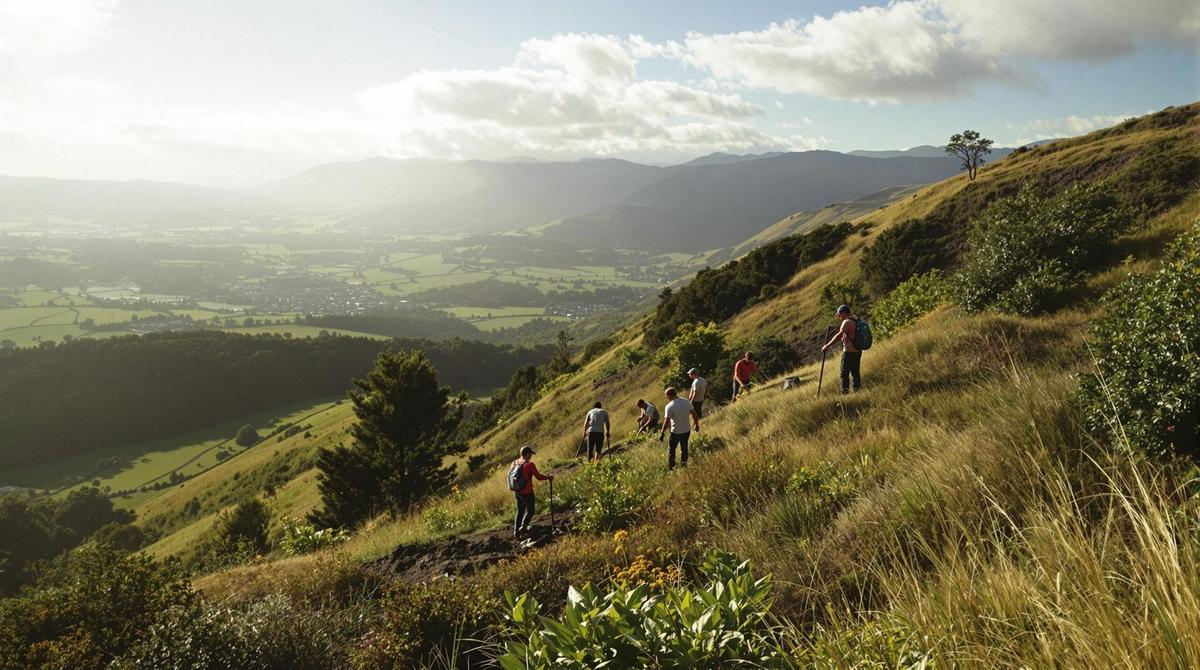
New Zealand's "clean and green" image is not just a tourism slogan — it is backed by nationwide environmental protection efforts. From climate change policy and renewable energy to waste reduction, the country's initiatives offer lessons for how we all live. This article takes a detailed look at New Zealand's environmental programs.
In this guide, we explain how New Zealand is working to protect its environment and forge its path as a "green nation" — covering concrete strategies, public attitudes, and the country's international role, with the latest information as of 2026. Understanding not only the beauty of New Zealand's nature but also the effort that goes into protecting it will make your time in the country deeper and more meaningful.
The Real Environmental Issues: What Our Environment 2025 Found
Before the initiatives, the honest picture. Aotearoa New Zealand publishes an unusually rigorous account of its own environmental health: under the Environmental Reporting Act 2015, the Ministry for the Environment and Stats NZ jointly produce a state of the environment report every three years, alongside a rolling environmental reporting series covering air, freshwater, marine, land, and atmosphere and climate. The most recent, Our environment 2025, does not read like a tourism brochure. Media coverage at the time called it a code red for nature, and the numbers explain why.
Native species: the most serious of the environmental concerns
New Zealand's terrestrial ecosystems evolved with no land mammals except bats, which left native species defenceless against introduced predators. As of 2021, the share of indigenous species classed as threatened with extinction or at risk was:
- 94% of reptiles and 93% of frogs
- 91% of seabirds and shorebirds, and 78% of native terrestrial birds
- 80% of bats — the only native land mammals
- 76% of native freshwater fish
- 48% of native vascular plants and 22% of marine mammals
Land use change, predation by introduced species, and a changing climate are the drivers. This is the context that makes Predator Free 2050 less an environmental luxury than a rescue operation.
Freshwater and water quality
Water pollution is the issue most likely to surprise visitors, because the rivers look pristine. Between 2016 and 2020, 45% of New Zealand's total river length was unsuitable for swimming, and 55% of monitored river length showed moderate or severe organic pollution or nutrient enrichment — with trends worsening at 56% of monitoring sites. The cause is not mysterious: intensified land use for pasture, especially dairying, sends nitrogen, sediment and effluent into waterways, and degradation in the lowland catchments is the result. This is the gap between the image and the data, and it is why freshwater reform has been the most contested environmental politics of the past decade.
Climate change impacts already being felt
The effects of climate change are not a future problem in parts of New Zealand; they are in the insurance claims. The country's exposure runs in two directions at once — a drying trend in the east of both islands that lengthens droughts for primary industries, and heavier short-duration rainfall that overwhelms rivers and stormwater systems in the north and west. Extreme weather events in early 2023 made the point brutally: the Auckland Anniversary floods and then Cyclone Gabrielle, which devastated Hawke's Bay and Tairāwhiti and became the most costly storm in the country's history.
Alongside these climate extremes, the slower changes are just as consequential. Southern Alps glaciers have lost roughly a third of their ice since the late 1970s, feeding the tourism the mountains depend on into a long decline. Sea level rise is compounded in Wellington and parts of Christchurch by land that is subsiding, effectively doubling the local rate. Climate projections for the future climate of New Zealand, produced by NIWA and assessed by the Climate Change Commission, are what national adaptation planning is now built on — and adaptation, not just efforts to mitigate climate change, has become the harder political question, because it decides which communities are moved.
Emissions, air quality and the laws behind them
New Zealand's emissions profile is unusual. Roughly half of gross greenhouse gas emissions come from agriculture — biogenic methane and nitrous oxide — rather than from energy, which is why a nearly renewable electricity system does not translate into low emissions per person. Transport does most of the rest. Air quality, by contrast, is good by OECD standards; the main source of air pollution is winter particulates from home heating in inland towns, where cold, still nights trap woodsmoke. Urban water is the bigger city-scale problem: in Auckland, ageing combined sewers still send wastewater overflows onto beaches after heavy rain.
Three pieces of law do most of the work here. The Resource Management Act 1991 governs how land and water may be used and sets national environmental standards, and its replacement has been debated by successive governments for years. The Hazardous Substances and New Organisms Act 1996 controls what chemicals and organisms may enter the country — the backbone of New Zealand's famously strict biosecurity. And the independent Climate Change Commission, created under the Zero Carbon Act, sets the emissions budgets and reports publicly on whether the government is meeting them, drawing on climate projections from NIWA and the wider climate science community. The Ministry for Primary Industries carries the same responsibility for farming, forestry and fisheries, and the OECD Environmental Performance Reviews provide an outside check on all of it.
None of this cancels the achievements described below. It does mean the honest version of the story is a country with a genuinely strong policy framework, an exceptional protected estate, and some of the most degraded lowland waterways and most threatened wildlife in the developed world — all at once. New Zealand is a global leader on some measures and a laggard on others, and the environmental organisations that publish the uncomfortable half of that record are a large part of why the data exists at all.
Kaitiakitanga: The Māori Concept of Guardianship
You cannot discuss environmental conservation in New Zealand without understanding the Māori worldview. Kaitiakitanga (kai-tia-ki-ta-nga) is a foundational concept that means guardianship, protection, and stewardship. It embodies the deep, spiritual connection between Māori and the natural world (Papatūānuku, the earth mother, and Ranginui, the sky father).
Kaitiakitanga is not just about sustainability; it’s a responsibility to care for the land, skies, and waters and ensure they are healthy for future generations. This principle is increasingly at the heart of national conservation strategies, blending traditional knowledge with modern science.
The Government’s Flagship Programs: Leading the Charge
New Zealand has taken bold steps to address its environmental challenges, spearheaded by government-led organizations and ambitious national goals.
🎯 Predator Free 2050: An Ambitious National Goal
Imagine a New Zealand where the forests are once again filled with the deafening sound of native birdsong. That’s the vision of Predator Free 2050. Launched in 2016, it is one of the most ambitious conservation projects in the world.
The goal is to eradicate the most damaging introduced predators—specifically possums, stoats, and rats—from the entire country by the year 2050. This isn’t just about trapping; it involves scientific innovation, large-scale landscape projects, and mobilizing communities, from rural farmers to backyard trappers in the cities.
🌲 The Department of Conservation (DOC): Stewards of Public Land
The Department of Conservation (Te Papa Atawhai), known universally as DOC, is the government agency responsible for managing over 30% of New Zealand’s land area. This includes national parks, forest parks, and marine reserves.
DOC’s work is vast and varied:
- Maintaining hiking tracks and huts.
- Running breeding programs for endangered species like the kākāpō and takahē.
- Controlling pests and weeds.
- Working with iwi (Māori tribes) and community groups on local conservation projects.
For any visitor or resident, interacting with DOC’s work is almost inevitable, whether you’re hiking a Great Walk or visiting a protected island sanctuary.
How You Can Participate in Environmental Conservation in New Zealand
The good news is that everyone can contribute. The conservation movement in New Zealand is a team effort, and visitors and residents are a vital part of it.
✅ Become a Conservation Volunteer
For those on a working holiday, a student visa, or simply with time to spare, volunteering offers a deeply rewarding way to connect with the land and its people. You can get your hands dirty planting trees, monitoring wildlife, or maintaining tracks.
✅ Practice Sustainable & Responsible Tourism
Every traveler can make a difference through their choices. This means minimizing your environmental footprint, respecting wildlife, and supporting businesses that are committed to sustainability.
✅ Support Local Community Conservation Groups
Across New Zealand, thousands of passionate locals form community groups to trap pests in their neighborhood, restore local streams, or re-plant hillsides. Supporting them through donations or participating in their events is a fantastic way to make a local impact.
Volunteering in NZ: What You Need to Know
Volunteering is a popular way for international visitors to contribute. Here’s how to get started.
Finding the Right Opportunity for You
Several organizations facilitate conservation volunteering.
- Department of Conservation (DOC): Offers a wide range of volunteer opportunities, from single-day events to residential roles. Check their website for current listings.
- Conservation Volunteers New Zealand (CVNZ): A dedicated charity that organizes short-term and long-term conservation projects in major centers like Auckland, Wellington, and Christchurch.
- Local Sanctuaries & Trusts: Places like Zealandia in Wellington, Sanctuary Mountain Maungatautari, or local island trusts often have their own volunteer programs.
Visa and Requirements for International Volunteers
It’s crucial to have the correct visa.
- Visitor Visa: You can volunteer on a standard visitor visa as long as the main purpose of your visit is tourism and you do not receive any payment for your work.
- Working Holiday Visa: This visa is ideal as it allows you to volunteer freely.
- Important Note: Visa requirements vary significantly by nationality. Always check the official Immigration New Zealand website for the most accurate and up-to-date information for your specific situation.
The Tiaki Promise: A Commitment for Every Visitor
Tiaki means “to care for” in te reo Māori. The Tiaki Promise is an invitation to every person who travels to New Zealand to act as a guardian of the country.
What is the Tiaki Promise?
It’s a set of guiding principles for travelers to follow, encouraging them to care for people, place, and culture for now and for future generations. It’s about being a mindful and considerate visitor. You will see it promoted at airports, in rental car offices, and at tourist sites.
Simple Steps to Uphold the Promise
- Care for Land, Sea and Nature: Leave no trace.
- Travel Safely: Show care and consideration for all.
- Respect Culture: Be open to and respectful of Māori culture and local customs.
New Zealand's Environmental Challenges: Working for Future Generations
To protect its rich natural environment, New Zealand is tackling a wide range of environmental issues head-on. Climate change, energy, and waste in particular are recognized as priority challenges for the nation.
Climate Action: Ambitious Targets and Concrete Measures
The New Zealand government treats climate change as a matter of national security and has enacted the Zero Carbon Act. This law sets an extremely ambitious goal: reducing net greenhouse gas emissions to zero by 2050 (achieving carbon neutrality).
To reach this target, the following concrete measures are underway.
- Emissions Trading Scheme (ETS): A system that puts a price on major emission sources, creating economic incentives to cut emissions. The sectors covered are being gradually expanded.
- Accelerating the shift to renewable energy: As described below, investments and policies are in place to raise the share of renewables in the electricity supply.
- Decarbonizing transport: Measures include promoting electric vehicle (EV) uptake (subsidies and charging infrastructure), encouraging public transport use, and improving transport efficiency.
- Cutting agricultural emissions: Research and development aimed at reducing methane emissions from agriculture — New Zealand's key industry, especially livestock farming — along with support for transitioning to sustainable farming practices.
- Climate adaptation: Planning and infrastructure development are also underway to prepare for unavoidable climate impacts such as sea-level rise and extreme weather.
These efforts are supported not only by the government but also by businesses, local communities, and individual citizens working together.
The Shift to Renewable Energy: The Road to 100%
Blessed with abundant natural energy resources — hydro, geothermal, and wind — New Zealand is one of the world's leaders in renewable energy adoption. Renewables already supply more than about 80% of the country's electricity, and New Zealand has set the ambitious goal of 100% renewable electricity by 2030.
Current Status (2025 estimate)
About 85% of the electricity supply already comes from renewables!
Main sources: hydro (approx. 60%), geothermal (approx. 15-20%), wind (approx. 5-10%)
Target: 2030
100% of the electricity supply from renewable energy!
To reach the target, expanded investment in solar and wind power and strengthening of the transmission grid are underway.
Main Renewable Energy Sources
Hydro power: The main electricity source, harnessing abundant rainfall and steep terrain.
Geothermal power: Leverages New Zealand's position on the Pacific Ring of Fire to provide a stable supply.
Wind power: High generation potential, especially along coastlines and in hill country.
Solar power: Adoption has been growing rapidly in recent years.
To help achieve this goal, the government supports energy efficiency and renewable energy adoption in homes and businesses through agencies such as the Energy Efficiency and Conservation Authority (EECA). Examples include subsidies for installing solar panels and incentives for switching to energy-efficient appliances.
The Push for Zero Plastic Waste: Government and Public Working Together
Plastic waste is a global problem, and New Zealand is no exception — the country is tackling it head-on. Reducing single-use plastics is a particularly urgent priority.
The government has been rolling out laws that ban the use and supply of specific single-use plastic products in stages.
- 2019: Ban on single-use plastic shopping bags (thin, disposable plastic bags)
When shopping at supermarkets in New Zealand, I found that brown paper bags were used instead of plastic bags almost everywhere! Once I got used to the feel of paper bags, touching a plastic bag again after a long time actually felt strange...!
- 2022 onwards: Bans on plastic cotton buds, straws (with some exceptions), tableware (plates, bowls, cutlery), and polystyrene foam food and beverage containers
- Future plans: Further items are scheduled to be banned, including a complete ban on plastic shopping bags and certain plastic packaging materials.
Single-Use Bans (Phased)
Problematic single-use plastics — shopping bags, straws, some tableware, cotton buds — banned by law.
Promoting Alternative Materials
Encouraging and supporting the switch to compostable and recyclable materials.
Container & Packaging Recycling Scheme
Plans for a more effective recycling system based on extended producer responsibility (EPR).
Encouraging a Refill & Reuse Culture
Campaigns and infrastructure promoting reusable bottles, cups, and refillable products.
What We Can Do
- Always carry a reusable bag, bottle, and cup.
- Avoid over-packaged products and use bulk-buy options.
- Follow your local waste-sorting rules correctly.
- Consciously choose plastic-free products.
- Choose reusable items instead of disposables.
Alongside these regulations, the government is also investing in improving recycling infrastructure, supporting the development of compostable alternative materials, and running public awareness campaigns. Supermarkets have well-stocked bulk-buy sections, cafes offer discounts for bringing your own cup, and environmentally conscious consumer habits are steadily becoming part of everyday life.
Protecting a Rich Natural Heritage: Conservation and Eco-Tourism
New Zealand's greatest attraction is undoubtedly its vast and diverse natural environment. To protect this precious ecosystem, home to many endemic plants and animals, a wide range of conservation activities are carried out by the national government, regions, and citizens.
National Parks and Reserves: The Front Line of Biodiversity Conservation
New Zealand has 13 National Parks — including Fiordland, Tongariro, and Abel Tasman — and large swathes of the country are designated as protected areas. These are managed primarily by the Department of Conservation (DOC).
DOC's main activities include the following.
- Controlling and eradicating introduced species: Eradicating introduced mammals that threaten native species — rats, stoats, possums — is one of the highest priorities. Under the national goal of "Predator Free 2050," New Zealand aims to eliminate its main introduced predators by 2050.
- Protecting endangered species: DOC runs breeding programs and habitat conservation work for critically endangered endemic species such as the Kiwi, Kākāpō, and Takahē.
- Ecosystem restoration: Projects to restore degraded environments, including wetland regeneration and reforestation (tree-planting programs).
- Managing walking tracks and facilities: DOC builds and maintains hiking tracks, campsites, and visitor centres so that travelers can enjoy nature safely and responsibly.
DOC's work is funded not only by the government budget but also supported by volunteers and donations, with many residents and visitors taking part in conservation activities.
| National Park | Location | Key Features & Highlights |
|---|---|---|
| Fiordland | Southwest South Island | Spectacular fiords including Milford Sound and Doubtful Sound, ancient forests, waterfalls |
| Tongariro | Central North Island | Active volcanoes (Tongariro, Ngauruhoe, Ruapehu), emerald lakes, UNESCO dual World Heritage site |
| Abel Tasman | Northern South Island | Golden beaches, turquoise waters, popular for kayaking and hiking |
| Aoraki/Mount Cook | Central South Island | Aoraki/Mount Cook, New Zealand's highest peak, glaciers, dark sky reserve |
| Westland Tai Poutini | West Coast, South Island | Franz Josef Glacier, Fox Glacier, temperate rainforest |
Eco-Tourism: Travel That Coexists with Nature
While tourism is a major contributor to New Zealand's economy, the country is well aware of the pressure that growing visitor numbers place on the natural environment. That is why the concept of "eco-tourism" is given such weight.
Eco-tourism is a form of travel that minimizes impact on the natural environment and local culture, contributes to conservation, and benefits the local economy. In New Zealand, it is promoted in the following ways.
- Environmental certification schemes: Certification programs such as "Qualmark" assess and endorse sustainable tourism operators (accommodation, activity providers, and so on) that show care for the environment and society. Travelers can use these marks as a guide for making responsible choices.
- Small-group tours: Rather than large-scale tours, smaller groups with a lighter environmental footprint are encouraged.
- Built-in environmental education: Guides explain the local nature, culture, and conservation efforts, deepening travelers' understanding and awareness.
- A share of revenue for conservation: Some operators channel a portion of tour fees into local environmental protection projects.
- The Tiaki Promise: A campaign asking visitors to New Zealand to commit to caring for the land, respecting nature and culture, and traveling safely. https://www.tiakinewzealand.com/en_NZ/
Challenges remain, however, including overcrowding and environmental pressure at popular destinations and lagging infrastructure. Making tourism truly sustainable requires each traveler to understand the spirit of the Tiaki Promise and act responsibly.
Growing Public Environmental Awareness: Power from the Grassroots
New Zealanders are known for their strong environmental awareness. This is thought to stem from environmental education from an early age, the constant presence of rich nature close to home, and the deep connection with nature in Māori culture (Kaitiakitanga: the responsibility of guardianship and stewardship).
- Waste sorting and recycling: Sorting household waste is standard practice, and composting food scraps is encouraged in many areas.
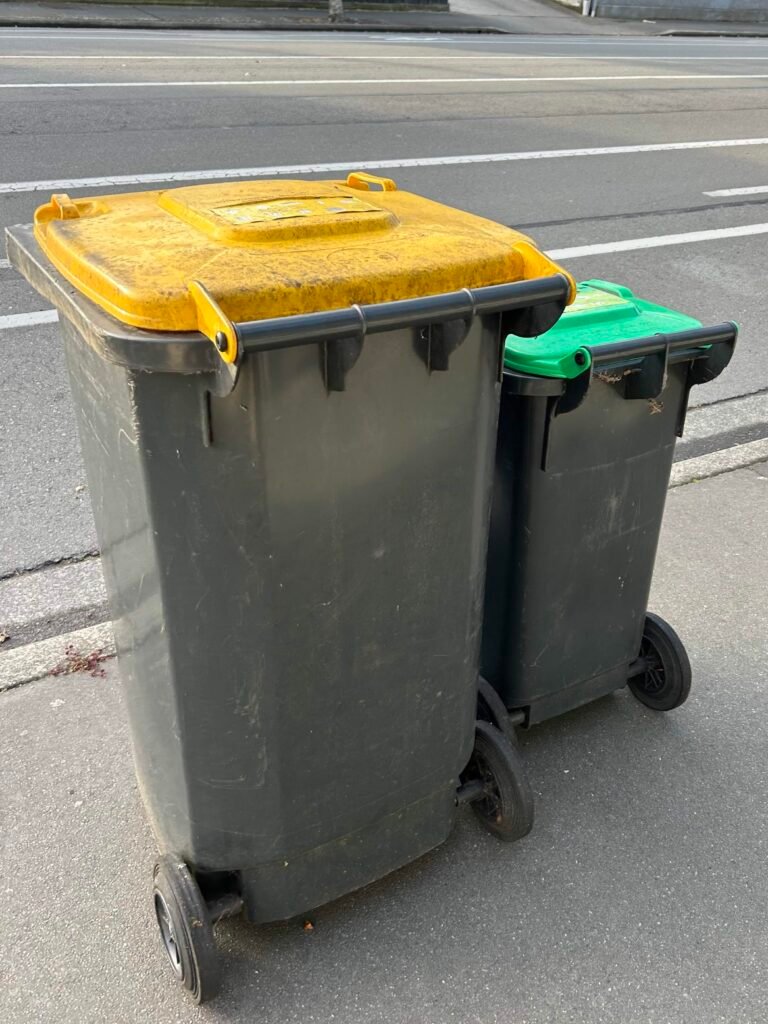
A typical rubbish collection day — this one was for the yellow and green bins. Yellow is for recyclables such as aluminium and plastics, green is for food scraps and garden trimmings, and red is for non-recyclable landfill waste such as certain plastics.
- Choosing eco-friendly products: There is strong interest in products with a lower environmental footprint, such as organic goods, local produce, and plastic-free products.
- Volunteering: Many people take part in volunteer activities organized by DOC and local environmental groups, including tree planting, beach clean-ups, and pest control.
- Everyday habits: Bringing reusable bags and bottles, saving water and electricity, and using public transport are all part of daily life.
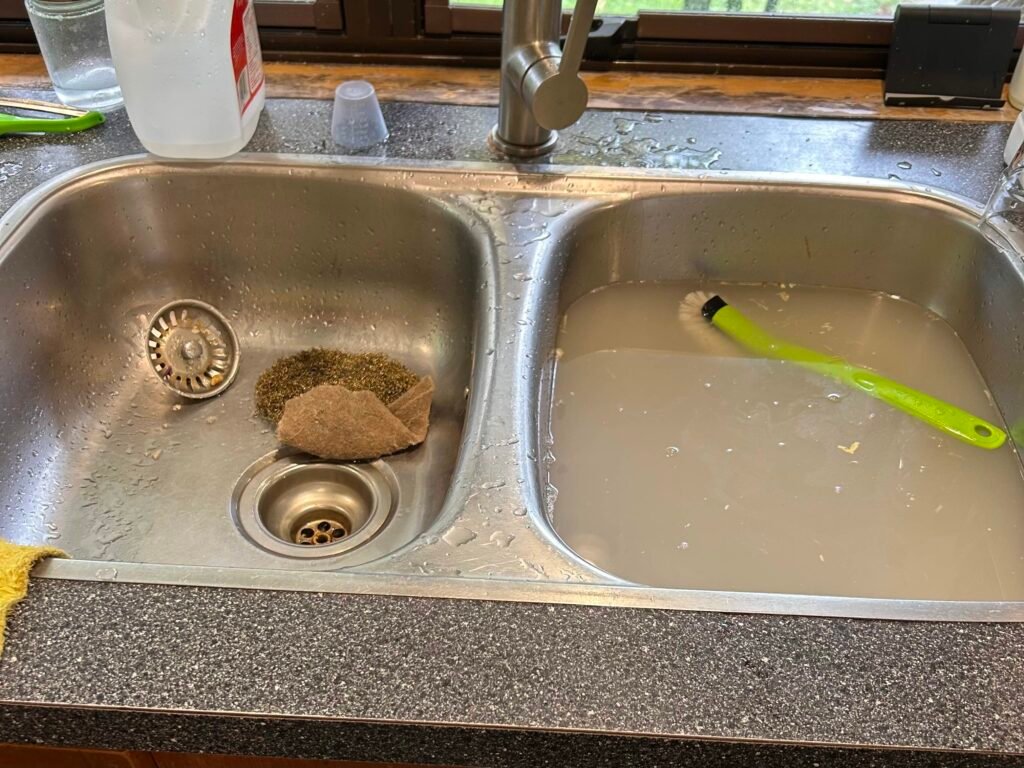
A kitchen sink in one household I stayed with — it had two basins. You give dishes a quick rinse on the left, then scrub them properly in the right basin filled with water and dish soap. That's how they saved water. (When I washed dishes with the tap running, I was told "Stop!"...!)
This kind of individual awareness and action powerfully reinforces the nation's environmental protection efforts as a whole.
Toward a Sustainable Future: The National Strategy
New Zealand aims not just for short-term economic growth but for sustainable development that balances the environment, society, and the economy. As part of its national strategy, the country is committed to achieving the international SDGs (Sustainable Development Goals) and fostering green industries.
Policies and Progress Toward the SDGs
New Zealand is committed to achieving the 17 SDGs (Sustainable Development Goals) set by the United Nations, and aligns its domestic policies accordingly. The government regularly reviews progress and publishes reports.
| National Park | Location | Key Features & Highlights |
|---|---|---|
| Fiordland | Southwest South Island | Spectacular fiords including Milford Sound and Doubtful Sound, ancient forests, waterfalls |
| Tongariro | Central North Island | Active volcanoes (Tongariro, Ngauruhoe, Ruapehu), emerald lakes, UNESCO dual World Heritage site |
| Abel Tasman | Northern South Island | Golden beaches, turquoise waters, popular for kayaking and hiking |
| Aoraki/Mount Cook | Central South Island | Aoraki/Mount Cook, New Zealand's highest peak, glaciers, dark sky reserve |
| Westland Tai Poutini | West Coast, South Island | Franz Josef Glacier, Fox Glacier, temperate rainforest |
Climate action (Goal 13), clean energy (Goal 7), responsible consumption and production (Goal 12), and the conservation of marine and terrestrial ecosystems (Goals 14 and 15) are especially closely tied to New Zealand's environmental protection strategy.
Growing Green Industries and Supporting Innovation
There is also an active movement to treat environmental challenges as new opportunities for economic growth. The government supports the transition to a "green economy" and invests in developing environmental technology (cleantech), sustainable agriculture, and renewable energy industries.
- Investment in research and development: Funding for research institutions and programs supporting corporate R&D into new technologies and products with lower environmental impact. Examples include methane-reduction technology in agriculture and new recycling technologies.
- Promoting green investment: Policies and information services designed to attract investment into environmentally responsible ventures.
- Startup support: Support programs also exist for entrepreneurs launching new businesses in environmental fields.
The aim is to achieve both environmental care and economic development at the same time.
Eco-Friendly Products and Consumer Choice
In New Zealand, consumers increasingly favor environmentally responsible products and services. In response, many companies are building sustainability into their management and product development.
- Eco-labels: Labels such as "Energy Star" for energy efficiency and the "Environmental Choice New Zealand" certification help consumers identify eco-friendly products.
- Emphasis on local produce: Choosing locally grown food to cut food miles is increasingly popular, and farmers' markets are thriving.
- B Corp certification and more: A growing number of New Zealand companies hold "B Corporation (B Corp)" certification, an international mark of strong environmental and social performance.
- Upcycled and recycled products: Products made from materials that would otherwise be discarded (fashion, homewares, and more) are also attracting attention.
When consumers make conscious choices, it further encourages businesses to invest in environmental protection — a virtuous cycle that is now taking shape.
Citizen-Led Environmental Protection: Everyone Plays a Part
Environmental protection in New Zealand rests not only on the government and specialist agencies but on the active participation of individual citizens. From classrooms to community groups and grassroots campaigns, initiatives at every level raise environmental awareness and encourage concrete action.
Environmental Education in Schools and Communities
In New Zealand, children have plenty of opportunities to learn about the environment from a young age.
- The Enviroschools programme: A program joined by many schools in which children take the lead in improving their school environment and learning about sustainability. Activities include growing vegetables in the school grounds, composting, and energy-saving projects. https://enviroschools.org.nz/
- Using local resources: Local parks, reserves, and recycling centres serve as places for environmental learning. DOC rangers and local experts also visit schools to give lessons.
- Hands-on learning: Beyond the classroom, real-world engagement is emphasized — tree planting, water-quality testing, litter clean-ups, and other direct experiences in nature.
Through this kind of education, children develop both a love of nature and a sense of personal responsibility for environmental issues.
Volunteering and the Role of Community Groups
New Zealand is home to many NPOs and community groups actively working on environmental protection. These groups collaborate with government agencies and run their own projects.
- Tree planting and ecosystem restoration: Planting projects to green local areas and restore habitats for native species are popular activities that draw many volunteers.
- Beach and river clean-ups: Regular events across the country remove litter from coastlines and riverbanks. Organizations such as Sustainable Coastlines (https://sustainablecoastlines.org/) are well known.
- Pest control: Working with DOC, residents set and manage rat traps in their backyards and nearby reserves — a practice known as trapping that continues to spread.
- Advocacy: Some groups campaign for stronger environmental policies and voice their positions publicly.
These activities contribute directly to environmental protection while also strengthening community ties and raising public awareness. Many volunteer activities are open to international students and working holiday makers too, so if you're interested, they are well worth seeking out.
Reduce, Reuse, Recycle
Cut down on waste, carry a reusable bottle and bag, and sort your rubbish properly.
Shop Smart
Choose local, seasonal, and eco-labeled products, and avoid excess packaging.
Save Energy & Water
Turn off unused lights, take shorter showers, and treat resources with care.
Volunteer
Join local activities like tree planting, beach clean-ups, and trapping.
Keep Learning
Stay curious about local environmental issues and DOC's work, and keep informed.
Speak Up & Spread the Word
Talk about the environment with family and friends, and share good initiatives.
Awareness Campaigns and Public Communication
The government, local councils, and environmental groups run a variety of campaigns and communication programs to raise public environmental awareness.
- Keep New Zealand Beautiful: A nationwide campaign calling for litter prevention, recycling, and community beautification.
- Gen Less: A platform run by EECA that shares information and ideas for reducing energy consumption.
- DOC's public outreach: Communicating the importance of national parks and conservation, along with safe ways to enjoy them, via its website, social media, and visitor centres.
- Media coverage: Television, radio, newspapers, and online media regularly cover environmental issues, keeping public interest high.
This ongoing communication plays a vital role in making environmental protection a shared value across society.
A Global Perspective: NZ's Role in International Environmental Issues
Beyond its domestic efforts, New Zealand actively seeks to play a role in solving global environmental problems on the international stage. As an island nation with a unique ecosystem, it takes a particularly strong interest in climate change and marine environmental issues.
International Cooperation and Partnerships
New Zealand recognizes that global environmental problems cannot be solved alone, and that cooperation with other countries is essential.
- Partnership with Pacific Island nations: New Zealand provides technical assistance and funding for climate action, disaster resilience, and sustainable development to Pacific Island nations, which are among the most vulnerable to impacts such as sea-level rise.
- Participation in international environmental treaties: The country actively participates in and fulfills its obligations under numerous international environmental agreements, including the UNFCCC (Paris Agreement), the Convention on Biological Diversity, and the Antarctic Treaty.
- Bilateral and multilateral cooperation: New Zealand works with partner countries on specific environmental issues such as marine plastic pollution and combating illegal fishing.
Leadership and Voice at International Conferences
Despite its small size, New Zealand speaks up actively at international environmental conferences (such as the COP meetings), backed by its progressive initiatives and ambitious targets.
- Championing ambitious targets: Citing its own zero-carbon goals, New Zealand sometimes calls on other countries to raise the bar on their climate action.
- Contributions in agriculture: The country shares its research and expertise on reducing agricultural greenhouse gas emissions with the international community and seeks to lead the conversation.
- Speaking for the South Pacific: New Zealand also acts as a voice for Pacific Island nations in international forums.
Its "clean and green" national image is one reason its voice carries weight on the international stage.
Sharing Environmental Technology and Supporting Developing Countries
New Zealand is also keen to share the technologies and know-how it has developed with countries that need them, especially developing nations.
- Renewable energy technology: New Zealand cooperates by sharing expertise and dispatching specialists in its areas of strength, such as geothermal power generation.
- Sustainable agricultural technology: Cooperation in fields such as low-impact farming techniques and breeding climate-resilient crop varieties.
- Disaster risk management: Drawing on its extensive experience with natural disasters, New Zealand shares knowledge on disaster preparedness and post-disaster recovery.
Through this technical cooperation and support, the country aims to contribute to global sustainability as a whole.
Conclusion: New Zealand's Challenge for the Future
New Zealand draws global attention as a "green nation" not only because of its beautiful landscapes. It is because the country, its regions, and its people take environmental protection seriously and act on it — through climate policy, the transition to renewable energy, plastic waste reduction, and the steady, unglamorous work of protecting unique ecosystems.
While pursuing ambitious targets such as carbon neutrality by 2050 and 100% renewable electricity, and advancing concrete policies toward the SDGs, New Zealand is also exploring tourism that coexists with nature through eco-tourism, and passing environmental awareness on to the next generation through school education and community action.
Of course, challenges remain — invasive species, and the environmental pressures of growing tourist numbers among them. But New Zealand's real strength lies in its refusal to look away: seeking solutions grounded in scientific evidence and sustained public debate.
If you are considering traveling, studying, or moving to New Zealand, we encourage you to engage with these local efforts and play your own part. There is plenty you can do: carry a reusable bottle, sort your rubbish carefully, choose eco-certified tours, or join a volunteer project. New Zealand's drive to protect its beautiful nature and build a sustainable future may well inspire you to rethink your own lifestyle too.
Further information:
- Ministry for the Environment: https://environment.govt.nz/ (English) – Information on environmental policy in general
- Department of Conservation (DOC): https://www.doc.govt.nz/ (English) – National parks, conservation work, volunteer opportunities, and more
- Energy Efficiency and Conservation Authority (EECA): https://www.eeca.govt.nz/ (English) – Information on energy saving and renewable energy (including the Gen Less campaign)
Disclaimer: This article was created with the help of AI-generated information. While we strive to provide the most up-to-date and accurate information possible, details may become outdated or change over time. For information that changes frequently, such as prices and opening hours, please always check official websites for the latest details. This article is intended for general informational purposes only and does not constitute advice for individual circumstances. The content may be updated in the future based on personal experience and additional information.