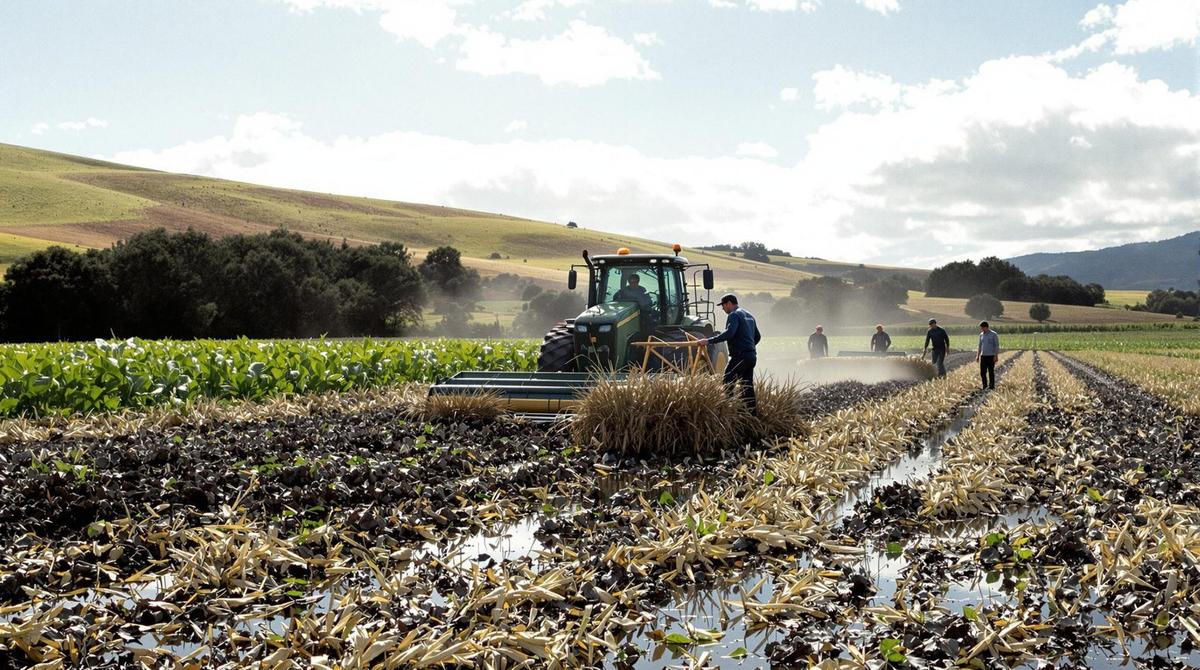
One of the most popular options for working holiday makers and international students is farm work. Getting involved in fruit picking and agricultural work across New Zealand's vast landscapes is an experience unique to this country.
That said, you probably have plenty of questions and concerns: "How do I actually find a job?" "How much English do I need?" "What's the pay like?"
This article covers everything working holiday makers and international students need to know about farm jobs in New Zealand — from how to find work and apply, to seasons and regions, real first-hand experiences, and the all-important question of wages. It's packed with practical tips to help you succeed in your New Zealand adventure. Let's take that first step toward finding your farm job together!
How to Work on a New Zealand Farm: Know the Basics
If you want to try agricultural work in New Zealand but aren't sure where to start, you're not alone. This section explains what farm jobs actually involve, your options for finding work, and the preparation you'll need before you start.
What Is a Farm Job?
"Farm job" is a broad term covering a wide variety of work. The best-known roles are fruit picking (harvesting) — kiwifruit, apples, cherries, and more — and packing, which involves boxing up the harvested fruit. Other jobs include vineyard work like pruning and wire lifting, planting and harvesting vegetables, and helping with milking or sheep shearing on livestock farms. Off-season maintenance work of this kind is often overlooked by job seekers, which is precisely why it is easier to get.
In most cases, no special skills or experience are required, but many of these jobs are physically demanding. Since the work is mostly outdoors, it can also be affected by the weather. Still, the satisfaction of working with your body in nature and hitting targets together with your teammates is an experience that's hard to find anywhere else.
How Do You Find a Farm?
There's no single way to find farm work. Combining several methods will give you the best chance of landing a job that matches what you're looking for.
- Job websites:
- Backpackerboard: The go-to site for working holiday makers and travellers, with plenty of seasonal work listings. https://www.backpackerboard.co.nz/work_jobs/new_zealand_fruit_picking_jobs.php
- Seek: One of New Zealand's largest job sites. Farm jobs are listed here too, though it also carries many professional roles.
- Trade Me Jobs: Trade Me is New Zealand's biggest online marketplace, and its jobs section is also well stocked with listings.
- Other specialist sites: Sites like Kiwi Recruitment and Pick NZ focus on specific crops or regions.
- Facebook groups: Search for keywords like "NZ Farm Work" or "Backpacker Jobs New Zealand", then join two or three of the biggest groups. They're a great source of real-time information and word-of-mouth recommendations.
- Recruitment agencies: Registering with an agricultural recruitment agency is another option. Some have connections with large orchards and contractors.
- Working hostels: In regions with lots of farm work, you'll find working hostels that arrange jobs for guests. Many will connect you with work as long as you stay there, and they double as great hubs for swapping information.
- Walk-ins: If you have a car, you can drive around farming regions and ask directly whether they're taking applications. It's not the most efficient approach, though.
- Word of mouth and referrals: A referral from a friend or acquaintance you've met locally is a reliable and effective route. Be proactive about exchanging information.
Easy Steps! How to Find a Farm Job in New Zealand
Research & Prepare
Check your visa, browse job sites, and prepare your documents (CV, etc.).
Apply & Make Contact
Apply online, by phone, or through direct contact on the ground.
Interview or Info Session
Confirm the job details, pay, and conditions. May be held online.
Contract & Paperwork
Review your employment agreement. Provide your IRD number and bank account.
Start Work!
Your farm job begins! Work hard and put safety first.
What Preparation Do You Need?
To work in New Zealand, there are a few things you need to sort out first.
- The right visa:
- Working Holiday Visa: Allows you to work, including farm jobs. This is the most common option.
- Student Visa: Comes with work-hour restrictions (usually up to 20 hours per week, full-time during holidays), but farm work is possible. Check your visa conditions for details.
- Other visas with work rights.
- IRD number (Inland Revenue Department number): New Zealand's tax number. Make sure you get one before you start working — you can apply online.
- A New Zealand bank account: Needed to receive your wages. Open one soon after arriving.
- CV in English: A simple CV in the New Zealand format is preferred. In some cases, highlighting your enthusiasm and physical fitness can matter more than your work history.
- Work clothing and gear: Comfortable clothes you don't mind getting dirty, sturdy footwear (safety boots may be required), a hat, sunglasses, sunscreen, and rain gear. Some farms may require specific equipment.
- Physical fitness: As mentioned above, farm jobs are physically demanding. It's a good idea to get into a regular exercise routine before you travel.
- Transport (a car): Not essential, but having a car is extremely handy for job hunting, commuting, and getting around on days off. Rural farms often have little public transport, so whether or not you have a car can affect which jobs are realistically open to you.
Applying for Farm Jobs in New Zealand: Seizing Your Chance
Once you've found a job you like, it's time to apply. Here are the key points for a smooth application process.
What Documents Do You Need to Apply?
You'll generally need the documents below. Requirements vary by employer, so always check in advance.
- CV/Resume in English: Keep it concise and in New Zealand style. Include your name, contact details, visa type and expiry date, any relevant work experience, and a short personal statement (fitness, motivation, teamwork, etc.).
- Copy of your passport: For identification.
- Proof of visa: Evidence that you hold a visa with work rights, such as a Working Holiday Visa or Student Visa.
- IRD number: Provide it if you already have one.
- Bank account details: For wage payments.
- Cover letter: Often optional, but briefly explaining why you're interested in the job and what your strengths are makes a good impression.
📝 Farm Job Application Document Checklist
- ✅ CV in English: Concise, NZ-style. Highlight your contact details, visa status, and motivation.
- ✅ Passport copy: Must be valid.
- ✅ Proof of visa: A copy of a visa with work rights.
- ✅ IRD number: Provide it if you already have one.
- ✅ NZ bank account details: For wage deposits.
- ⬜️ Cover letter (optional): Your chance to show enthusiasm!
*Required documents vary by employer. Always confirm in advance.
How to Use Job Websites
On job sites like Backpackerboard, you can search by keyword (e.g. "kiwi fruit picking", "vineyard work", "Bay of Plenty"), region, or job type. Applying via an online form or email is standard. Including a brief introduction, your available start date, and your visa type will make the process smoother.
How to read a farm job vacancy
Most listings are short, and the things that matter are the things they leave out. Before you reply to any vacancy, work through the job description and confirm these five points — by email if they are not stated:
- Pay structure: Hourly or piece rate, and the exact figure. "Above minimum" is not a rate.
- Guaranteed hours: Rain stops picking. Ask how many hours a week you can actually expect, not the maximum.
- Accommodation: Whether it is provided, what it costs, and whether the cost is deducted from your pay. This is where a good-looking rate quietly shrinks.
- Duration and start date: How long the work runs, and how much time to spend in the region before it dries up.
- Employer verification: A real name, a landline or a physical orchard address, and a presence you can look up. Anyone asking for a payment to secure you a job is running a scam — legitimate growers and contractors never charge job seekers a fee.
Growers hire fast and read little. A short message saying you are keen, available from a specific date, physically fit, and hold a visa with work rights beats a long CV almost every time. If a listing goes quiet, drop them a follow-up message after three or four days — turnover is high, and a vacancy that was full on Monday is often open again by Friday.
The Importance of Networking on the Ground
Applying online works well, but gathering information and building connections locally is just as important. Farm work in particular has high turnover, so it's common to find jobs through word of mouth.
- Hostels and caravan parks: Swap information with other travellers and working holiday makers. You'll get first-hand intel on where people found good jobs and which farms have good reputations.
- Community noticeboards: Job ads are sometimes posted on noticeboards at supermarkets and community centres.
- Strike up conversations: Talk directly to people working on farms, or even ask café staff — you never know where a lead will come from.
Seasonal Work by Region: Where to Find Seasonal Jobs, and When
New Zealand stretches a long way from north to south, and the climate and main crops differ by region. As a result, the type and timing of farm work varies significantly from place to place. Understanding the seasons and regional differences is key to finding work efficiently.
Which Regions Have the Most Fruit Picking Jobs? Hawke's Bay, Bay of Plenty and Beyond
Farm jobs exist all over the country, but there are several key regions where vacancies are concentrated.
| Region | Main Crops / Work | Main Season |
|---|---|---|
| Northland | Avocados, citrus, kiwifruit | Summer–autumn (Dec–May) |
| Bay of Plenty | Kiwifruit (picking, packing, pruning) | Autumn–winter (Mar–Aug) – picking mainly Mar–Jun |
| Hawke's Bay | Apples, pears, stone fruit (peaches, nectarines), grapes | Summer–autumn (Jan–May) – apples mainly Feb–May |
| Marlborough | Grapes (pruning, wire lifting, harvest), cherries | Year-round (grape work), summer (cherries Dec–Jan) |
| Nelson Tasman | Apples, kiwifruit, hops, berries | Summer–autumn (Dec–May) |
| Central Otago | Cherries, stone fruit (apricots, peaches), apples, grapes | Summer (Dec–Feb) – cherry season is short and intense |
| Gisborne | Citrus, apples, squash, grapes, sweetcorn | Summer–autumn (Jan–May) |
| Auckland (Pukekohe) | Fruit and vegetable growing — onions, potatoes, leafy greens; packhouse work | Year round, with a summer–autumn peak |
| Waikato | Dairy (milking, calf rearing), maize, general farm hand work | Year round – calving season Jul–Sep is the busiest |
Two things are worth pulling out of that table. First, most fruit picking jobs follow the harvest, so the work moves down the country as the season progresses — a common route is cherries in Central Otago over Christmas, apples around Hastings and Napier in Hawke's Bay — or in the top of the South Island around Nelson — from February, then kiwifruit in the Bay of Plenty from March. Following the harvest north like this is the easiest way for a new worker with no contacts to stay employed for a full season, and it is exactly what experienced pickers do. Second, not everything is seasonal: Pukekohe's vegetable growers and Waikato's dairy farms hire year round, which makes them the more sensible target if you arrive at an awkward time of year or want to stay in one place.
Nelson is worth a special mention for anyone weighing where to spend a few months. It records some of the highest sunshine hours in the country, and the combination of apples, hops and berries means the region has work opportunities stretching across a long window rather than a three-week rush.
Use the Official Seasonal Work Calendar
Before you commit to a region, check the free tool that most working holiday makers never find: Work and Income's seasonal work calendar. It is a government-run map of the whole country broken down by region, crop and month, and it tells you which areas are actively recruiting right now rather than which ones ran a harvest last year. Click through to a region and you get the crop, the months, and in many cases the contact details of the growers and contractors doing the hiring.
Pair it with the job vacancies listed on Backpacker Job Board and PickNZ, both of which carry live listings aimed specifically at travellers who want to work as a fruit picker. Between the official calendar and those two boards you can find seasonal jobs for almost any month of the year without paying an agency a cent.
Farm Work by Season
Farm work changes throughout the year in line with each crop's growing cycle.
- Winter (June–August):
- Pruning: Cutting back the branches of fruit trees and vines (kiwifruit, apples, grapes, etc.) to shape growth for the next season — an essential job.
- Maintenance: Servicing machinery, repairing facilities, and so on.
- Spring (September–November):
- Planting: Planting vegetables and new seedlings.
- Frost fighting: Protecting crops from frost in the early morning (especially in vineyards).
- Thinning: Removing excess buds and fruitlets once fruit begins to set, so the best fruit can develop.
- Summer (December–February):
- Harvesting / picking: Harvest season for cherries, berries, and stone fruit (peaches, apricots, etc.).
- Thinning: Thinning work on apples and other crops may continue.
- Leaf plucking: Removing leaves in vineyards so the fruit gets more sunlight.
- Autumn (March–May):
- Harvesting / picking: The main harvest season for apples, kiwifruit, and grapes — the busiest time of year for labour demand.
- Packing: Sorting and boxing harvested fruit in the packhouse. Indoor work that's less affected by weather.
📅 NZ Farm Job Seasonal Calendar (Key Crops)
🌸 Spring (Sep–Nov)
Planting 🌱 / Thinning / Frost fighting
Jobs start to appear
☀️ Summer (Dec–Feb)
🍒 Cherries
🍓 Berries
🍑 Stone fruit harvest
Lots of short, intense jobs
🍂 Autumn (Mar–May)
🥝 Kiwifruit
🍎 Apples
🍇 Grapes — harvest & packing
Peak season for vacancies
❄️ Winter (Jun–Aug)
✂️ Pruning
🛠️ Maintenance
Work is relatively scarce
*Timing varies by region and weather. Use as a rough guide only.
Picking Seasons for Kiwifruit and Other Fruit
The picking seasons for the most popular fruits are as follows.
- Kiwifruit: Mainly in the Bay of Plenty, running from around March through June. Green and gold kiwifruit seasons can be slightly offset from each other.
- Apples: Mainly in Hawke's Bay and Nelson, from around February through May. Harvest timing depends on the variety.
- Cherries: Mainly in Central Otago and Marlborough, in a short window from mid-December to late January. The season is weather-sensitive — earnings can be high, but there will also be days with no work.
- Grapes: Mainly in Marlborough, Hawke's Bay, and Central Otago, from around February to April. Most of the work is harvesting wine grapes.
Experiences and Pay: What Seasonal Workers Actually Earn
What is it actually like to do a farm job? Let's hear from people who have done it — and take a look at the pay.
First-Hand Experiences
Among people who've done farm work, you'll consistently hear positive comments like "it's tough but rewarding," "I made friends from all over the world," and "working out in nature feels amazing."
- A. (working holiday / kiwifruit picking): "The muscle aches were brutal at first, but once I got used to it I found my rhythm and started enjoying it. The feeling when our team hit our bin target was the best! Making friends from so many different countries is a great memory too."
- B. (student / apple packing): "Since it was indoor work, the weather never got in the way and I could work steadily. The tasks were repetitive, but I could listen to music while working, and it was great being able to travel on weekends with the money I earned. I worked intensively during school holidays."
- C. (working holiday / cherry picking): "The season was short and we had a lot of days off depending on the weather, but on an hourly basis I earned really well. The early-morning starts were tough, but afternoons were free, so I'd go swimming at a nearby lake and made the most of it."
Of course, there are also less rosy accounts: "I had a dispute with a contractor," "I earned less than I expected," or "it was too physically demanding and I couldn't keep going." Working conditions vary from company to company and farm to farm, so researching in advance and reviewing your contract carefully is essential.
How Much Can You Earn?
There are two main pay structures: hourly rate and piece rate (contract rate).
- Hourly rate: You're guaranteed at least New Zealand's minimum wage ($23.95 NZD/hour as of August 2026 — subject to change). Best for those who want stable income. Common for packing work, some picking jobs, and pruning.
- Piece rate: You're paid based on how much you harvest (e.g. per bin of kiwifruit, per box of apples). Work hard and you can earn well above minimum wage — but if your pace is slow, there's a risk of falling below it. Legally, however, piece rates must be set so that your average hourly earnings do not fall below the minimum wage. This is the most common structure for picking work.
Pay guide for fruit picking jobs (as of August 2026, gross, before tax and ACC):
| Pay Structure | NZ Dollars (NZD) | Gross per 40-hour week | Notes |
|---|---|---|---|
| Minimum wage | $23.95+ / hour | approx. $958+ / week | Legal minimum (subject to change) |
| Typical hourly rate | $23.95 – $28.00 / hour | approx. $958 – $1,120 / week | Depends on experience and job type |
| Piece rate (e.g. per kiwifruit bin) | $50 – $80 / bin | Varies with your picking speed | High earnings possible depending on ability. Confirm the rate. |
| Piece rate (hourly equivalent) | $23.95 – $35.00+ / hour | approx. $958 – $1,400+ / week | Experienced pickers can far exceed minimum wage. |
Things to note:
- Income tax and the ACC levy (New Zealand's accident compensation scheme) are deducted from your pay.
- Check whether Holiday Pay is paid separately or included in your hourly rate (typically an 8% loading on top of the hourly wage).
- Accommodation and transport costs are sometimes deducted from your wages. Always confirm before signing a contract.
Balancing Life and Work in New Zealand: Making the Most of Your Time Abroad
A farm job isn't just a way to earn money — it's also an opportunity to fully enjoy life in New Zealand. Strike a good balance between work and free time to make your days as fulfilling as possible.
Living Costs on a Working Holiday
Most people put their farm job earnings toward living expenses and travel. Here's a breakdown of the main costs.
- Accommodation: Working hostels ($30–40 NZD/night), flat shares ($150–250 NZD/week), or on-site accommodation provided by the farm (ranging from free to paid).
- Food: Around $80–120 NZD/week if you mostly cook for yourself. Eating out is pricey.
- Transport: Car running costs (fuel, insurance, repairs) or public transport fares.
- Phone: Mobile plan ($40–60 NZD/month).
- Social and leisure: Money for activities and time with friends.
Costs vary a lot depending on region and lifestyle, but if you're careful with your spending, a farm job income is enough to live on — and to save or travel with too.
How to Balance Work and Play
Farm work is physically draining, so rest matters.
- Plan your days off: Most jobs give you one or two days off per week. Research nearby sights and activities in advance so you can recharge properly.
- Socialise with your crew: Going out for meals or day trips with workmates is a great way to unwind — and to enjoy the kinds of friendships you only make abroad.
- Look after your health: Don't push yourself too hard. Prioritise sleep and good nutrition, and take proper rest when you're unwell.
- Manage your budget: Deciding in advance what your earnings are for helps you avoid frittering money away and makes it easier to reach your goals (like that big trip).
Farm Jobs for International Students: Balancing Study and Work
International students on a student visa can also take on farm work in New Zealand — but there are a few things to be aware of.
What Students Need to Know Before Working on a Farm
- Work-hour limits: On a student visa, you can generally work up to 20 hours per week during term time and full-time during designated holiday periods. Always check your own visa conditions and make sure you never exceed the limit.
- Balancing study: Farm work is often physically demanding, so keep your hours manageable and don't let work interfere with your studies. You may need to adjust your shifts around exam periods in particular.
- Be upfront with employers: When applying, tell them honestly that you're an international student and that your work hours are restricted.
Cultural Exchange and the Benefits of Working While Studying
Farm jobs offer international students some genuinely valuable experiences.
- Better English: Working alongside native speakers and people from all over the world gives you plenty of opportunities to use practical, real-world English.
- Income: Helps cover tuition and living costs.
- Cultural experience: You'll get a taste of rural New Zealand culture and a truly multinational work environment.
- Networking: You'll meet people from all kinds of backgrounds — connections that could benefit your future.
To make your time studying abroad even richer, taking on a farm job during your holidays is well worth considering.
Conclusion: Make Unforgettable Memories with a New Zealand Farm Job!
A farm job in New Zealand is far more than just a way to earn money — it's a wonderful opportunity to experience life abroad in depth, with lessons and encounters you simply won't find at home. The work can be hard at times, but the beautiful scenery, the camaraderie with people from around the world, and the satisfaction of reaching your goals together will become a treasured part of your life.
Use the search methods, application tips, and season and region information in this article to prepare thoroughly. Check the job boards regularly and network actively once you're on the ground. Find the work that suits you — picking, packing, or something else — stay safe, and enjoy your New Zealand farm job experience to the fullest!
We're cheering you on all the way.
Next steps:
- Check your visa: First, confirm that your visa allows farm work and review your work conditions. See the official Immigration New Zealand website for details.
- Start researching: Begin checking job sites like Backpackerboard and relevant Facebook groups.
- Get prepared: Apply for your IRD number, open a bank account (after arrival), and put together your CV in English.
Disclaimer: This article was created using AI-generated information. While we strive to provide the most up-to-date and accurate information possible, details may become outdated or change. In particular, for information that changes frequently — such as prices, the minimum wage, and visa conditions — always confirm the latest details on official websites (the minimum wage cited in this article is a reference figure as of August 2026). This article is intended as general information only and does not constitute advice for individual circumstances. The content may be updated in the future based on personal experience and additional information.