You can't truly understand New Zealand culture without knowing the history of its indigenous people, the Māori. Once you learn about the story of European settlement — symbolized by the Treaty of Waitangi — and the Māori language and customs that remain very much alive today, you'll start seeing place names and everyday scenes in a whole new light. This article walks through New Zealand's history with a focus on the Māori people, from a perspective that's genuinely useful for travelers and anyone considering a move.
In this guide, we take a clear, thorough look at the history and culture of the Māori — New Zealand's indigenous people — and their place in the country today. The Māori are essential to understanding New Zealand's history. From their origins and first encounters with Europeans to their role in modern society, this article will deepen your understanding of New Zealand as a whole.
By reading this article, you'll gain a better understanding of the following:
- The origins of the Māori people and the history of their migration to New Zealand
- The significance and historical background of the Treaty of Waitangi
- The uniqueness and appeal of Māori culture — ceremonies, language, and art
- The role and presence of Māori in modern New Zealand society
- Tourist destinations where you can experience Māori culture
So let's begin our journey into the Māori world — the very soul of Aotearoa (the Māori name for New Zealand).
The History of the Māori People — From Origins to the Present Day
The history of the Māori, deeply rooted in the land of New Zealand, is the very identity of this country. Learning their story is the first step toward understanding New Zealand as a nation.
Where Did the Māori People Come From?
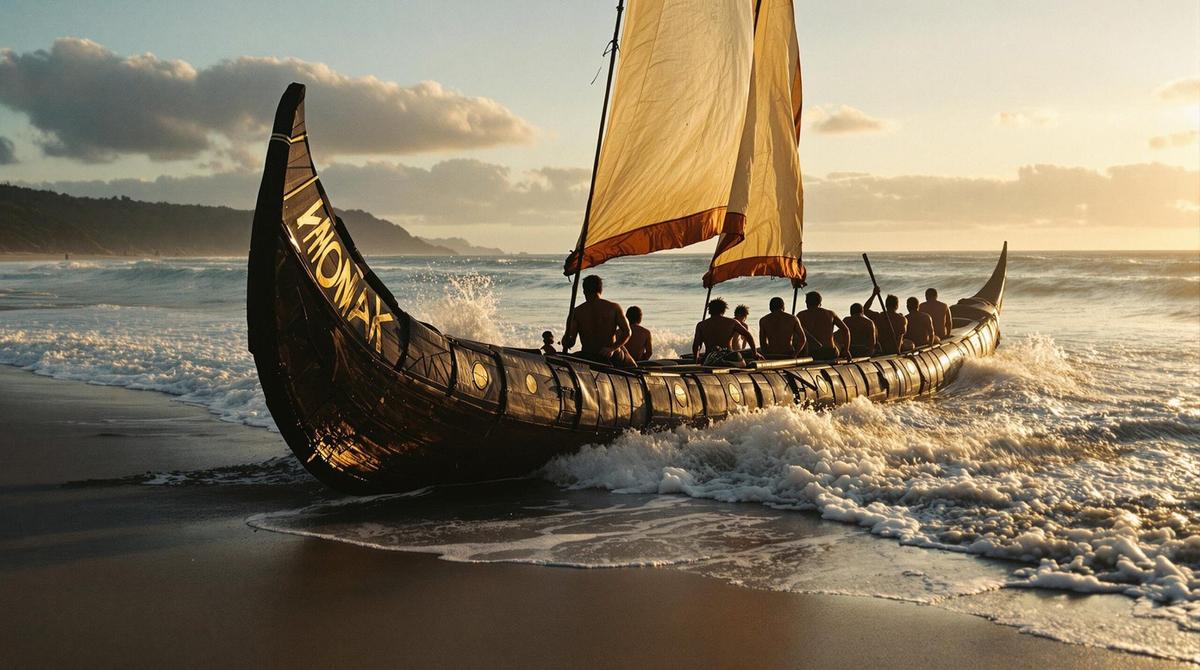
The origins of the Māori lie in Polynesia, across the vast Pacific Ocean. Māori are East Polynesians, a branch of the seafaring Polynesians renowned for their exceptional navigation skills, and are believed to have reached the islands of New Zealand by canoe (waka) after centuries of migration.
- Timing of migration: Modern dating has narrowed this considerably. New Zealand was first settled remarkably late. Radiocarbon work on rat bones and archaeological sites dates the Polynesian settlement of New Zealand to somewhere between 1250 and 1275 in the North Island of New Zealand, and the South Island between about 1280 and 1295. In global terms this is astonishingly recent: New Zealand was among the last large landmasses on Earth to be settled by people at all.
- Navigation skills: They are believed to have deliberately set course for New Zealand, guided by the stars, the sun, ocean currents, and the movements of birds. The sophistication of their voyaging techniques is remarkable.
- Hawaiki: In Māori tradition, their ancestors came from a homeland called "Hawaiki." It functions as both a real place and a spiritual origin, and it is most often identified with Raʻiātea in the Society Islands, in the wider Tahiti and Cook Islands region of the South Pacific — the launching point from which the great voyaging waka set out.
Once settled in New Zealand, the Polynesian settlers formed tribes (iwi) and sub-tribes (hapū) across the country, developing their own distinctive society and culture. Individual Māori tribes still trace their descent to a named founding waka — Te Arawa to the canoe of the same name that made landfall in the Bay of Plenty, Ngāpuhi to Ngātokimatawhaorua in the north — and that whakapapa remains the backbone of tribal identity today.
Adapting to these shores meant reinventing Polynesian life for a colder, far larger country. Tropical crops mostly failed; the kūmara (sweet potato) survived, and became the staple of a new horticultural system with storage pits to carry it through winter. For the first century or two, protein came in extraordinary abundance from the moa — nine species of large flightless birds, some standing over three metres tall — along with seals and seabirds. It did not last. The moa were hunted to extinction within roughly two hundred years of settlement, one of the fastest large-animal extinctions in the human record, and the loss forced a shift toward fishing, fern root and intensified gardening that reshaped Māori society. Competition for the best gardening land followed, and with it the fortified hilltop village — the pā, whose earthworks are still visible on headlands all over the North Island. Māori would go on to fortify these positions so effectively against artillery in the nineteenth century that British engineers studied the designs.
First Contact: Abel Tasman in 1642, James Cook in 1769
Europeans reached these shores of New Zealand late, and badly. The Dutch explorer Abel Tasman sighted the west coast of the South Island in December 1642, becoming the first European to record the country's existence. He never set foot on it. At anchor in what is now Golden Bay, at the top of the South Island, a group of Māori in waka confronted his boats and four of his crew were killed. Tasman named the place Murderers' Bay and sailed away. No European returned for 127 years.
When Captain James Cook arrived in 1769, the encounter went differently. European accounts have long called this the discovery of New Zealand, though Cook discovered New Zealand only in the sense that he was the first to chart it; people had lived here for four hundred years by then. Cook circumnavigated and charted both islands with an accuracy that held up for over a century, and although his first landing at Poverty Bay also ended in Māori deaths, he returned on later voyages in 1773 and 1777, spending long enough in the Marlborough Sounds to establish real, if uneasy, relations between Māori and Europeans. European settlers arrived in his wake, and his charts opened the country to sealers, whalers, traders and missionaries — and to the muskets, potatoes, and epidemic diseases that arrived with them.
The Musket Wars, 1805–1843
The most destructive period in Māori history was not the wars against the British. It was the wars Māori tribes fought against each other with European weapons. When the first traders began exchanging muskets for flax and timber, the iwi with the earliest access — above all Ngāpuhi in Northland, under the chief Hongi Hika — could overwhelm neighbours armed with traditional weapons. Every other tribe then had to arm in turn or be destroyed.
The resulting conflicts swept the country for roughly three decades and reached almost every region, driving whole iwi from their territory and depopulating others. The Māori population had declined from around 100,000 in 1800 to somewhere between 50,000 and 80,000 by the time the fighting subsided in the early 1840s. Understanding this matters for what came next: many chiefs came to negotiate with the British in 1840 looking for a way to stop the killing and to control the traders, not to hand over their country.
The Significance of the 1840 Treaty of Waitangi
In New Zealand history, 1840 stands as a pivotal year. On 6 February 1840, at Waitangi in the Bay of Islands, a group of Māori chiefs signed the Treaty of Waitangi with Captain William Hobson, sent from Britain with instructions to obtain sovereignty and who became the colony's first governor. Copies were then carried around the country through the rest of that year: in total more than 500 Māori chiefs signed the Treaty of Waitangi in 1840, though some — notably in the Waikato and Taranaki — refused outright. This treaty was decisive in laying the foundations of New Zealand as a nation.
One detail explains most of what followed. Nearly every chief signed the Māori-language text, which had been translated overnight by the missionary Henry Williams and his son. It is not a faithful rendering of the English. Where the English says the chiefs cede "sovereignty," the Māori text says they cede kāwanatanga — governorship, a borrowed word with no history of meaning absolute power — while guaranteeing them tino rangatiratanga, full chieftainship, over their lands and treasures. Māori retained, as they understood it, authority over their own affairs. The Crown believed it had acquired the country.
- Background to the signing: European settlement — particularly by the British — was increasing, and disputes over land transactions and resource use were beginning to arise. The British government sought to establish sovereignty over New Zealand and bring order to the country.
- The treaty's content: The treaty exists in both English and Māori versions, and there are significant differences in how the two are interpreted.
- English version: The Māori chiefs are described as ceding the "sovereignty" of New Zealand to the British Crown.
- Māori version: The chiefs are understood to have ceded "kawanatanga" — governance — while retaining "tino rangatiratanga," their absolute chiefly authority, including ownership of land and resources.
- The difference in interpretation: This divergence became the source of much controversy and conflict in later history. Māori did not consider themselves to have ceded sovereignty, and disputes with the British over land ownership and rights arose frequently.
Background to the Signing
- Increasing European (especially British) settlement
- Emerging disputes over land transactions and resources
- Britain's intent to maintain order and establish sovereignty over New Zealand
Two Versions of the Treaty and Differing Interpretations
The Treaty of Waitangi exists in both English and Māori versions, with major gaps in the translation and interpretation of key terms.
🇬🇧 English Version
States that the Māori chiefs fully ceded "Sovereignty" to the British Crown.
🇳🇿 Māori Version
Understood to mean that the chiefs ceded governance — "Kawanatanga" — while retaining "Tino Rangatiratanga," their absolute authority over land and resources.
Impact on History
- The difference in interpretation became the root of later land disputes and rights issues.
- Regarded as New Zealand's founding document, yet the source of much controversy.
- Even today, the treaty's principles continue to shape New Zealand's legal system and policy.
The Treaty of Waitangi remains at the center of debate in New Zealand's society and politics to this day. The principles of the treaty are taken into account in government policy-making and court rulings, and serve as a basis for protecting Māori rights. February 6 is celebrated each year as Waitangi Day, a national public holiday commemorating the signing of the treaty and a day for reflecting on New Zealand's biculturalism.
The Impact of the Colonial Era and the Changes That Followed
After the Treaty of Waitangi was signed, New Zealand became a British colony, and Māori society faced enormous changes.
- Loss of land: Through differing interpretations of the treaty, subsequent unjust laws, and at times armed force, Māori lost vast areas of land. This severely damaged both their economic base and their spiritual connection to the land.
- The King Movement: By the 1850s, Waikato iwi concluded that selling land piecemeal was destroying them, and in 1858 they installed Pōtatau Te Wherowhero as the first Māori King — the Kīngitanga — to hold land collectively and deal with the Crown as an equal. The colonial government read it as rebellion.
- The New Zealand Wars: Fighting began in the north in 1845 and continued in waves until 1872, with the heaviest campaigns in the 1860s: Taranaki from 1860, then the invasion of the Waikato in 1863. British imperial troops, colonial militia and allied Māori fought against those iwi resisting land sales and Crown authority. By the standards of the mid-nineteenth century these were substantial campaigns: at their height, more imperial soldiers were deployed here than the number of Māori fighters they faced in the whole country.
- Confiscation: The New Zealand Settlements Act 1863 let the government confiscate the land of iwi it deemed to be in rebellion. More than a million hectares were taken this way — much of it from tribes that had never fought at all. This raupatu, rather than the fighting itself, did the lasting damage, and it is the source of most of the historical grievances settled in our own time.
- Cultural suppression: Through the colonial period the government sought to assimilate Māori into settler society, attempting to suppress Māori culture — including punishing children for speaking te reo in schools. As a result, the Māori language and traditions came dangerously close to decline.
- Population decline: Introduced diseases against which Māori had no immunity — influenza, measles, tuberculosis — combined with warfare, land loss and poverty to decimate communities that colonization had already uprooted. From an estimated 100,000 at the start of the 19th century, the Māori population had declined to 37,520 by the 1871 census — the lowest figure ever recorded. Many European settlers of the period wrote as though the outcome were settled, and history books of the day spoke openly of a dying race. They were wrong: the numbers began recovering before the century was out, reaching 42,113 by 1896, and have risen ever since.
From the 20th century onward, however, new leaders emerged from within the Māori community, and activism for cultural revival and the restoration of rights gained momentum — land occupations, the 1975 land march, and the campaign that saved the language.
Especially after World War II, as more Māori moved to urban areas, the importance of Māori identity and culture came to be recognized anew. Language revitalization movements and rights claims based on the Treaty of Waitangi were actively pursued, leading to the renaissance of Māori culture we see today.
The Making of a Nation: New Zealand History After 1840
The Māori story runs through everything above, but the settlers who came to New Zealand after 1840 built a country with a history of its own — and a few episodes in it are genuinely without parallel anywhere else. This is the brief history of how New Zealand became New Zealand.
Colonization and the Colony of New Zealand, 1835–1870
Even before the Treaty, northern chiefs had asserted the independence of New Zealand: in 1835 they signed He Whakaputanga, the Declaration of Independence of the United Tribes of New Zealand, with British backing. Five years later the Treaty replaced that arrangement, and British colonization of New Zealand began in earnest. Much of it was privately organised — the New Zealand Company shipped the settlers who arrived in New Zealand to found Wellington, Whanganui, New Plymouth and Nelson, and the New Zealand Company's land purchases, many of them dubious, seeded decades of dispute.
British law in New Zealand arrived with the colony. The New Zealand Constitution Act 1852 established representative government, and the first New Zealand Parliament met in 1854 — early by any standard. Auckland served as capital until 1865, when the seat of government moved south to Wellington for its central position between the North Island and the South Island of New Zealand. In 1867 four Māori seats were created, giving Māori men the vote more than a decade before all Pākehā men had it.
Gold, Refrigeration and Economic History, 1861–1914
In 1861 gold was found at Gabriel's Gully in Otago. The rush that followed transformed Dunedin into the country's largest and richest city and briefly made the South Island the centre of national life. But the change that mattered most for New Zealand's economy came in 1882, when the sailing ship Dunedin left Port Chalmers carrying the world's first commercially successful cargo of frozen meat to London. From that voyage on, the country's economic history was the story of shipping protein to Britain — a dependence that lasted almost a century.
Two firsts belong to this period. New Zealand's first great social reform came in 1893, when it became the first self-governing country in the world to grant women the vote in national elections, after a petition campaign led by Kate Sheppard. In 1898 it introduced one of the world's first state old-age pensions. New Zealand became a Dominion in 1907, though full legal independence waited until Parliament adopted the Statute of Westminster in 1947.
Wars, the Welfare State and a New Identity, 1914–1987
New Zealanders fought far from home and in extraordinary numbers. In the First World War, roughly 100,000 served overseas from a population near one million, and about 18,000 died — among the highest casualty rates of any combatant nation. The Gallipoli landings of 25 April 1915 gave the country Anzac Day, still its most solemn commemoration, and much of the New Zealand identity was forged there and in the Second World War that followed. Both wars shaped what is now the New Zealand Defence Force, and the broadcasts that carried the news home built Radio New Zealand into a national institution.
At home, the First Labour Government's Social Security Act 1938 built one of the earliest comprehensive welfare states. Then in 1973 Britain joined the European Economic Community, and the guaranteed market for New Zealand meat and dairy vanished almost overnight — the single biggest shock in the country's economic history, and the reason Australia and New Zealand, and later Asia, became its main trading partners.
The 1980s rewrote the rest. The 1981 Springbok rugby tour split the country over apartheid and put New Zealanders in riot lines against each other. From 1984 the fourth Labour government deregulated the economy at a speed few countries have attempted. In 1985 French agents bombed the Greenpeace ship Rainbow Warrior in Auckland harbour, killing a photographer — an act of state terrorism by an ally that hardened public opinion decisively. And in 1987 Parliament passed the nuclear-free legislation that remains the clearest statement of New Zealand foreign policy, alongside the Māori Language Act of the same year. In 1996 the country replaced first-past-the-post with proportional representation, and coalition government has been the norm ever since.
What Defines Māori Culture? — Tradition and Modernity
Māori culture is a unique and powerful culture that captivates visitors to New Zealand. At its foundation lie a deep connection with nature, reverence for ancestors, and strong communal bonds.
Traditional Māori Ceremonies and Festivals
Māori ceremonies and festivals vividly reflect their worldview and values.
- Pōwhiri: A formal ceremony welcoming visitors onto a marae (a Māori meeting ground). It carries spiritual significance and includes speeches and songs of greeting, the hongi (a greeting where noses are pressed together), and the sharing of food (kai). Through this ceremony, visitors are accepted as members of that marae's community.
- Haka: Originally a dance performed before battle to intimidate opponents and raise the warriors' own morale, the haka is now performed on many occasions — to express welcome, and at celebrations and memorials. It is world-famous thanks to New Zealand's national rugby team, the All Blacks, who perform it before every match.
- Tangihanga: The funeral ceremony. It is an important rite in which the community comes together to mourn the deceased, share their grief, and farewell the departed spirit. It can last several days.
- Matariki: The Māori New Year, marking the rising of the Pleiades star cluster (Matariki in Māori) in the winter sky. Traditionally a time to celebrate the harvest, honor ancestors, and plan for the future, Matariki has in recent years become an official public holiday in New Zealand.
| Ceremony / Festival | Main Purpose / Content | Features |
|---|---|---|
| Pōwhiri | Ceremony welcoming visitors onto a marae | Speeches, songs, hongi, sharing of food |
| Haka | War dance; also welcome, celebration, mourning | Powerful movements and chants, performed as a group |
| Tangihanga | Funeral rites honoring the deceased | Community-wide mourning over several days |
| Matariki | Māori New Year, harvest festival, honoring ancestors | Celebrates the rising of the Pleiades; recently made a public holiday |
These ceremonies are far more than formalities — they play a vital role in passing Māori spirituality, history, and communal values on to the next generation.
The Māori Language and Why It Matters
The Māori language (Te Reo Māori) is the core of Māori culture and the foundation of Māori identity.
- The language today: Suppression during the colonial era caused speaker numbers to plummet, but the revitalization movement that began in the 1970s has restored recognition of its importance. Te Reo Māori is now one of New Zealand's official languages, and its use in schools and the media is actively promoted.
- Kōhanga Reo: A Māori-language immersion program for preschool children. Meaning "language nest," it gives children exposure to the Māori language and culture from an early age and has contributed enormously to language revitalization.
- Why it matters: Language is not merely a communication tool — it embodies culture, history, and an entire worldview. Learning Te Reo Māori is essential to understanding the Māori spiritual world.
In New Zealand, you'll encounter the Māori language everywhere in daily life, from place names to greetings. Learning a few simple phrases will make your interactions with locals all the richer.
| Māori (Te Reo Māori) | English Meaning | Pronunciation (Approx.) |
|---|---|---|
| Kia ora | Hello, thank you, be well | kee-ah OR-ah |
| Haere mai | Welcome | HIGH-reh MY |
| Haere rā | Goodbye (to someone leaving) | HIGH-reh RAH |
| E noho rā | Goodbye (to someone staying) | eh NO-ho RAH |
| Ka kite anō | See you again | kah KEE-teh ah-NAW |
| Aotearoa | New Zealand (Māori name) | ah-oh-teh-ah-ROH-ah |
| Whānau | Family (in the broad sense; community) | FAH-no |
| Kai | Food, a meal | KYE |
Māori Art and Its Forms of Expression
Māori art is a vital means of visually conveying their history, mythology, and values.
- Carving (Whakairo): Intricate carvings worked into wood, bone, and stone — especially pounamu, the prized greenstone. They can be seen on the posts and beams of meeting houses (wharenui), on weapons, and on ornaments. Spiral motifs (koru) and mythological figures are common design elements.
- Weaving (Raranga): Weaving using plant fibers such as flax (harakeke) to create baskets, mats, and garments (kākahu). Geometric patterns are a distinctive feature.
- Tā Moko: Traditional tattooing. Far more than decoration, tā moko carries deep meaning, signifying genealogy (whakapapa), tribal affiliation, social standing, and personal achievements. Applied to the face and body, each design is unique to the individual. It has seen a resurgence in recent years alongside the broader cultural revival.
- Kapa Haka: A composite performing art combining song (waiata), dance (including haka), and performance. It expresses Māori stories and emotions and strengthens community bonds. Competitions are held both within New Zealand and internationally.
You can encounter these art forms not only in museums and galleries but also on marae and in public spaces throughout New Zealand.
The Māori Presence in Modern New Zealand
Having overcome past oppression and hardship, the Māori people hold a significant presence in modern New Zealand society. Alongside the revival of their culture, they play important roles across many fields.
The Role of Māori in New Zealand Society
Māori people are active in every sphere of New Zealand society — politics, the economy, education, the arts, and sport.
- Population: According to provisional results from the 2023 census, approximately 978,000 people identified as being of Māori descent, making up about 19.6% of New Zealand's total population. This figure is trending upward, reflecting the growing presence of Māori in society.
- Political participation: Dedicated Māori seats in Parliament, based on the Māori electoral roll, ensure that Māori voices are represented in national politics. Many Māori MPs are also elected through general seats.
- Economic activity: In addition to industries based on traditional lands and resources — fishing, forestry, agriculture, and tourism — Māori businesses have flourished across diverse sectors in recent years. The Māori economy now occupies an important place in New Zealand's economy as a whole.
- Spread of culture: The Māori language and culture are now widely shared with non-Māori through education and the media. This is a key element in shaping New Zealand's distinctive biculturalism.
Identity and Cultural Renaissance
The Māori Renaissance — the cultural revival movement that began in the late 20th century — has profoundly shaped modern Māori identity.
- Language revitalization: The establishment of Kōhanga Reo and Māori-language schools (Kura Kaupapa Māori), along with the launch of Māori Television, has raised the status of the Māori language.
- The role of the marae: Beyond ceremonies and gatherings, marae serve as centers for education, social welfare, and cultural transmission, playing a vital role in strengthening community bonds.
- Revival of traditional arts: Tā moko, kapa haka, and other traditions are being embraced by younger generations, becoming symbols of restored pride in Māori culture.
Through these activities, Māori people are reaffirming their culture and identity and passing them on to the next generation.
Māori Education and How Widely It Has Spread
Within New Zealand's education system, learning about Māori culture and history is given real importance.
- Schools: Many schools incorporate the Māori language and tikanga Māori (Māori customs and protocols) into their curricula.
- Higher education: Universities have established Māori studies departments and research centers, offering specialized research and education on Māori topics.
- Community education: Museums, cultural centers, and community programs give the general public opportunities to engage with and learn about Māori culture.
As a result, non-Māori New Zealanders are also deepening their understanding of, and respect for, Māori culture.
Political Participation
- Dedicated Māori seats giving Māori a voice in national politics
- Many Māori MPs also elected through general seats
- Treaty of Waitangi principles considered in government policy-making
Economic Activity
- Growth of traditional industries (fishing, forestry, tourism, etc.)
- Māori businesses thriving across diverse sectors
- Growing contribution of the Māori economy to New Zealand's economy overall
Cultural Sharing
- Māori language and culture taught in schools
- Broadcasting through Māori Television and other media
- Promotion of biculturalism and deepening public understanding
Identity and Renaissance
- Successful language revitalization (Kōhanga Reo and more)
- Community cohesion centered on the marae
- Traditional arts passed on — tā moko, kapa haka and more
The Relationship Between Māori and the New Zealand Government
Since the signing of the Treaty of Waitangi, the relationship between the Māori people and the New Zealand government has cycled through periods of cooperation and conflict. Today, efforts are underway to build a genuine partnership grounded in the spirit of the treaty.
Government Policy and Māori Rights
The New Zealand government implements a range of policies to honor the principles of the Treaty of Waitangi and to protect and promote Māori rights.
- The Waitangi Tribunal: Established in 1975, this body investigates claims by Māori of harm suffered through government actions that breached the treaty's principles — chiefly the loss of land — and recommends remedies to the government. It plays a crucial role in addressing historical injustices and advancing reconciliation.
- Treaty Settlements: Based on Waitangi Tribunal investigations and recommendations, or through direct negotiation, settlements for past treaty breaches are being reached between the government and individual iwi. Settlements can include formal apologies, financial compensation, the return of land, and the restoration of cultural treasures.
- Te Puni Kōkiri (Ministry of Māori Development): A government agency dedicated to supporting Māori social and economic development and to embedding Māori perspectives in policy across government.
- Health and education policy: Policies designed with Māori culture and needs in mind are being advanced to improve Māori health outcomes and educational achievement.
These policies aim to ensure that Māori enjoy equal opportunities in New Zealand society and can continue to develop their own culture.
None of this has been smooth, and the sharpest recent example is the foreshore and seabed dispute. In 2003 the Court of Appeal ruled that Māori could at least ask the Māori Land Court whether customary title to the coast still existed. Parliament responded the following year with the Foreshore and Seabed Act 2004, which vested that coastline in the Crown and removed the question from the courts entirely. It produced one of the largest protest marches in the country's history, a hīkoi that walked the length of the North Island to Parliament, and led directly to the founding of the Māori Party. The Act was repealed and replaced by the Marine and Coastal Area (Takutai Moana) Act in 2011, which restored the right to seek customary title through the courts — under tests strict enough that the argument continues today.
Māori Representatives and Their Work
Māori elect representatives at many levels who work to protect their rights and interests.
- Members of Parliament: As noted above, Māori voices reach the national level through both the dedicated Māori seats and general seats. There are also political parties focused on advocating for Māori rights, such as Te Pāti Māori (the Māori Party).
- Iwi and hapū representatives: Each iwi and hapū has its own leaders and representative bodies, which handle settlement negotiations with the government, regional resource management, and social welfare activities.
- Committees and councils: Māori representatives sit on various government committees and local council bodies, participating in policy-making processes.
These representatives play a vital role in gathering the diverse views of Māori communities and advocating for Māori positions to the government and society at large.
The Place of Māori in the Modern Legal System
In New Zealand, which has no single written constitution, the Treaty of Waitangi is regarded as a document of near-constitutional importance.
- Legal consideration of treaty principles: Many statutes require that "the principles of the Treaty of Waitangi" be taken into account. Courts, too, sometimes incorporate treaty principles into their interpretation of the law.
- The influence of tikanga Māori on the law: In recent years, tikanga Māori — Māori customary law — has increasingly influenced New Zealand's common law. In areas such as resource management and family law, tikanga concepts are now being taken into consideration.
- Legal ownership: Through treaty settlements, many iwi have regained legal ownership or management rights over land and resources, including fishing rights.
Challenges remain, however, regarding the full implementation of the treaty and the safeguarding of Māori rights, and the place of Māori in the legal system will likely continue to evolve. This complex relationship, forged throughout New Zealand's history, continues to deeply shape the country's modern legal framework.
Māori Culture as a Travel Experience
Māori culture is one of New Zealand's greatest draws for visitors. Through cultural experience tours and visits to historic sites, travelers can immerse themselves in the rich Māori world.
Popular Destinations and Māori Culture
Across New Zealand, there are popular destinations where you can experience Māori culture firsthand.
- Rotorua — North Island: Famous for its geothermal activity, Rotorua is also known as a heartland of Māori culture.
- Te Puia: Alongside geysers and mud pools, you can visit Māori traditional arts schools (carving and weaving) and enjoy Māori cultural performances, including concerts and hāngi feasts. Te Puia official website
- Tamaki Māori Village: In this recreated Māori village, you can experience a traditional welcome ceremony (pōwhiri), cultural performances, and hāngi — a traditional meal steam-cooked in an earth oven.
- Mitai Māori Village: A cultural experience venue known for its unique touches, such as warriors arriving by waka (canoe) and glowworm viewing in the forest at night.
- Waitangi Treaty Grounds — Bay of Islands, North Island: The historic site where the Treaty of Waitangi was signed. You can visit the museum, a Māori meeting house (wharenui), and an enormous ceremonial waka, experiencing firsthand one of the most important stages of New Zealand history.
- Auckland War Memorial Museum — Auckland, North Island: Home to a rich collection of Māori and Pacific Island artifacts. Māori treasures (taonga), a huge wharenui, and waka are on display, and Māori cultural performances are held daily.
- Te Papa Tongarewa — Wellington, North Island: New Zealand's national museum. It features innovative, interactive exhibitions on Māori culture, where you can learn in depth about both the history and the contemporary life of the Māori people.
| Attraction | Location | Main Experiences |
|---|---|---|
| Te Puia | Rotorua (North Island) | Geothermal fields, Māori arts schools, cultural performances, hāngi feasts |
| Tamaki Māori Village | Rotorua (North Island) | Māori village experience, pōwhiri, cultural performances, hāngi feasts |
| Mitai Māori Village | Rotorua (North Island) | Cultural performances, waka arrival, hāngi feasts, glowworm viewing |
| Waitangi Treaty Grounds | Bay of Islands (North Island) | Historic site, museum, wharenui, waka, cultural performances |
| Auckland War Memorial Museum | Auckland (North Island) | Māori and Pacific Island collections, cultural performances |
| Te Papa Tongarewa | Wellington (North Island) | New Zealand's national museum; interactive Māori culture exhibitions |
Sharing Māori Culture Through Tourism
Tourism is a powerful way of introducing Māori culture to visitors from New Zealand and abroad, and of deepening understanding. Many tourism operators work in partnership with Māori communities to offer visitors authentic cultural experiences.
- Cultural performances: The haka, songs, and dance convey the artistry and passion of the Māori people.
- Guided tours: Māori guides lead visitors through historic sites, natural landscapes, and marae, sharing history, culture, and their view of the natural world from a Māori perspective.
- Craft workshops: Join carving or weaving workshops and try traditional techniques for yourself.
- Marae visits: There are also opportunities to visit a marae through a formal welcome ceremony (pōwhiri) and connect with the local community (advance booking and an understanding of proper etiquette are required).
Through these experiences, travelers can connect not just with the surface of Māori culture, but with its spirituality and values.
Sustainability and Māori Participation in Tourism
In recent years, the role of Māori in tourism has grown ever more important. Many iwi and Māori businesses now run their own tourism ventures, aiming to sustain both culture and economy together.
- Māori-owned and operated tourism: Tour companies and accommodations run by Māori themselves are on the rise. This means tourism revenue flows directly back into Māori communities, supporting the preservation and development of their culture.
- The Tiaki Promise: An initiative promoted by Tourism New Zealand and others, inviting all visitors to New Zealand to pledge to respect nature and culture and to act with care and safety. It is grounded in the Māori concept of kaitiakitanga — the spirit of guardianship. Tiaki Promise official website
- Sustainable tourism: Māori values of living in harmony with nature and protecting the environment serve as important guiding principles in New Zealand's push for sustainable tourism.
When you engage with Māori culture as a visitor, approach it with respect — and try to make choices that support the Māori people who keep this culture alive.
The Future of the Māori People — Challenges and Outlook
While the Māori possess a rich culture and a strong identity, they also face a range of challenges in modern society. At the same time, they hold many possibilities and opportunities for the future.
Challenges and Opportunities in Modern Society
- Challenges:
- Socioeconomic disparities: Average income and healthy life expectancy among Māori remain lower than among non-Māori. Improving access to education, employment, and healthcare remains an ongoing challenge.
- Land and resources: The effects of historical land loss run deep, and while treaty settlements continue to progress, issues around the management and use of resources persist.
- Cultural continuity: Amid urbanization and globalization, maintaining connections to traditional culture and language — particularly for younger generations — can be a challenge.
- Institutional racism: There are concerns that underlying discrimination and bias continue to disadvantage Māori in various areas of society.
- Opportunities:
- Population growth and a young generation: The Māori population is growing, and its notably young age profile is a source of energy for the future.
- Growth of the Māori economy: Economic activity by Māori businesses and tribal organizations is flourishing, with a growing contribution to New Zealand's economy as a whole.
- Expanding cultural influence: The Māori language, arts, and values are becoming ever more important as part of New Zealand's national identity.
- Harnessing technology: Digital tools such as language-learning apps and the archiving of cultural resources are advancing.
Maintaining Identity as New Zealand's Indigenous People
Even in an era of accelerating globalization, maintaining Māori identity and passing it on to the next generation remains profoundly important to Māori communities.
- Whakapapa (genealogy): Knowing which ancestors, which iwi, and which waka (canoe) you descend from lies at the very root of Māori identity.
- Te Reo Māori (the Māori language): Language is the soul of a culture, and its use and spread are essential to maintaining identity.
- Tikanga Māori (customs): Continuing to practice ceremonies and social customs keeps cultural connections alive.
- The marae (meeting grounds): The marae remains the physical and spiritual center of the community — a place where people gather, learn their culture, and affirm who they are.
Protecting and nurturing these elements is the key to sustaining Māori pride amid a changing society.
Why Māori Culture Matters From a Global Perspective
Māori culture holds significance not only for New Zealand but for the international community as well.
- A model for indigenous cultures: The Māori cultural renaissance and the treaty-based relationship being built with the government are watched closely by other indigenous peoples around the world as a model for reclaiming rights and preserving culture.
- A contribution to cultural diversity: Māori art, language, and worldview are precious elements that enrich the world's cultural diversity.
- Wisdom for sustainability: Traditional Māori values that emphasize living in harmony with nature — such as kaitiakitanga — offer important insights for building a sustainable society at a time when environmental challenges are intensifying.
Understanding and respecting Māori culture doesn't just deepen your knowledge of New Zealand — it offers a valuable lens for thinking about cultural diversity and coexistence from a global perspective.
In Summary: A Journey Into the Soul of New Zealand
In this article, we've explored the Māori — the indigenous people of New Zealand — covering the history of New Zealand from their origins, their distinctive culture, and their role in modern society and the road ahead.
- The Māori are a people who voyaged from Polynesia and settled in New Zealand.
- The Treaty of Waitangi was a pivotal turning point in the relationship between Māori and the British, and in the formation of New Zealand as a nation.
- From the pōwhiri and haka to tā moko and the Māori language, Māori culture is rich and diverse, forming the core of New Zealand's identity.
- Today's Māori have achieved a cultural renaissance and are active across every field of society, playing vital roles.
- The relationship with the government is moving toward reconciliation and partnership, grounded in the principles of the treaty.
- Centered on places like Rotorua, you can experience Māori culture through tourism — but respect and a mindful approach to sustainability matter.
- While facing both challenges and opportunities, the Māori future will be forged on a foundation of strong identity and culture.
When you visit New Zealand, take the time to engage with Māori history and culture. Visit a museum, join a cultural experience tour, or simply exchange a friendly "Kia ora!" — any of these will make your time in New Zealand deeper and more memorable.
Understanding Māori culture is the beginning of a journey into the very soul of New Zealand. For further reading, the following resources are a great place to start.
- Tourism New Zealand: https://www.newzealand.com/jp/maori-culture/
- Te Papa Tongarewa Museum of New Zealand: https://www.tepapa.govt.nz/
We hope your journey of learning and discovery in New Zealand is a rich and rewarding one.
Disclaimer: This article was created using AI-generated information. While we strive to provide the most current and accurate information possible, details may become outdated or change over time. In particular, for information that changes frequently — such as prices and opening hours — please always check official websites for the latest details. This article is intended as general information only and does not constitute advice for individual circumstances. Its content may be updated in the future based on personal experience and additional information.