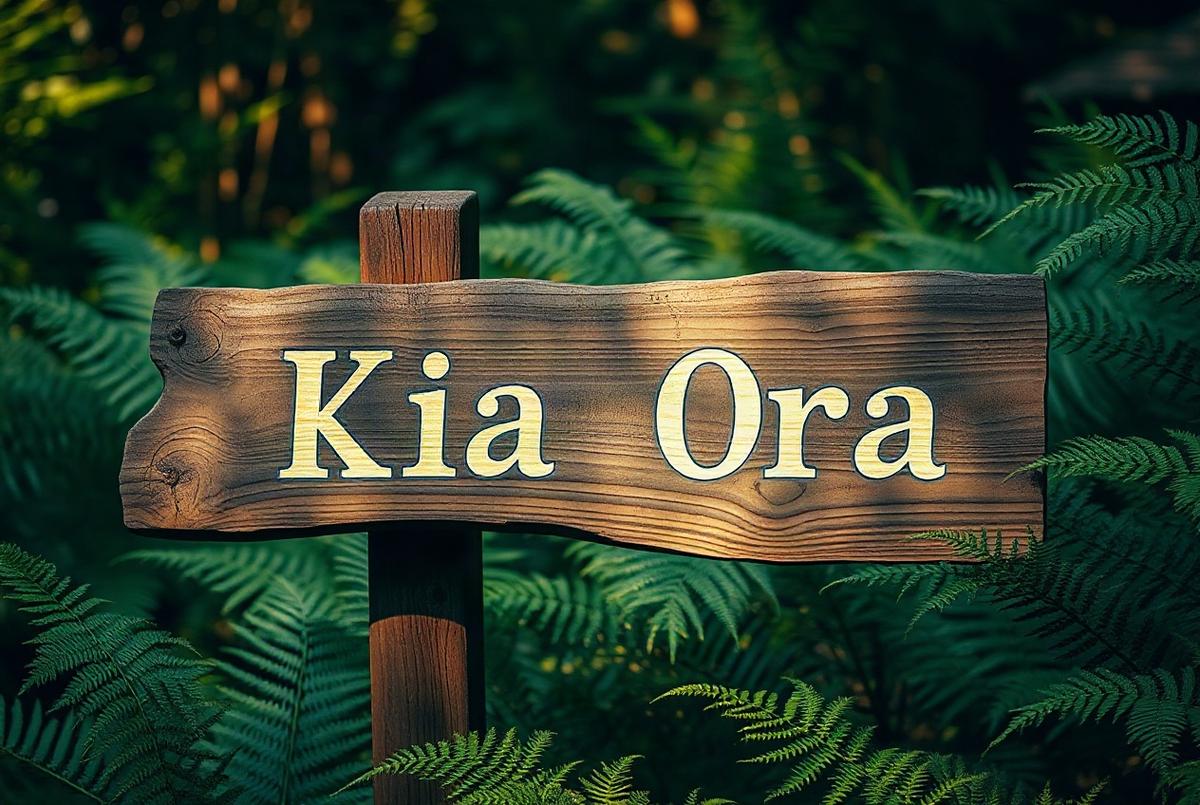
English is spoken everywhere in New Zealand, but the country's other spoken official language, te reo Māori, is woven into daily life — in greetings, place names, signage and everyday conversation. Knowing even a few simple Māori words instantly closes the distance between you and the locals. This article introduces the te reo Māori basics that will genuinely come in handy while you travel or live in New Zealand.
In this guide, we break down the essential Māori phrases — plus a few uniquely Kiwi turns of phrase in English — that will make your communication in New Zealand richer and smoother. From greetings to everyday conversation and expressions you'll actually use on the road, it's packed with tips for understanding the local culture and connecting with people. Learning just a handful of phrases can make your New Zealand experience remarkably more special. Let's dive into the language together!
Māori Greetings: Start with Kia Ora
The first words you'll exchange after arriving in New Zealand are greetings. Here are the most fundamental and important greeting expressions in te reo Māori, with pronunciation guides and their English equivalents. Using them is also a great way to show respect for the local culture — give them a go.
Essential Greeting Phrases in Te Reo Māori
The Māori greeting you'll hear most often in New Zealand is "Kia ora" (kee-ah aw-rah). It's a wonderfully versatile word that can mean "hello," "thank you," "good luck," "be well" and more — the equivalent of English "Hello," "Hi," "Thanks," or "Cheers," and it's used with a great deal of warmth.
Here are the basic greetings for different times of day and situations.
- Hello / Thanks / How's it going? (all-purpose):
- Te Reo Māori: Kia ora (kee-ah aw-rah)
- English equivalent: Hello / Hi / Cheers / Thanks
- Good morning:
- Te Reo Māori: Mōrena (maw-reh-nah) / Ata mārie (ah-tah maa-ree-eh)
- English equivalent: Good morning
- Hello (more formal):
- Te Reo Māori: Tēnā koe (teh-naa kweh – to one person) / Tēnā kōrua (teh-naa kaw-roo-ah – to two people) / Tēnā koutou (teh-naa koh-toh – to three or more) – a more respectful greeting
- English equivalent: Hello / Good afternoon
- Good evening:
- Te Reo Māori: Pō mārie (paw maa-ree-eh)
- English equivalent: Good evening
- Goodbye (said to someone who is leaving):
- Te Reo Māori: Haere rā (high-reh raa)
- English equivalent: Goodbye / See you
- Goodbye (said to someone who is staying):
- Te Reo Māori: E noho rā (eh naw-haw raa)
- English equivalent: Goodbye / See you
- Thank you:
- Te Reo Māori: Kia ora (kee-ah aw-rah)
- English equivalent: Thank you / Thanks / Cheers
- You're welcome:
- Te Reo Māori: Kei te pai (kay teh pie – also carries the sense of "it's all good")
- English equivalent: You're welcome / No problem / All good
What Makes Māori Greetings Different
A distinctive feature of Māori greetings — especially "Tēnā koe / kōrua / koutou" — is that the form changes depending on how many people you are addressing. This reflects the importance that te reo Māori places on relationships and context.
"Kia ora" is very casual and used in almost any setting, while "Tēnā koe" and its variations suit slightly more formal occasions or moments when you want to show particular respect. That said, as a visitor you'll be warmly received using "Kia ora" in nearly every situation.
🇳🇿 Try These Essential Māori Greetings! 🗣️
All-purpose ✨
Kia ora
(kee-ah aw-rah)
🗣️ **Meaning:** Hello, thank you, how's it going, cheers, and more
💡 **When to use it:** The most common greeting of all — anytime, with anyone. Try it with shop staff or people you pass on the street!
Morning ☀️
Mōrena
(maw-reh-nah)
Ata mārie
(ah-tah maa-ree-eh)
🗣️ **Meaning:** Good morning
💡 **When to use it:** In the morning — perfect for café and hotel staff.
Respectful greetings (formal) 🙏
Tēnā koe
(teh-naa kweh)
🗣️ **Meaning:** Hello (to one person)
Tēnā kōrua
(teh-naa kaw-roo-ah)
🗣️ **Meaning:** Hello (to two people)
Tēnā koutou
(teh-naa koh-toh)
🗣️ **Meaning:** Hello (to three or more people)
💡 **When to use it:** In slightly formal settings, or when you want to show respect. The form changes with the number of people.
A Few Notes on Greeting the Locals
New Zealanders (known as Kiwis) are generally friendly and casual. When greeting someone, the basics are simple: smile and make eye contact.
- Eye contact: Meet the other person's eyes in a friendly, relaxed way.
- Tone of voice: Bright and clear.
- Using te reo Māori: Even if your pronunciation isn't perfect, the effort to use Māori is received warmly. Don't hesitate to lead with "Kia ora."
- Handshakes: Common when meeting someone for the first time or in business settings, but not required for everyday greetings.
- Hugs and the hongi: Close friends may hug. The traditional Māori greeting, the "Hongi" — pressing noses together — is reserved for special ceremonies and moments of deep respect. Travellers rarely encounter it, but if you're ever invited to take part, follow your host's lead.
Māori Pronunciation: Five Vowels and Two Rules
Te reo Māori is phonetically consistent — once you know the sounds, you can read any word on a road sign. That is more than can be said for English.
The five vowels never change. This is the whole foundation of Māori pronunciation:
- a — as in "car"
- e — as in "egg"
- i — "ee" as in "feet"
- o — as in "or"
- u — "oo" as in "boot"
A macron (ā, ē, ī, ō, ū) simply means you hold the vowel longer. It changes meaning, so it is worth noticing: keke is cake, kēkē is armpit.
Two consonant rules cover most mistakes visitors make:
- wh is said like an English f. Whangārei is "fa-nga-REI"; whānau (family) is "FAH-no".
- ng is the sound in "singer", not "finger" — no hard g. Ngāi Tahu, Whanganui.
Stress usually falls on the first syllable, and the r is a light tap closer to a Spanish r than an English one. Say each vowel and you will be understood: New Zealanders are used to visitors trying, and trying shows respect for Māori language and culture in a way that saying nothing does not.
Common Māori Words and Phrases for Everyday Use
Once you've got greetings down, try some simple everyday conversation. Here are the phrases — in English and te reo Māori — that are especially useful while travelling, organised by situation.
Handy Phrases for Travellers
These are worth memorising for moments when you need help, want to ask for something, or want to say thanks.
| Situation | English phrase | Te Reo Māori (optional) | Pronunciation / notes |
| Saying thanks | Thank you / Thanks / Cheers | Kia ora | kee-ah aw-rah |
| Apologising | Sorry / Excuse me | Aroha mai | ah-raw-hah my |
| Making a request | Could you please…? / Can I have…? | ||
| Asking directions | Where is the…? | Kei hea te…? | kay heh-ah teh…? |
| Asking the price | How much is this? | ||
| When you don't understand | Sorry, I don't understand. | ||
| Asking someone to slow down | Could you speak more slowly, please? | ||
| Saying yes | Yes / Yeah / Sure / All good | Āe | aa-eh |
| Saying no | No / Nah | Kāore | kaa-aw-reh |
| When you need help | Can you help me? / I need help. | ||
| When you feel unwell | I don't feel well. | Kei te māuiui ahau | kay teh maa-oo-ee-oo-ee ah-how |
| Asking for a photo | Could you take a picture, please? |
Tip: There's no pressure to use the te reo Māori phrases, but "Kia ora" and "Kei te pai" ("all good") are easy wins that help break the ice with locals. Start with what feels comfortable and build from there.
Sample Conversations by Situation
1. Ordering at a café
- You: Hi, can I please have a flat white and a muffin?
- Staff: Sure. Anything else?
- You: No, that's all. Thanks.
- (When picking up your order) You: Kia ora! (Thanks!)
2. Asking for directions
- You: Excuse me, where is the nearest bus stop?
- Local: Go straight down this road and turn left at the corner. You'll see it.
- You: Thank you very much!
- (Or, for a friendly local touch) You: Kia ora!
3. At a souvenir shop
- You: How much is this?
- Staff: It's $25.
- You: Okay, I'll take it.
- Staff: Great. Cash or card?
- You: Card, please.
- (After paying) You: Cheers!
Te Reo Māori and the Official Languages of Aotearoa
English dominates day-to-day life in New Zealand, but te reo Māori holds an important place as an official language. Knowing the background of both languages will deepen your understanding of the country itself.
Basic Māori Vocabulary
Māori pronunciation is quite consistent once you know the rules. The vowels (a, e, i, o, u) are short and pure — closer to Spanish or Italian vowels than English ones — while long vowels (ā, ē, ī, ō, ū, written with a macron) are simply held longer. Two consonant combinations to note: "wh" is pronounced close to an "f" sound, and "ng" is a soft nasal sound, like the "ng" in "singer."
Here are basic Māori words you'll encounter in everyday life and in place names.
| Te Reo Māori | Pronunciation guide | Meaning | Notes |
| Aotearoa | ao-teh-ah-raw-ah | New Zealand | Means "land of the long white cloud" |
| Māori | maa-aw-ree | Māori (the people) | The indigenous people of New Zealand |
| Pākehā | paa-keh-haa | New Zealander of European descent | |
| Whānau | faa-noh | Family (in a broad sense) | Includes community, not just blood relatives |
| Kai | kye | Food, a meal | You'll spot it on restaurant signs |
| Wai | why | Water | Common in place names (e.g. Waiheke) |
| Maunga | moh-ngah | Mountain | Common in place names (e.g. Maunganui) |
| Moana | maw-ah-nah | Sea, large lake | |
| Aroha | ah-raw-hah | Love, compassion | |
| Mana | mah-nah | Prestige, spiritual power | A key concept in Māori culture |
| Tapu | tah-poo | Sacred, forbidden | Marks sacred sites or special rules |
| Haka | hah-kah | Traditional Māori dance | Famously performed by the All Blacks, NZ's national rugby team |
| Pōwhiri | paw-fi-ree | Māori welcome ceremony | Held at a Marae (meeting grounds) and other venues |
Pronunciation practice tip:
Many online Māori dictionaries include audio recordings — Te Aka Māori Dictionary is an excellent one. Take your time and let the sounds become familiar bit by bit.
The Cultural Background of New Zealand's Languages
New Zealand has three official languages: English, te reo Māori, and New Zealand Sign Language (NZSL).
- English: Brought by British settlers, it is the most widely spoken language. New Zealand English is known for its distinctive accent and slang — for example, "sweet as" (great!), "dairy" (a small corner shop or convenience store), and "togs" (swimwear).
- Te Reo Māori: The language of the Māori, New Zealand's indigenous people. The number of speakers once declined sharply, but in recent decades a vigorous language revitalisation movement has promoted its use in schools and public life. You'll encounter it daily in place names, government agency names, and greetings. Knowing te reo Māori is key to a deeper understanding of New Zealand's history and culture.
- New Zealand Sign Language (NZSL): Recognised as an official language in 2006. It serves the Deaf community and is a fully independent language with its own grammar and vocabulary.
Māori culture and English today:
Respect for te reo Māori and Māori culture is increasingly emphasised across New Zealand society. Public broadcasters air programmes in Māori, and road signs and official documents increasingly carry bilingual Māori-English text. English-speaking Kiwis commonly sprinkle simple Māori — especially greetings — into everyday speech. This coexistence and mutual influence of two languages and cultures is a defining feature of modern New Zealand.
Words You Will Hear Everywhere in New Zealand
Some Māori words are simply part of how New Zealanders speak English. You do not need to be learning a language to use them — they are commonly used in New Zealand by everyone.
- Haere mai — welcome. On signs at every airport, marae and school gate.
- Whānau — family, in the wide sense that includes the people you choose.
- Tangata whenua — people of the land; Māori as the indigenous people of Aotearoa.
- Taonga — treasure. Used for objects, places and the language itself.
- Tikanga — the customs and protocol that govern how things are done, especially on a marae.
- Te ao Māori — the Māori world: the worldview, values and relationships behind the words.
- Kai — food. Pai — good. Mahi — work. All three turn up in ordinary conversation.
Te reo Māori is an official language of New Zealand alongside New Zealand Sign Language — English is the everyday language by custom rather than by statute. That legal status matters: te reo was in real danger of being lost within living memory, and the effort to keep the language alive is why you now hear it on the news, in Parliament and at the supermarket checkout. Learning basic Māori words as a visitor is not tokenistic; it is the opposite.
Learning Māori Words on the Road: Tips for Travellers
A language or accent barrier can be a source of anxiety when travelling. But with a few small tricks, communication becomes much easier.
🗣️ Tips for Smooth Communication While Travelling 💡
Speak slowly
Don't rush — speak at an easy-to-follow pace. It's perfectly fine to ask the other person to slow down too!
Keep it simple
Skip complicated words and grammar — aim to get your point across in the simplest way possible.
Use gestures
When words alone don't do the job, a bit of body language makes you much easier to understand.
Smile and make eye contact
A friendly attitude crosses any language barrier. Lead with a smile.
Lean on translation apps
When you're really stuck, translation apps and dictionaries are reliable backups.
You don't need to be perfect — what matters is the effort to connect.
Communication Tips for Your Trip
- Ask people to repeat themselves: Don't be shy about saying "Sorry?" or "Could you say that again?"
- Writing things down works: A notes app on your phone, or a small notepad and pen, can be a lifesaver. Place names and addresses in particular are much clearer written down.
- Ask people around you for help: If you look like you're struggling, a kind Kiwi will often step in to help.
- Don't fear mistakes: Even with imperfect grammar or pronunciation, people will meet you halfway if you're genuinely trying. Aim to enjoy the conversation rather than to be perfect.
- Get used to "Kiwi English": New Zealand's distinctive expressions and slang may throw you at first. If you don't understand something, just ask what it means — that's part of the fun of cultural exchange.
Efficient Ways to Pick Up the Language
Learning even a little of the local language before your trip makes it twice as enjoyable.
- Use apps: Language apps like Duolingo and Memrise let you learn basic Māori greetings and vocabulary in a fun, game-like way.
- Carry a phrase list: Print out a phrase collection like this one, or save it to your phone, so it's always within reach.
- Videos and music: YouTube is full of New Zealand travel content and te reo Māori learning channels. Discovering the language through music is another enjoyable route.
- Use it on the ground: Once you've learned a phrase, use it — mistakes and all. Actually saying the words is what makes them stick.
Why Learn Te Reo Māori
You can get by in New Zealand just fine with English alone, but knowing even a little te reo Māori opens the door to a much deeper experience.
Why Te Reo Māori Matters for Travellers
Te reo Māori is more than a communication tool. It carries the soul, history and culture of New Zealand itself.
- Respect for the culture: Simply greeting someone with "Kia ora" shows that you hold Māori culture in respect.
- Connection with locals: Using simple Māori phrases can close the emotional distance with local people — especially Māori — and lead to warmer exchanges.
- Understanding place names: Many of New Zealand's place names come from te reo Māori. Knowing what the words mean deepens your appreciation of each place's history and character. "Rotorua," for example, means "second lake."
- Reading signs and notices: Māori text is appearing in more and more public places. Knowing basic words helps you guess the meaning.
What You Gain by Using Te Reo Māori
Engaging with te reo Māori is worth far more than the words themselves.
🌿 The Rewards of Engaging with Te Reo Māori 🌟
Deeper cultural understanding
Through the language, you can connect with Māori values (e.g. Whānau, Mana) and a distinctive worldview.
Warmer connections with locals
Even a simple greeting (Kia ora!) conveys respect and can become a conversation starter.
A more unique trip
Learning the meanings of place names and noticing words that come from te reo Māori adds little discoveries throughout your journey.
A small attempt at te reo Māori might just create your most unforgettable memory.
- A fresh perspective: Every language reflects the worldview of its culture. Engaging with te reo Māori lets you sense a side of New Zealand that a purely Western lens misses.
- Unforgettable memories: The joy of getting a "Kia ora" back, the surprise of discovering what a Māori place name means — these small wins colour the memory of your trip.
- A spark for further learning: Starting with simple words may kindle an interest that leads you deeper into te reo Māori and Māori culture.
While you're in New Zealand, seek out chances to engage with te reo Māori. It's sure to make your journey deeper and more meaningful.
Summary: Connecting Through Language in New Zealand
Day-to-day communication in New Zealand happens mainly in English, but engaging with te reo Māori — the country's other spoken official language — makes any trip richer. This article covered handy everyday phrases along with simple Māori greetings and vocabulary, starting with "Kia ora," and the cultural background behind them.
- Greetings come first: "Kia ora" is the all-purpose Māori greeting. Use it freely and often.
- English is the default, but Māori matters: Everyday conversation runs on English, yet knowing a little te reo Māori deepens your cultural understanding and can smooth your interactions with locals.
- Enjoy the conversation: Don't fear mistakes — smile, keep your words simple, use gestures, and engage actively.
- Te reo Māori is a doorway to the culture: Engaging with the language is a precious opportunity to understand New Zealand's history, culture, and values.
Language is the bridge between people and between cultures. We hope the phrases introduced here help spark wonderful encounters and experiences during your time in New Zealand. Dip into the local language and savour everything Aotearoa — the Māori name for New Zealand — has to offer.
Want to explore te reo Māori and New Zealand culture further? These resources are a great next step.
- Te Aka Māori Dictionary: An online Māori dictionary with audio pronunciation
- Tourism New Zealand: Travel information plus plenty of cultural background
Disclaimer: This article was created with the help of AI-generated information. While we strive to provide the most up-to-date and accurate information possible, details may become outdated or change over time. For information that changes frequently — such as prices and opening hours — always check official websites for the latest details. This article is intended as general information only and is not advice for individual circumstances. Its content may be updated in the future based on personal experience and additional information.