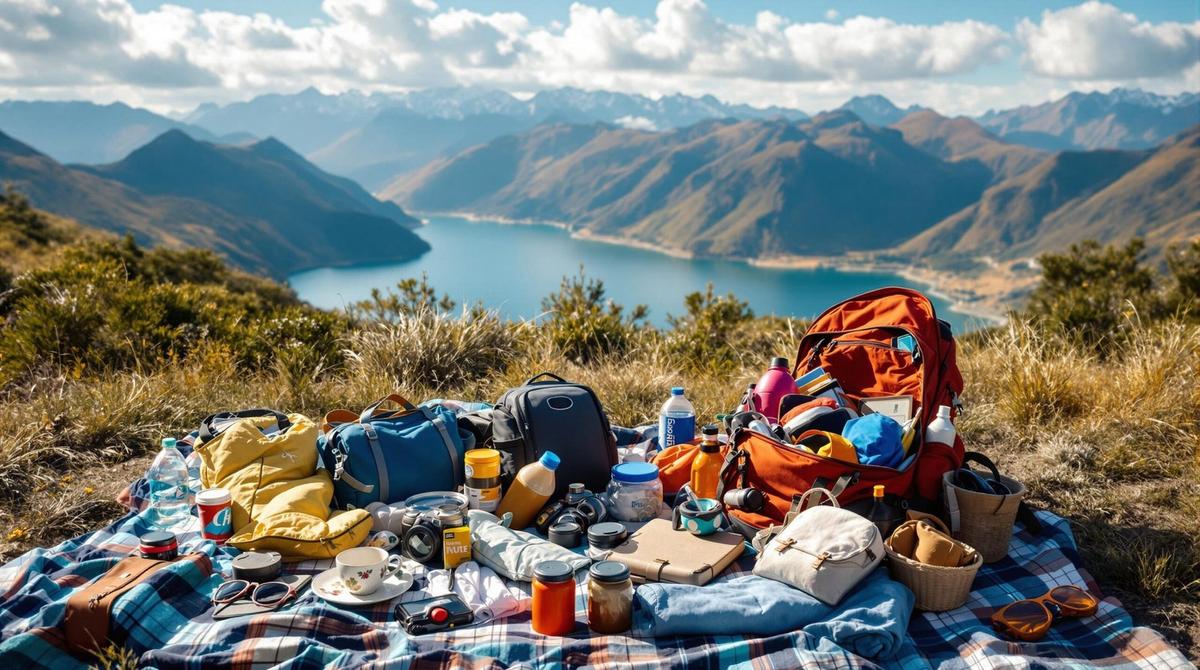
Getting your packing right before you leave for New Zealand is one of the most important steps toward a comfortable stay once you arrive.
New Zealand offers spectacular wilderness, multicultural cities, and one-of-a-kind activities — but its climate and environment may be quite different from what you're used to, and many travelers find themselves wondering, "What exactly should I bring?" and "What can I just buy over there?"
This article gives you a comprehensive, up-to-date packing list (as of August 2026) so you can prepare with confidence — from absolute essentials to season-specific advice and nice-to-have extras, along with key precautions. Whether you're a short-term visitor, an international student, or on a working holiday, there's plenty of useful information here. Read through to the end and start your New Zealand adventure fully prepared!
The Essential New Zealand Packing List
First, let's cover the items you absolutely cannot forget, no matter why you're traveling to New Zealand. These are things that are difficult to replace or take time to reissue, so double-check them — repeatedly — before departure.
Top Priority: New Zealand Essential Documents Checklist 🛂✈️📄
1. Passport (original) 📖
Must be valid for your stay plus at least 3 months. Prepare copies stored separately.
2. Visa / NZeTA ✅
Confirm you have the right visa or NZeTA (electronic travel authority) for your purpose. Print it or save it on your phone.
3. Flight Tickets (e-tickets) ✈️
Print your booking confirmation and save it on your phone. You may be asked to show a return or onward ticket out of NZ.
4. Travel Insurance Certificate 🛡️
Insurance is a must in case of illness or accidents. Keep your policy number and emergency contact numbers handy.
5. Cash (NZ dollars / home currency) 💲💴
Carry a small amount of NZD for immediate use on arrival. A little of your home currency is also reassuring, just in case.
6. Credit Cards 💳
Visa and Mastercard are the most widely accepted. Bringing more than one card is safest. Don't forget to confirm your PIN.
*Information current as of August 2026. Always check the latest details before you travel.
- Passport: Your passport must be valid for at least 3 months beyond your planned departure date from New Zealand. Check well in advance and renew it if needed. In case of loss or theft, we strongly recommend keeping copies of the photo page (both paper and digital) stored separately from the original.
- Visa / NZeTA: For short tourist stays (usually up to 3 months), travelers from many countries are visa-waiver eligible, but you must apply for and obtain an NZeTA (New Zealand Electronic Travel Authority) before departure. If your purpose requires a specific visa — such as a student visa or working holiday visa — be sure to secure it in advance. Print your approved visa or NZeTA, or save it securely on your smartphone. Check the official Immigration New Zealand website for the latest requirements.
- Flight tickets (e-tickets): Print a copy of your e-ticket with your booking details and save it on your smartphone as well. At immigration, you may be asked to show a return ticket or an onward ticket to a third country.
- Travel insurance certificate: Medical costs in New Zealand can be very high. Always take out travel insurance to cover illness, injury, or theft. Keep your policy certificate (or proof of cover), emergency contact numbers, and the information needed to file a claim easily accessible. If you plan to rely on insurance bundled with your credit card, carefully verify the coverage and eligibility conditions before you leave.
- Cash (New Zealandlars / home currency): New Zealand is largely cashless, but it's reassuring to have a minimal amount of NZD cash ready for immediate needs after arrival — think airport transport or purchases at small shops (a rough guide: New Zealand–200). A small amount of your home currency is also handy for transport when you return home or for unexpected situations. (Indicative rate as of August 2026: 1 NZD ≈ approx. ¥93 — exchange rates fluctuate constantly.)
I only exchanged a small amount of cash into New Zealand dollars after landing at the airport. Once I'd opened a local bank account, I did most of my shopping with that card — so honestly, exchanging just the bare minimum is all you need!
- Credit cards: Cards will be your main way of paying for everything on the ground — accommodation, food, transport, activities — so always bring more than one. Visa and Mastercard are widely accepted; JCB and American Express work only in limited places. Before departure, check your credit limits and expiry dates, and make sure you know your card PIN. As a precaution against skimming, don't forget to sign the back of each card.
Take care with how you manage these essentials so you don't lose them. Keep your passport, cash, and credit cards in separate places, and carry copies stored apart from the originals. (More on this in the "Staying Safe and Comfortable" section below.)
Four Seasons in One Day: What to Wear by Season in New Zealand
New Zealand sits in the Southern Hemisphere, so its seasons are the reverse of the Northern Hemisphere's. The weather is also famously changeable — locals say you can experience "four seasons in one day." What you should pack varies significantly depending on when you visit.
Summer (December–February): Sun Protection and Light Clothing
New Zealand's summer sun is intense, and UV protection is essential. Temperatures vary by region — the North Island stays warm, and even in the South Island most days are comfortable in a T-shirt.
- Clothing: Mostly summer wear — T-shirts, shorts, dresses. That said, always pack a light long-sleeve shirt or cardigan for cool mornings and evenings, air-conditioned spaces, and sun protection. Don't forget swimwear (you'll want it at beaches, lakes, and hot springs).
- Must-haves:
- Sunscreen: Bring a high-protection product such as SPF50+ / PA++++ from home if you have a brand you trust. You can buy sunscreen locally, but it may not suit your skin. Reapply frequently.
- Sunglasses: With proper UV protection.
- Hat: A wide brim is ideal.
- Layering piece: A light long-sleeve shirt, cardigan, or hoodie.
- Other: Flip-flops (jandals), insect repellent (especially if you're heading into nature).
Winter (June–August): Serious Cold-Weather Gear — Layering Is Key
Winter can be harsh, especially in the South Island's inland and alpine areas, where it snows. In the North Island, cities like Auckland see frequent rain and chilly days. Even in urban areas, heating is often less powerful than you may be used to, so prepare for the cold both indoors and out.
- Clothing: Thermal base layers (such as Uniqlo Heattech), fleece, sweaters, and a down jacket or waterproof, windproof outer layer are essential. Plan to layer so you can regulate your body temperature. For bottoms, choose warm fabrics or wear tights or leggings underneath.
- Must-haves:
- Warm outer layer: A waterproof, windproof down jacket or coat.
- Cold-weather accessories: Gloves, scarf, beanie.
- Warm base and mid layers: Thermal underwear, fleece, sweaters.
- Waterproof footwear: Shoes that can handle rain and snow — non-slip soles are a plus.
- Other: A folding umbrella (especially for the North Island), hand warmers (if needed), lip balm and hand cream (for the dry air).
Spring (September–November) and Autumn (March–May): Dress for Adjustability
Spring and autumn are pleasant seasons, but the weather is unstable and temperature swings are large. This is when you'll most likely experience "four seasons in one day" for yourself.
- Clothing: Base your outfits on long-sleeve shirts, blouses, and light knits. Layering you can adjust is the key. Even when days are warm, mornings and evenings get cold, so a jacket, cardigan, or hoodie is essential. Because the weather changes quickly, **a light waterproof, windproof outer layer (such as a windbreaker)** is extremely useful.
- Must-haves:
- Adjustable clothing: Long sleeves, short sleeves, layering pieces (jacket, cardigan, etc.).
- Waterproof, windproof outer layer: For sudden rain and wind.
- Comfortable walking shoes: Sneakers or similar.
- Other: Folding umbrella, sunglasses, sunscreen (UV levels stay high year-round).
New Zealandson-by-Season Clothing Guide 👕🌦️
Summer (Dec–Feb) ☀️
T-shirts/shorts/dresses + a light long-sleeve layer (key).
👒 Sunglasses, 🧴 high-SPF sunscreen
Winter (Jun–Aug) ❄️
Thermal base layers + fleece/sweater + waterproof insulated outer layer (key).
🧤 Gloves, 🧣 scarf, 🧢 beanie
Spring (Sep–Nov) 🌸
Adjust with layers.
Long sleeves + a layering piece + weatherproof windproof outer layer
Autumn (Mar–May) 🍁
Adjust with layers.
Long sleeves + a layering piece + weatherproof windproof outer layer
Every season: comfortable walking shoes👟, rain gear☔ (a rain jacket is especially practical)
Whatever the season, if you plan to go tramping or do other outdoor activities, pack the appropriate clothing and gear — hiking boots, quick-dry clothing, a backpack, and so on.
Nice to Have: Items That Make Your Stay More Comfortable
These aren't strictly key, but they'll make your time in New Zealand noticeably more comfortable. Pick and choose based on your travel style and length of stay.
- Electronics:
- Plug adapter (Type I): Essential for using appliances from home. Having several is handy.
- Voltage converter: Needed only if you want to use single-voltage appliances (for example, 100V-only hair dryers or hair straighteners from Japan). Most modern phone and laptop chargers support 100–240V, so check the label on your adapter first. If your device isn't dual voltage, you'll need a converter — but they're heavy and bulky, so think hard about whether it's worth it. For things like hair dryers, buying locally or using the one at your accommodation is often easier.
- Power bank: Keeps your smartphone alive while you're out — a must if you rely heavily on maps and your camera.
- Camera and spare SD cards: If you want to capture all that scenery, bring plenty of storage or a spare card.
- Everyday and hygiene items:
- Regular medications: The cold medicine, stomach medicine, painkillers, and motion-sickness tablets you normally use. If you have a chronic condition, bring your prescription along with an English-language doctor's letter.
- Plasters and antiseptic: For minor cuts and scrapes.
- Insect repellent and anti-itch cream: Especially in summer or in nature-heavy areas. Watch out for sandflies — tiny biting insects found in some regions.
- Toiletries and cosmetics: Travel sizes of the products you know and trust. Everything is available locally, but quality and prices vary.
- Sanitary products: Available locally, but quality and variety may differ from what you're used to — if you have strong preferences, bring your own.
- Contact lenses and glasses: Bring spares, and don't forget lens solution.
- Pocket tissues and wet wipes: Useful in all sorts of situations.
- Nail clippers, cotton swabs, etc.: Handy for longer stays.
- Clothing and laundry:
- Loungewear: For relaxing at your hotel or hostel.
- Laundry net: Protects your clothes in laundromat or hostel washing machines.
- Travel detergent, clothesline, and pegs: Convenient for frequent washing on longer stays.
- Other:
- Folding umbrella: For city sightseeing and sudden showers. Wind is frequent and strong, though, so choose a sturdy one — in many situations a rain jacket is more practical.
- Reusable shopping bag: Supermarkets in New Zealand have phased out or charge for plastic bags, so bringing your own is convenient and saves money. One that folds down small won't take up space.
- Ziplock and plastic bags: Great for wet items, organizing small things, and storing food.
- Water bottle or tumbler: Tap water is drinkable in most areas, so refilling saves money and is eco-friendly. Some cafés even offer a discount for bringing your own cup.
Bottled drinks add up fast here, and since I feel the cold easily, I love carrying a hot drink with me in winter. Bringing my own bottle turned out to be a lifesaver!
- Comfort foods and seasonings from home: Miso soup, furikake, instant meals, favorite condiments, and the like. On a long stay, you'll be glad to have them when you miss the flavors of home. Staples like soy sauce and mirin are sold at local Asian grocery stores, but often at a premium.
- Guidebook and phrasebook: Smartphone apps are convenient, but a paper backup is reassuring in areas with no signal or when your battery dies.
- Neck pillow, eye mask, earplugs: They make the long flight — and long bus or train journeys — far more comfortable.
- Pen and notebook: For quick notes and swapping contact details.
- International Driving Permit: Required if you plan to rent a car. Bring your home country's driver's license too.
Bring It from Home, or Buy It in New Zealand?
One of the trickiest packing decisions is whether to bring something with you or buy it after you arrive. Here's a quick decision guide.
| Category | Recommended to Bring from Home | Easy to Buy Locally | Tips and Cautions |
|---|---|---|---|
| Medicines & Toiletries | Regular and prescription medications, skincare and cosmetics you know suit you, high-SPF sunscreen, preferred sanitary products | General cold medicine, plasters, shampoo and conditioner, toothpaste, standard sanitary products | If you have sensitive skin or allergies, bringing your own is safest. Carry English-language documentation for prescription medication. |
| Clothing | High-performance thermal base layers (such as Uniqlo Heattech), clothing in hard-to-find sizes or styles, formalwear (if needed) | T-shirts, jeans, sweaters, everyday outerwear | Local brands are stylish, but prices are on par with or slightly above what you'd pay at home. Watch out for different sizing conventions. |
| Electronics | Your own smartphone, laptop, camera, plug adapters, power bank | SIM cards, charging cables (if forgotten), hair dryers (mind the voltage) | A plug adapter is key. Check whether you need a voltage converter. SIM cards are often cheaper bought locally. |
| Food | Favorite foods from home (instant meals, seasonings, snacks), green tea bags | Basic groceries, some Japanese and Asian ingredients (soy sauce, rice, etc.) | Mind New Zealand's strict biosecurity import rules (especially meat products, dairy, honey, and fruit). Declaration may be required. Asian grocery stores stock many items, but prices run high. |
| Other | Folding umbrella (light and compact), reusable shopping bags, laundry net, stationery | Stationery, umbrellas, reusable bags, basic travel goods | All available locally, though the versions from home are sometimes cheaper and better quality. |
As a general rule, bring items that are a matter of personal preference, familiar products that give you peace of mind, or things that are cheaper and easier to find at home. On the other hand, everyday goods like shampoo and toothpaste, along with basic clothing, are easy to buy locally with no trouble. Airline baggage limits are real — shop smart on arrival for anything you can get in New Zealand.
Hiking Gear: Boots, Layers and a Day Pack
Even if you have no plans for hiking in New Zealand, the country will tempt you into it. A short day hike is the default afternoon activity almost everywhere, and half the famous New Zealand experiences — Milford Sound, Doubtful Sound, the hills above Queenstown — start with a walk, so a minimum of hiking gear earns its space in the suitcase.
- Hiking boots or trail shoes: broken in before you fly, never on the plane out. Tracks here are rooty, rocky and often wet; road trainers will do for a lakeside stroll and nothing harder.
- A weatherproof shell: not a water-resistant jacket. Rain on the West Coast arrives sideways.
- A fleece or light down layer: the temperature drops fast when the sun goes behind a ridge, even in February.
- Hiking pants that dry: synthetic or merino, not denim.
- A 20–30 litre day pack: big enough for the shell, lunch, a water bottle and a camera.
- Merino base layers: the local speciality, lightweight and easy to pack, and worth buying once you arrive rather than carrying from home.
- Boots with ankle support: more useful than grip alone on the rooty descents.
- A small first aid kit: blister plasters above all.
Sunscreen and Sunglasses: New Zealand’s Ozone Problem Is Real
This is the one thing visitors consistently underestimate about New Zealand’s weather. The ozone layer above New Zealand is thinner than over Europe or North America, the air is unusually clean, and the country sits close enough to the hole in the ozone layer that UV levels in a New Zealand summer run far above what the same latitude delivers in the northern hemisphere. People burn here on overcast days, and faster at altitude. If you are planning a summer trip, treat this as the first line on your checklist for New Zealand.
- Sunscreen at SPF 50+, reapplied. Bring some, then buy the local stuff — it is formulated for these conditions.
- Sunglasses with real UV protection, especially for driving, boats and snow.
- A brimmed hat, which does more than any other single item.
Adapters and Electronics for New Zealand Travel
New Zealand runs on 230V at 50Hz with the angled three-pin Type I plug, the same as Australia. Bring a travel adapter; most phone and laptop chargers handle the voltage themselves, but check anything with a motor or a heating element before you plug it in. Packing cubes and a power bank are both worth carrying for long bus days, and a car phone mount is genuinely useful if you are driving, since offline maps do most of the navigating outside the cities.
Packing Tips for Getting Around New Zealand
A few well-chosen items will make traveling around New Zealand and sightseeing much smoother.
Preparing for Long Journeys (Plane, Bus, Train)
- Neck pillow, eye mask, earplugs: Better sleep on the move. Inflatable versions pack down small.
- A layer or scarf: Cabins and coaches are often over-air-conditioned, so keep something to throw on.
- Entertainment: Books, an e-reader, music, downloaded movies and shows.
- Snacks and drinks: Long-distance buses do make rest stops, but it's good to have something for when hunger strikes. A water bottle helps too.
- Motion-sickness tablets: Don't forget them if you're prone to travel sickness.
- Wet wipes and hand sanitizer: For cleaning your hands and general hygiene.
Recommended Items for Sightseeing
- Comfortable walking shoes: Possibly the single most important item. Whether you're wandering a city or walking in nature, you'll be on your feet for hours — broken-in sneakers or walking shoes are key. Bring hiking boots if you plan to go tramping.
- Daypack or backpack: Perfect for carrying your water bottle, camera, extra layer, and rain gear together. Keeping both hands free is also safer.
- Camera: New Zealand is packed with jaw-dropping views. A smartphone takes great photos, but bring a camera if you're serious about photography.
- Power bank: Map apps and constant searching drain your phone battery fast.
- Water bottle: Refill with tap water and stay hydrated.
- Rain gear (rain jacket or folding umbrella): The weather changes quickly, so keep it with you at all times.
- Sunglasses, hat, sunscreen: Sun protection matters in every season.
- Binoculars: Great for birdwatching and distant scenery.
Getting Around: Points to Keep in Mind
- Watch your belongings: While traveling or sightseeing, keep valuables (passport, wallet, smartphone) on your person, and consider wearing your backpack on your front in crowds. Car break-ins do happen, so never leave belongings visible inside a rental car.
- Public transport: Long-distance buses (such as InterCity) are a convenient, relatively cheap way to travel between cities. Flights (Air New Zealand, Jetstar) can be great value if you catch a sale. Train journeys (KiwiRail) offer wonderful scenery, though routes are limited. Booking ahead is recommended.
- Driving: A rental car gives you the most freedom. New Zealand drives on the left with right-hand-drive vehicles — if that's the opposite of home, take extra care. Review the road rules (roundabouts, signage, etc.) beforehand, take regular breaks on long drives, and drive safely. An International Driving Permit is required.
- Check the weather: Always check the forecast before heading out and adjust your clothing and gear. Mountain weather in particular can change abruptly.
What You Don’t Need to Pack for New Zealand
Finally, here are the key points for a safe, comfortable trip — especially when it comes to managing your belongings.
How to Protect Your Passport and Important Documents
Losing your passport, visa, tickets, or insurance documents — or having them stolen — is a serious headache. Spread the risk with these methods.
Protecting Important Documents from Loss & Theft 🔒📄💾
1. Make Paper Copies
Copy your passport photo page, visa, and tickets, and store them separately from the originals (in your suitcase, for example).
2. Save Digital Copies
Photograph or scan your documents and save them to cloud storage (Google Drive, Dropbox, etc.) or email. Make sure they're accessible offline too.
3. Split Things Up
Keep your original passport in a security pouch on your body or in the hotel safe. Carry the copy when you're out.
💡 Make an emergency contact list (family back home, your embassy/consulate, insurance company, card issuers) and keep it on paper and digitally.
- Copy and digitize: Always make paper copies of your passport photo page, visa, NZeTA, flight tickets, and travel insurance certificate, and keep them in a different bag from the originals (your suitcase, for instance). On top of that, photograph or scan them and upload to cloud storage (Google Drive, Dropbox, etc.) or email them to yourself — a lifesaver if you lose both the originals and the paper copies.
- Split storage: Think carefully about whether you really need to carry your original passport when going out. It's less risky to leave it somewhere secure like the hotel safe and carry a copy instead. Likewise, don't keep all your cash and cards in one wallet — split them across a few places.
- Prepare emergency contacts: Make a list of your family's contact details back home, your country's embassy or consulate in New Zealand, your travel insurance emergency line, and your card issuers' lost/stolen hotlines. Keep it in both paper and digital form.
Reducing Worry While You're There
- Safety: New Zealand is a relatively safe country, but don't let your guard down completely. Pickpocketing, bag snatching, and car break-ins do occur, especially in urban areas. Keep an eye on your valuables, avoid walking alone at night, and don't follow strangers — basic street smarts go a long way. For details, check resources such as SafeTravel (the New Zealand Ministry of Foreign Affairs and Trade's travel safety site).
- Stay connected: Buy a local SIM card, use your home carrier's international roaming, or rent a portable Wi-Fi router — whatever you choose, being able to communicate and look things up at any time is reassuring, and vital in an emergency.
- Payment backup: Cards are the norm, but keep a small amount of cash for the rare places that don't accept them. Know your card PINs by heart and check your statements regularly.
- Emergencies: Know who to call if you get sick or have an accident (your insurer, a hospital), and memorize New Zealand's emergency number for police, fire, and ambulance: 111.
What You Don’t Need to Carry From Home
A packing list for New Zealand is as much about what to leave out. Pack light: this is a country of casual wear, where a restaurant that requires a jacket is a rarity and nobody will notice the same fleece three days running. Skip formal clothes, skip the hairdryer your accommodation already has, and skip bulk toiletries — supermarkets are everywhere and cheaper than excess baggage.
- Too many outfits. Two weeks travelling in New Zealand needs about five days of clothing plus a sink. Washing clothes in the sink at night is normal here, and most hostels and holiday parks have laundries.
- Heavy winter coats for a summer trip. A packable puffer jacket and a waterproof and windproof jacket over merino beat one bulky coat, and you will experience all four seasons in one day anyway.
- Specialist gear you will use once. Hire it. Sleeping bags, chains, camping stoves and even a pair of bike shorts are all rentable.
- Sandals are the exception — bring them. New Zealand in summer runs on jandals, and you will want something for the beach and the shared showers.
Final Thoughts: Pack Well and Enjoy New Zealand
Good packing is a huge part of a successful trip or stay in New Zealand. Beyond confirming the keys, build your list around the season you're visiting, your purpose, and your personal style — and start packing early enough to do it without stress.
We hope this New Zealand packing list and the advice here make your preparations easier. Above all, remember the three keys to a comfortable, safe stay: clothing that handles changeable weather (layers!), serious UV protection, and careful management of your important documents.
Write out your packing list and run a final check before departure. Make sure nothing's forgotten and every required step is done — then set off for New Zealand fully prepared!
Stunning landscapes, friendly people, and a unique culture are waiting for you. Prepare well and enjoy the very best New Zealand has to offer!
Disclaimer: This article was created with the help of AI-generated information. While we strive to provide the most current and accurate information possible, details may become outdated or change. In particular, always verify time-sensitive information such as prices and opening hours on official websites. This article is intended as general information only and does not constitute advice for individual circumstances. The content may be updated in the future based on personal experience and additional information.