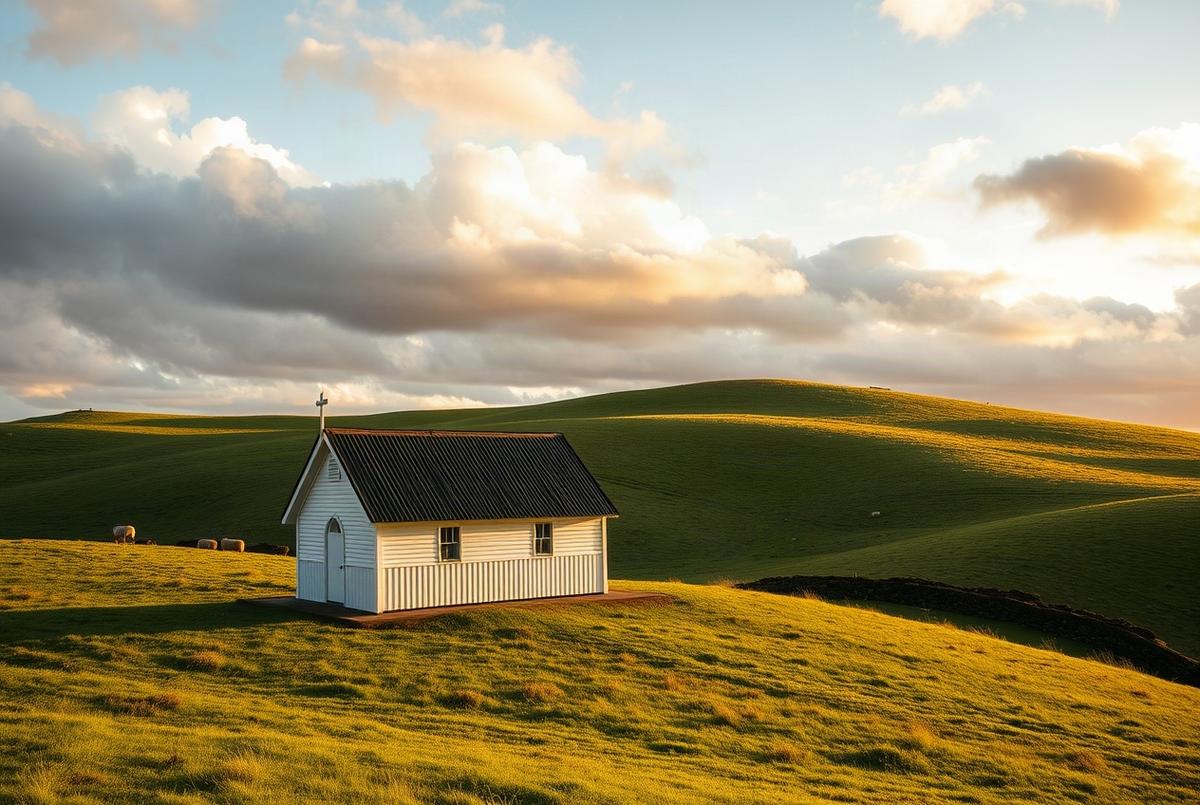
One of the keys to truly understanding New Zealand is the country's distinctive blend of religious outlooks and values, born from the fusion of European culture and the culture of the indigenous Māori people. Traces of this background remain vivid in everyday greetings, public events, and even place names. This article explains how religion in New Zealand developed and how it intertwines with Māori culture, from a perspective that will be useful for daily life and connecting with locals.
This article focuses on the Māori people, New Zealand's indigenous population, and takes a detailed look at their history, traditional culture, spiritual worldview, and their place in modern society. We hope that reading it will help you have a richer, more meaningful experience in New Zealand.
Who Are the Māori, New Zealand's Indigenous People?
No conversation about New Zealand is complete without the Māori people. As the country's "tangata whenua" — the people of the land — they have played a defining role in shaping the nation's identity.
Māori Origins and Settlement in New Zealand
The ancestors of the Māori were Polynesian navigators who voyaged across the vast Pacific Ocean. Around 1,000 years ago, they are believed to have set out from their East Polynesian homeland of "Hawaiki" (a mythical place whose exact geographic location has never been identified), sailing in great canoes called "waka" and navigating by the stars and ocean currents until they reached Aotearoa (the Māori name for New Zealand, meaning "land of the long white cloud"). The first settlers developed their own culture, language, and social structures, forming tribes (iwi) and sub-tribes (hapū) throughout New Zealand.
The Māori Population Today (Estimates as of 2026)
As of 2026, New Zealand's total population exceeds roughly 5.3 million. Of these, people who identify as having Māori ancestry are estimated to make up about 17–18% of the population — more than 900,000 people — making them a vital part of New Zealand society. The most accurate figures come from the national Census conducted every few years, but the Māori population is on an upward trend, and notably, a growing number of younger people identify as Māori. Most live in the North Island, particularly in urban centers such as Auckland, yet many maintain strong connections to their traditional ancestral lands.
A Must-Know: The Rich Traditions and Culture of the Māori
Māori culture is a cornerstone of New Zealand's diversity. Its deep spirituality, artistry, and community-centered values remain powerfully alive in modern society.
The Heart of Māori Culture: Core Values
Several key values lie at the foundation of Māori culture.
- Whanaungatanga: The value placed on connection and relationships with family, kin, and community. This includes bonds forged not only through blood but also through shared purpose and experience.
- Manaakitanga: The spirit of hospitality, kindness, generosity, and mutual respect. It emphasizes the importance of warmly welcoming and caring for visitors.
- Kaitiakitanga: The responsibility of guardianship over the environment — land, water, and natural resources. It expresses a deep connection with nature and a duty to protect it for future generations.
- Mana: A person's prestige, authority, spiritual power, and charisma. Mana can be inherited from ancestors or enhanced through one's achievements and conduct.
These values permeate every aspect of Māori life, from social relationships and ceremonies to decision-making.
The Importance of Te Reo Māori and Its Revival
The Māori language, Te Reo Māori, is often described as the soul of Māori culture. At one point the number of speakers had declined to critical levels, but since Te Reo was legally recognized as one of New Zealand's official languages in 1987, a nationwide revitalization movement has been underway.
Today, Māori-language immersion schools are growing in number — "Kōhanga Reo" (for young children) and "Kura Kaupapa Māori" (primary and secondary schools) — and Māori language and Māori studies thrive at universities. Te Reo is also increasingly used across society, from public broadcasting and signage to official documents. For travelers and international students alike, learning a few basic greetings can go a long way toward smoother, warmer interactions with locals.
Basic Māori Greetings 👋
Kia ora (kee-ah OH-rah) – Hello, thank you, how are you? (an all-purpose greeting)
🗣️ The most commonly used greeting — it works in almost any situation.
Mōrena (moh-REH-nah) – Good morning
🌅 Used as a morning greeting.
Haere mai (HYE-reh MYE) – Welcome
🏠 Used when welcoming someone.
Haere rā (HYE-reh RAH) – Goodbye (said to the person leaving)
👋 Used by the person staying behind to see someone off.
E noho rā (eh NO-ho RAH) – Goodbye (said to the person staying)
🚶♀️ Used by the person who is leaving.
Ka kite anō (kah KEE-teh ah-NAW) – See you again
🤝 Carries the hope of meeting again.
Traditional Arts: Carving, Weaving, and Kapa Haka
Māori art is a vital means of expressing history, mythology, and values.
- Whakairo (carving): Intricate carvings worked into wood, bone, and pounamu (New Zealand jade/greenstone). Whakairo adorns marae (meeting grounds) as well as weapons, tools, and ornaments — and every pattern carries meaning.
- Raranga (weaving): Weaving made from plant fibers such as harakeke (New Zealand flax), used to create clothing, baskets, and mats. Geometric patterns are a defining feature.
- Kapa Haka: A traditional performing art combining song (waiata), dance (haka), and choreography. These powerful performances express Māori identity, history, and emotion, and are celebrated both in New Zealand and abroad. The haka performed by the All Blacks, New Zealand's national rugby team, before their matches is world-famous.
These art forms are far more than decoration or entertainment — they play a crucial role in passing knowledge and stories to the next generation.
Māori History: From European Contact to the Present
Māori history changed dramatically with the arrival of Europeans. The Treaty of Waitangi, signed during that period, remains profoundly important in shaping the foundations of New Zealand society today.
Māori Society Before European Arrival
Before the British explorer James Cook arrived in 1769, Māori society had developed its own tribal structures, customary law (tikanga), and economic activities including agriculture, fishing, and hunting. Māori held a deep connection to the land and possessed extensive environmental knowledge. While trade and conflict occurred between tribes, they maintained a distinct culture and social system of their own.
The Signing of the Treaty of Waitangi and Its Consequences
In the 19th century, European settlers — whalers, traders, and missionaries — began arriving in growing numbers. Land transactions and cross-cultural friction soon became sources of tension. Against this backdrop, on February 6, 1840, the Treaty of Waitangi (Te Tiriti o Waitangi) was signed between the British Crown and many Māori chiefs.
The Treaty is regarded as New Zealand's founding document, but crucial differences in wording and interpretation between the English and Māori versions became the root of conflicts and rights disputes that followed.
The Treaty of Waitangi (1840): Key Points and Points of Dispute 📜
🇬🇧 Main Interpretation of the English Version
- Cession of sovereignty: Māori cede complete sovereignty over New Zealand to the British Queen.
- Guarantee of lands, forests, and fisheries: Māori are guaranteed full ownership of their lands, forests, fisheries, and other properties.
- Rights as British subjects: Māori are granted the rights and privileges of British subjects.
➡️ The British interpreted this as granting them legitimate authority to govern New Zealand as a colony.
🇳🇿 Main Interpretation of the Māori Version (Te Tiriti)
- Governorship (Kawanatanga): Māori grant the British Queen kawanatanga — a term closer in meaning to "governance." This is widely interpreted as a limited right of governance rather than full sovereignty.
- Chieftainship (Tino Rangatiratanga): Māori retain full chieftainship (tino rangatiratanga — close in meaning to self-determination or autonomy) over their lands, villages, and all their treasures (taonga — including cultural treasures).
- Rights as British subjects: The same rights guaranteed in the English version.
➡️ Māori understood that while they granted governance, they retained autonomy over their own lands and culture.
Impact on the Present Day ➡️
These differences in interpretation became the root of the land wars of the late 19th century and of the many issues surrounding Māori rights that followed. The Waitangi Tribunal investigates Māori claims concerning breaches of the Treaty and issues recommendations to the government. Modern New Zealand aims to build a partnership grounded in the principles of the Treaty.
Even after the Treaty was signed, disputes over land ownership continued, and in the late 19th century armed conflicts known as the New Zealand Wars (also called the Land Wars) broke out across the country. As a result, Māori lost vast areas of land and were left in socially and economically difficult circumstances.
How History Shapes Māori Society Today
The past — especially the diverging interpretations of the Treaty of Waitangi and the loss of land — continues to have a deep impact on Māori society today. Disparities still exist between Māori and non-Māori (including people of European descent, known as Pākehā) in areas such as health, education, employment, and income.
At the same time, Māori are moving forward powerfully with the restoration of their rights and the revival of their culture. Through the establishment of the Waitangi Tribunal and Treaty settlements, redress for past injustices and the restoration of lost rights are steadily progressing. Māori language, culture, and values are increasingly respected across New Zealand society and recognized as an essential part of the nation.
New Zealand's Diverse Religious Landscape and Māori Beliefs
New Zealand is a secular state with no official religion, but the spirituality and beliefs of its people are diverse. Christianity has historically had a major influence, but in recent years the number of people identifying with no religion has grown, and Māori spiritual traditions and other faiths coexist alongside them. Understanding religion in New Zealand is essential to appreciating the country's cultural diversity.
New Zealand's Religious Profile (Based on Census Data)
The New Zealand Census of Population and Dwellings asks about religious affiliation, and the 2023 Census gives the clearest picture available of what people in New Zealand actually believe. New Zealand census data indicates that the country is no longer predominantly Christian: for the first time in its recorded history, a clear majority of New Zealanders reported no religion at all. Christianity remains the dominant religion among those who report one, but it is no longer the religious belief of most of the New Zealand population.
- No religion: The single largest answer, and now a majority. The non-religious share is highest among younger people and lowest among new immigrants, who are the main reason the non-Christian religious groups are growing at all.
- Christianity: Still the largest religious group, though its share has fallen by more than 26 percentage points since 2001. The main religion by denomination is Roman Catholic, followed by Anglicans and Presbyterians, and missionary activity in the nineteenth century resulted in most Māori converting to Christianity, mainly into these churches.
- Māori religions: Distinctively New Zealand faiths that blend Māori spirituality with Christianity — above all Rātana and Ringatū — alongside people who follow traditional beliefs.
- Non-Christian religious groups: Hinduism, Islam, Buddhism and Sikhism are the faiths that arrived in New Zealand with migration, and these immigrant religions increased fastest of any category between the last two censuses. Auckland has by far the greatest religious diversity of any part of New Zealand.
[Table 1: Religious affiliation in New Zealand, 2023 Census]
| Religious group | 2023 Census | Notes |
|---|---|---|
| No religion | 51.6% | The majority response. The non-religious share has risen at every census since 1991. |
| Christian (all denominations) | 32.5% | Still the largest religion in New Zealand, but down from 58.9% in 2001. |
| — Roman Catholic | 5.8% | The largest Christian group, and the largest religious denomination overall. |
| — Anglican | 4.9% | Historically dominant; Anglicans have declined faster than any other mainstream Christian group. |
| — Presbyterian, Congregational and Reformed | 4.1% | Strongest in Otago and Southland, reflecting Scottish settlement. |
| — Latter-day Saints | 1.1% | The Church of Jesus Christ of Latter-day Saints has an unusually high share of Māori and Pacific members. |
| Hindu | 2.9% | Hinduism is the second largest religion in the country after Christianity. |
| Islam | 1.5% | Small but growing, and drawn from an unusually wide range of countries of origin. |
| Māori religions, beliefs and philosophies | 1.3% | Rātana at 0.9% and Ringatū at 0.2% make up most of this. |
| Buddhist | 1.1% | Concentrated in Auckland; the country's largest Buddhist temple is Fo Guang Shan. |
| Sikh | 1.1% | A strong presence in Auckland, especially South Auckland and Manukau. |
| Not stated / objected | 6.9% | Answering the religion question has always been optional. |
Source: 2023 New Zealand Census of Population and Dwellings, Stats NZ. People could report more than one religious affiliation, so the figures do not sum to 100%.
How Fast the Change Happened
Few developed countries have secularised this quickly. Interpreting religious affiliation data in New Zealand across four censuses shows the scale of it:
- 2001: Christianity 58.9%, no religion 29.6%
- 2006: Christianity 54.2%, no religion 34.7%
- 2018: Christianity 37.3%, no religion 48.6%
- 2023: Christianity 32.5%, no religion 51.6%
Between the 2001 and 2006 census the shift was gradual; after that it accelerated sharply. In 2001 nearly six in ten New Zealanders affiliated with Christianity; today fewer than a third do. Actual practice has fallen further still — the number of religious people who go to church weekly is far smaller than the number who tick a Christian box, and for many the affiliation is inherited rather than observed. The census also has a habit of collecting protest answers: in 2001 more than 53,000 people listed themselves as Jedi, which on the raw count would have made it the second largest religion, and Statistics New Zealand treated Jedi responses as understood but not counted.
State Religion and Freedom of Religion
New Zealand has no state religion. There is no established church, no religious test for office, and freedom of religion is protected by the New Zealand Bill of Rights Act 1990 — a principle usually traced back to the assurances given at the signing of the Treaty of Waitangi, which covered Māori custom and belief alongside Christian denominations. Religious organisations operate freely, and religious holidays other than Christmas and Easter carry no legal status.
Faith Communities and the Christchurch Attacks
Any honest account of religious freedom in New Zealand has to include 15 March 2019, when a gunman attacked two mosques in Christchurch during Friday prayers and killed 51 worshippers. It was the worst mass killing in the country's modern history, and it was directed at a religious minority in New Zealand that had, until then, been largely invisible in public life.
What followed changed things. Firearms law was rewritten within a month. The call to prayer was broadcast nationally and the Prime Minister wore a headscarf at the memorial, and mosque congregations across the country reported a sustained increase in visits from neighbours who had never been inside one. It did not end anti-Muslim hostility, and the Royal Commission that reported afterwards was blunt about what agencies had failed to see. But it did establish, publicly and permanently, that the Muslim community in New Zealand is part of the country rather than a guest in it — a point worth understanding before you arrive.
Religion in Politics
For a secular country, one religious relationship still shapes the political calendar. The Rātana Church, founded by the prophet Tahupōtiki Wiremu Rātana in the 1920s, formed an alliance with the Labour Party in 1936 that delivered Māori electorate seats for decades. Every January, party leaders travel to the Rātana pā near Whanganui for the celebrations marking the founder's birthday, and what they say there is treated as the opening statement of the political year. Beyond that, religion plays a smaller role in New Zealand politics than in most English-speaking countries: explicitly religious parties have never won a seat in their own right, and candidates are rarely asked about their faith.
The Traditional Māori Worldview: Gods and the Bond with Nature
Before Europeans arrived, Māori belief was polytheistic, holding that everything in the natural world carried life and spiritual essence (mauri). The gods (atua) were understood to govern the creation of the world, natural phenomena, and human activity — the story of Ranginui (the Sky Father) and Papatūānuku (the Earth Mother) is especially well known.
Humans were seen as descendants of the gods and as part of the natural world. For this reason, respect for nature, a spiritual bond with the land (whenua), and reverence for ancestors (tūpuna) remain deeply important. These ideas live on strongly in modern Māori culture and values — above all in kaitiakitanga. Within New Zealand's religious landscape, this traditional Māori worldview occupies a truly unique place.
The Encounter with Christianity and Religious Syncretism
From the early 19th century, European missionaries began spreading Christianity in New Zealand. Many Māori embraced the new faith, but this did not necessarily mean abandoning their traditional beliefs entirely.
Some Māori leaders wove Christian teachings together with traditional Māori values and prophecy, giving rise to distinctive religious movements — a process known as syncretism. Notable examples include Pai Mārire, founded by the prophet Te Ua Haumēne; the Ringatū Church, which developed from Tahakura Hōu; and the Rātana Church, which is also linked to the spiritual and political dimensions of the Treaty of Waitangi. These churches continue to play an important role in Māori communities today, and stand as one example of New Zealand's religious diversity.
The Diversity of Māori Faith Today
The beliefs of Māori people today are highly diverse. While many belong to Christian denominations (Anglican, Catholic, Methodist, and others), others are members of distinctly Māori churches such as Rātana or Ringatū. A growing number cherish traditional Māori spirituality and worldviews without belonging to any organized religion, and many identify with no religion at all.
What matters most is that, regardless of individual faith, Māori cultural values — whanaungatanga, manaakitanga, kaitiakitanga, and others — form the foundation of how many Māori live and understand their identity. To make sense of religion in New Zealand, it is essential to grasp this bond between culture and belief.
Māori in Modern New Zealand Society
Grounded in their history and cultural significance, Māori hold a distinctive place in modern New Zealand society. Their presence is growing across every sector, enriching the country's multiculturalism.
Social and Political Standing, and the Movement to Restore Rights
The Treaty of Waitangi continues to influence New Zealand's legal system and politics today. The principles of the Treaty — partnership, protection, and participation, among others — are treated as important considerations in government policy-making.
New Zealand also has a unique electoral system of Māori electorates: Māori voters may choose between the general electoral roll and the Māori roll, and elect members of Parliament from dedicated Māori seats. This mechanism ensures that Māori voices are reliably represented in Parliament.
In addition, through the Waitangi Tribunal and Treaty settlement negotiations, redress for historical breaches of the Treaty is ongoing. These processes aim to restore Māori self-determination (Tino Rangatiratanga) and to close socioeconomic gaps.
Promoting Māori Culture and Language in Education
Education is a vital arena for passing Māori culture and language to the next generation. Alongside the Māori-language immersion institutions mentioned earlier — Kōhanga Reo and Kura Kaupapa Māori — mainstream schools are increasingly incorporating Māori history, culture, and language (Te Reo Māori) into their curricula.
Many schools have embraced Māori values, encouraging not only Māori students but all students to understand and respect New Zealand's indigenous culture. At the university level, Māori Studies is firmly established as an important academic discipline.
Urban Māori: Cultural Continuity and Its Challenges
After World War II, many Māori moved from rural areas to cities such as Auckland and Wellington in search of work. Today, the great majority of the Māori population lives in urban areas.
While city life offers opportunities in employment and education, it has also weakened ties to traditional communities and ancestral lands. Even so, urban marae — Māori meeting grounds established in the cities — serve as community hubs, offering cultural activities, language learning, and social support. Younger generations in particular are finding new ways to sustain and grow their Māori identity within an urban environment.
Māori Culture and the World
Māori culture attracts attention not only within New Zealand but internationally, connecting with the world in many ways. Its unique art forms, powerful performances, and values of living in harmony with nature captivate people everywhere.
Māori Culture in International Exchange: The Example of Japan
New Zealand maintains lively people-to-people and cultural exchange with countries around the world through working holiday schemes, study abroad, and tourism — and its relationship with Japan offers a good illustration of how Māori culture features in these connections.
- Rugby: Exchange through rugby is especially active. The All Blacks' haka is widely known in Japan, and watching rugby is often a first point of contact with Māori culture. As Japanese teams tour New Zealand and New Zealand players compete in Japan's leagues, cultural understanding deepens on both sides.
- Education and academic exchange: Māori Studies is researched at Japanese universities, while Japanese language and culture are studied at universities in New Zealand. Student exchange programs foster mutual understanding among younger generations.
- Art and tourism: Exhibitions of Māori art — carving, weaving, and more — are held in Japan, and growing numbers of visitors from Japan and elsewhere take part in marae visits and cultural experience tours in New Zealand.
International Recognition and Appeal of Māori Culture
With its distinctiveness and spirituality, Māori culture draws strong interest across the international community.
- Haka: World-famous as a pre-match performance in sport, the haka is in fact an important cultural practice used to express emotion and intent in many settings — welcome, challenge, and mourning among them.
- Tā Moko: Traditional Māori tattooing. Each moko carries deep meaning, telling the story of a person's genealogy (whakapapa), tribe, social standing, and achievements. In recent years, more people have chosen to wear moko as a symbol of the revival of Māori identity.
- Pounamu: New Zealand jade, or greenstone. Regarded as a sacred treasure (taonga) in Māori culture, pounamu has long been prized for tools and ornaments. Its beauty and cultural significance also make it a popular souvenir.
What Māori Culture Offers the World
Māori culture is far more than an exotic tradition — it carries important messages for modern society.
- Environmental stewardship (Kaitiakitanga): The value placed on a deep bond with nature and the responsibility to protect the environment for future generations resonates worldwide as societies pursue sustainability.
- The importance of community (Whanaungatanga): The emphasis on strong bonds with family and community reminds an increasingly individualistic world of the value of human connection.
- Respect for culture and coexistence: New Zealand's efforts toward Māori cultural revival offer the world a model for respecting indigenous cultures and building multicultural coexistence.
🌍 Māori Culture as Experienced and Recognized Around the World
🏉 Sport: The Haka
🗣️
World-famous through New Zealand sports teams such as the All Blacks, who perform it before matches. It expresses strength, challenge, and team unity.
Also recognized as performance art
🎨 Art: Carving, Weaving, and Moko
🗿✨
Intricate wood carvings, pounamu (greenstone) ornaments, geometrically patterned weaving, and deeply meaningful tā moko (tattooing) can be seen in museums, galleries, and souvenir shops around the world.
An expression of culture and identity
✈️ Tourism: Cultural Experiences
🏠🛶
Visitors to New Zealand can engage directly with Māori culture through marae visits, hāngī (traditional earth-oven) meals, and waka (canoe) experiences.
Fostering cross-cultural understanding and exchange
🌳 Values: Kaitiakitanga
🤝🌏
Values such as environmental guardianship (kaitiakitanga) and community bonds (whanaungatanga) inspire people worldwide who care about sustainability and coexistence.
A message for modern society
Conclusion: Māori Culture Is the Key to Understanding New Zealand
This article has explored the history and culture of New Zealand's indigenous Māori people, the country's religious landscape, and the place of Māori in society today.
- Māori are the "people of the land" of New Zealand, and their culture is at the core of the nation's identity.
- The revival of the Māori language and the transmission of traditional arts remain vibrant today.
- The Treaty of Waitangi is deeply intertwined with New Zealand's history, present-day rights issues, and even its religious background.
- Traditional Māori beliefs coexist and blend with Christianity and other faiths, shaping a diverse spiritual landscape.
- In modern society, Māori continue to advance the restoration of their rights and the flourishing of their culture, enriching the country's multiculturalism.
- Māori culture draws international attention and deepens exchange with countries around the world, including Japan.
When you visit New Zealand, take the time to engage with Māori culture with respect — its history and its values. Visit a museum, join a cultural experience, or simply exchange a friendly "Kia ora." Any of these will deepen your understanding of the country and make your stay all the richer.
For further reading, the following resources are excellent starting points.
- Te Papa Tongarewa, the Museum of New Zealand: Home to extensive exhibitions on Māori culture.
- New Zealand Government official website: Provides official information on the Treaty of Waitangi and Māori history.
Disclaimer: This article was created with the assistance of AI-generated information. While we strive to provide the most current and accurate information possible, details may become outdated or change over time. For information that changes frequently, such as prices and opening hours, please always check official websites for the latest details. This article is intended for general informational purposes only and does not constitute advice for individual circumstances. Its content may be updated in the future based on personal experience and additional information.