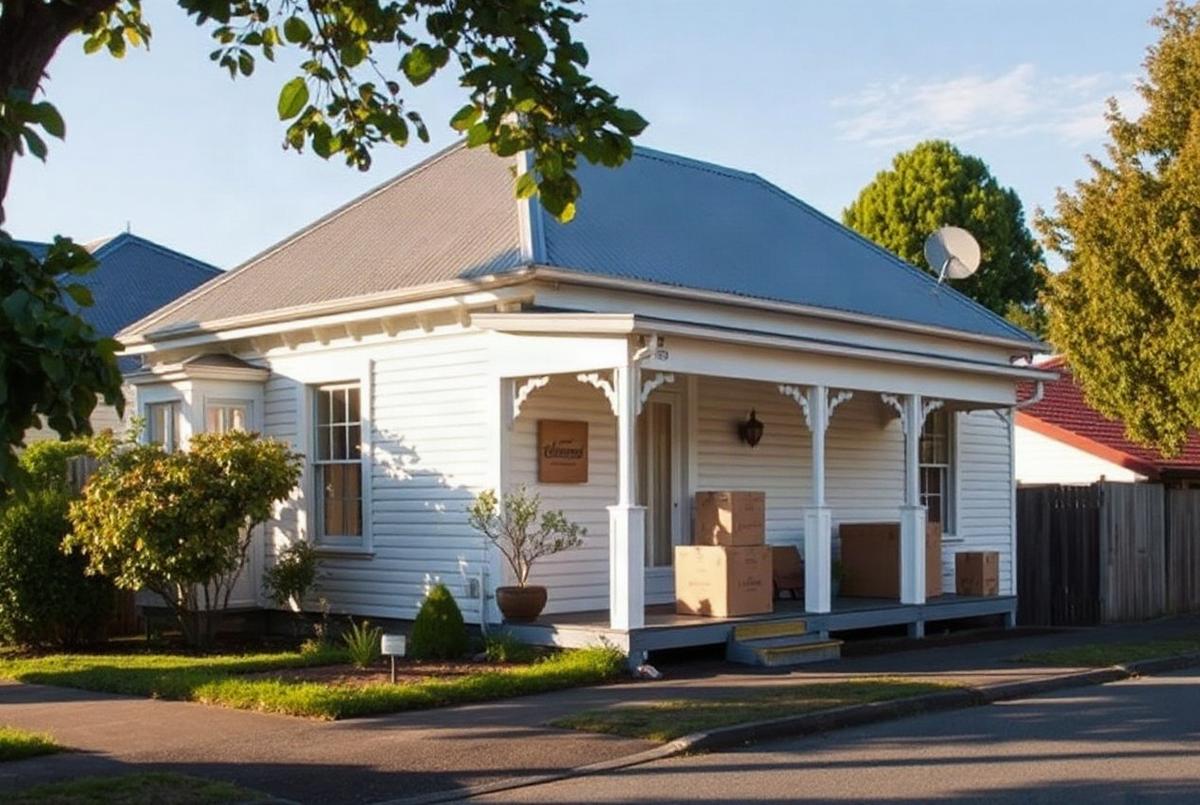
A new life in New Zealand — just imagining it is exciting! But finding a place to live, the foundation of your daily life there, can be the first big hurdle for many international students, working holiday makers, and new migrants. The rental customs and search methods may be quite different from what you're used to at home, and with so many unknowns — including what rent actually costs — it's natural to feel a little anxious.
This article is a complete guide designed to ease those worries and help you find a home smoothly: how to search for properties in New Zealand, typical rent levels, the key points to check before signing a contract, and search tips specific to study abroad and working holiday stays. By the end, you'll know the concrete steps to find a place that suits you and start your life in New Zealand with confidence.
Renting in New Zealand: The Basics of House Hunting
First, let's cover the main ways to find a home in New Zealand and the points you should keep in mind.
Main Ways to Search
There are several main ways to look for housing in New Zealand.
- Online property websites: The most common and efficient method. Major sites such as Trade Me Property and realestate.co.nz carry a wealth of rental listings (Rentals) and flatshare ads (Flatmates Wanted). You can filter by preferred area, maximum rent, number of rooms, and more.
- Facebook groups: Search for keywords like "(city name) Flatmates Wanted" and you'll find dedicated flat-hunting groups. These are mostly person-to-person exchanges and a fairly casual way to get information, but watch out for scams.
I posted my preferred conditions and move-in date in a Facebook Flatmates Wanted group, then went to view a few places from the hosts who contacted me before deciding.
- Real estate agents: Useful when you want to rent an entire house or apartment. An agent will help you find a property and handle the contract process, though agency fees may apply in some cases.
- Word of mouth and referrals: School notice boards and referrals from friends and acquaintances are also valuable sources. Especially for flatshares, an introduction from someone you trust adds real peace of mind.
- Language school or university support: If you're studying abroad, your school may offer partnered dormitories, homestays, or accommodation-search support. It's worth asking them first.
🔑 Basic Steps for House Hunting in New Zealand 🔑
Research
Use online sites, social media, and contacts to research listings and typical rent levels in your preferred area.
Viewing
Always visit any property you're interested in. Check its condition, the surrounding area, and (for flats) your future flatmates.
Application
Submit an application form if you like the place. You may need ID and proof of income (such as a bank statement).
Tenancy Agreement
Carefully check the contract terms (rent, term, rules) before signing. Pay the bond.
Pre-Move-In Check
Inspect the property's condition before moving in (Property Inspection Report). Taking photos gives you extra security.
Move-in
Collect your keys and start your new life! 🎉
Things to Watch Out For
For a smooth and safe house hunt, keep the following points in mind.
- Beware of scams: Especially in online exchanges, be wary of anyone pressuring you to sign a contract or transfer money without seeing the property in person. If something feels off, walk away from the deal.
- Always do a viewing: It's essential to check with your own eyes the things photos can't show — the property's actual condition, natural light, the neighbourhood, and noise. For flatshares, a viewing is also a great chance to meet the other flatmates and see whether you'd get along.
- Don't rush the decision: Good properties can be competitive, but never sign a contract in a hurry without reading it properly. Give yourself enough time to compare several options.
- Set a clear budget: Factor in not just rent but also expenses such as power, water, and internet, and set a realistic budget you can actually afford.
Cost of Living in Auckland, Wellington and Christchurch
Auckland, New Zealand's largest city, is popular for its wide range of jobs and schools — but that also means fiercer competition for housing and rents that tend to be higher than in other cities.
- The city centre is expensive: The CBD (Central Business District) and surrounding suburbs (Ponsonby, Parnell, etc.) are convenient, but rents there are very high.
- Consider the suburbs: Areas a little further out (North Shore, West Auckland, South Auckland, etc.) offer comparatively lower rents. Check the public transport options (bus, train) and weigh them against your commute to work or school.
- Act early: Quality properties in popular areas go fast, so start gathering information early and book viewings proactively.
Flatting 101: Flatshare Basics
In New Zealand, renting a room in a house or apartment and living with others — known as "flatting" — is extremely common. It's especially popular with international students and working holiday makers because it keeps costs down and expands your social circle.
Things to Watch Out For When Flatting
To enjoy a comfortable flatting life, there are a few things to keep in mind.
- Compatibility with flatmates: Whether your daily rhythms and values align really matters. Communicate actively at the viewing and try to discuss each other's expectations and house rules upfront.
- House rules: Agreeing in advance on cleaning duties, having friends over, noise, and how shared spaces are used helps prevent trouble later. Some flats even draw up a written Flatmate Agreement.
- Splitting costs: Beyond rent, be clear about how you'll split power, water, internet, and shared consumables (toilet paper, cleaning products, etc.). Some flats use a flat weekly amount, others split actual usage.
Average Rent in New Zealand: A Detailed Breakdown
Now let's take a closer look at what everyone wants to know most — the rent.
Typical Rent Levels and What Affects Them
Rent in New Zealand varies widely by region, property type (house, apartment, or single room), room size, and how modern the facilities are. Generally, urban centres — especially Auckland and Wellington — are expensive, while regional towns and outer suburbs are comparatively affordable.
Approximate Weekly Rent by City and Room Type (as of August 2026)
- Note: These are rough guides only; actual rents vary significantly depending on the property.
- Converted at 1 NZD = approx. ¥93 (exchange rates fluctuate constantly)
| City | Room in a Flat | 1 Bedroom Apt | 2 Bedroom House |
|---|---|---|---|
| Auckland | NZ$250 – $400+ (approx. ¥23,750 – ¥38,000+) |
NZ$450 – $650+ (approx. ¥42,750 – ¥61,750+) |
NZ$550 – $800+ (approx. ¥52,250 – ¥76,000+) |
| Wellington | NZ$230 – $380+ (approx. ¥21,850 – ¥36,100+) |
NZ$420 – $600+ (approx. ¥39,900 – ¥57,000+) |
NZ$520 – $750+ (approx. ¥49,400 – ¥71,250+) |
| Christchurch | NZ$180 – $300+ (approx. ¥17,100 – ¥28,500+) |
NZ$350 – $500+ (approx. ¥33,250 – ¥47,500+) |
NZ$450 – $650+ (approx. ¥42,750 – ¥61,750+) |
Top 3 Most Expensive Cities for Rent
The following cities are generally known for having some of the highest rents in New Zealand.
- Auckland: The country's largest economic hub, with an ever-growing population.
- Wellington: The capital, home to government agencies and corporate offices. Its hilly terrain and limited land also push prices up.
- Queenstown: A world-famous tourist destination with extremely high housing demand. Tauranga has also seen notable rent increases in recent years.
Cost of Living in New Zealand: How Rent Compares
Compared with major cities in countries like Japan, rents in New Zealand's main cities may feel similar or slightly higher — with the exception of the priciest districts of megacities like central Tokyo. The big difference, however, is that New Zealand has no "key money" (a non-refundable gift payment to the landlord common in Japan) and no lease renewal fees. Typical upfront costs are the bond (a security deposit, usually four weeks' rent) plus one to two weeks' rent paid in advance.
Weekly vs Monthly Payments
In New Zealand, rent is typically paid as **Weekly Rent**. Thinking in weekly units is deeply embedded in the culture — job ads, for example, often list wages per week too. If you earn a monthly salary, you'll need to divide it into weekly amounts when budgeting. The tenancy agreement will state the payment frequency (weekly or fortnightly), so check it carefully.
Utilities, Food and the Rest of the Cost of Living
Rent is the biggest line, but it is not the whole picture. If you are working out what it costs to live in New Zealand, budget for these on top of the weekly rent.
- Utilities in New Zealand — power, and often gas, are usually separate from rent. Expect a meaningful winter spike: many older houses are poorly insulated, and heating is the reason power bills double between June and August.
- Internet is typically a fixed monthly plan and fast; fibre reaches most urban addresses.
- Cost of food — groceries are expensive by international standards, especially dairy and fresh produce out of season. Shopping at Pak'nSave rather than the nearest supermarket makes a real difference over a month.
- Transport — outside Auckland and Wellington, most people need a car, and fuel is a standing cost.
- Bond and insurance — the bond is usually up to four weeks' rent, held by Tenancy Services rather than the landlord, and returned at the end of the tenancy.
Comparison sites such as Numbeo put the average cost of living in New Zealand close to the UK and below the United States in most categories except food and housing. For expats that pattern is worth knowing before you sign: the salary may look lower than what you left, and the rent will take a larger share of it.
Key Points of the Tenancy Agreement
Once you've found a place you like, the next step is the contract. To avoid trouble down the road, review the terms thoroughly.
What to Confirm Before Signing
A Tenancy Agreement is a legally binding document. Before you sign, always confirm the following points.
- Names of the parties: Are your name and the name of the landlord or property manager stated accurately?
- Property address: Is the address of the property you're renting correct?
- Tenancy term: Is it a fixed-term or a periodic tenancy? If fixed-term, what are the term and end date?
- Rent amount and payment frequency: The weekly rent amount, the payment day, and the payment schedule (weekly or fortnightly).
- Bond amount: Usually a maximum of four weeks' rent.
- Who pays the expenses: Are power, water, and other utilities included in the rent, or paid separately?
- House rules: Rules regarding pets, smoking, use of shared areas, and so on.
Critical Contract Terms You Must Not Miss
Make sure you understand the most important items in the agreement.
📜 Tenancy Agreement Checklist 📜
Rent & Payment
How much is it? Weekly or fortnightly? What is the payment date? How is it paid?
Bond
How much is it (maximum of four weeks' rent)? Will it be lodged with the government agency (Tenancy Services)?
Term
Fixed-term or periodic? If fixed-term, what are the start and end dates?
Notice Period
If you move out, how much notice is required? (Typically 28 days from the tenant; from the landlord it varies depending on the reason.)
House Rules
Are any special rules stated — no pets, no smoking, visitor restrictions, noise limits, and so on?
Landlord/Manager Contact Details
Is there a clearly stated contact for repairs and other issues?
If anything is unclear, always ask before you sign! The Tenancy Services website is a great reference too.
- Bond: Similar to a security deposit, but instead of the landlord holding it directly, it is lodged with Tenancy Services, a government agency. If the property has no damage when you move out, the full amount is refunded. Always make sure you receive proof of lodgement (a copy of the Bond Lodgement Form).
- Notice Period: When a tenant wants to move out, written notice of at least 28 days is normally required (this can vary by contract type). The notice period a landlord must give when asking a tenant to leave differs depending on the reason.
- Contract type (Fixed-term vs Periodic):
- Fixed-term: The tenancy has a set duration (e.g., one year) and generally cannot be ended early. With mutual agreement, it can be renewed or converted to a periodic tenancy.
- Periodic: No fixed end date; either party can end the tenancy by giving the required notice period. It offers flexibility, but the landlord may also ask you to leave.
Pre-Move-In Property Checklist
On moving day, you'll inspect the property's condition together with the landlord or property manager and fill in a document called the Property Inspection Report. This is a crucial process that affects the refund of your bond when you move out.
- Check every corner: Look closely at wall damage, floor stains, carpet marks, whether windows and doors open and close properly, the state of the plumbing (leaks, mould), and the operation of any appliances included with the property.
- Keep a record: Write down anything of concern in the Inspection Report, and if possible take date-stamped photos. This serves as evidence that the damage was "already there".
- Both parties sign: After the inspection, both the tenant and the landlord/manager sign the report. Always keep a copy for yourself.
How Rent Is Paid
The most common way to pay rent is by Automatic Payment (AP) from your bank account. You set up an automatic transfer to the bank account specified by the landlord or property management company so payment arrives by the due date. In a flatshare, one representative flatmate often pays the landlord in full and collects the shares from the others. Note that late payment is a breach of contract and can affect your credit record.
Where You Live Changes the Number: New Zealand Cities Compared
If you are looking to move, the single biggest lever on your living costs is which city you pick. Rental prices and property prices vary far more between New Zealand cities than most people expect.
- Auckland — the most expensive city in the country for both rent and housing. The trade-off is job opportunities: most roles, and most of the higher salaries, are here.
- Wellington — similarly priced for a city-centre apartment, cheaper for family homes, and small enough to walk. Government and tech dominate the employment market.
- Christchurch — noticeably cheaper rental costs than either, with more space for the money since the rebuild.
- Smaller towns and somewhere more rural — Taranaki, Nelson, Dunedin and the like are slightly cheaper again, with a laid-back lifestyle and fewer job options.
Beyond rent, the monthly expenses to budget for are food, power, internet, phone and transport. A one-way ticket on local public transportation in New Zealand costs a few dollars; a monthly pass is the sensible option in Auckland and Wellington, where the bus and train networks actually work.
Two more things that catch people out when they relocate. New Zealand's healthcare system is publicly funded, but eligibility depends on your visa — those on a shorter work visa should check their insurance options before arriving. And when you convert your budget from US dollars, remember that the New Zealand dollar moves; sites quoting New Zealand cost of living vs your home country in one currency can be out of date within months. Whatever the exchange rate, expect to pay more for food here than the headline comparison suggests, and slightly less for almost everything excluding rent.
Housing Strategies for Students and Working Holiday Makers
If your stay is limited — as a student or on a working holiday — your house-hunting strategy may need to look a little different.
Housing Options Suited to Students
- Hall of Residence: Located on or near university and college campuses, convenient for getting to class. Most are furnished, and some offer meal plans. There's plenty of interaction with other students, but rent is comparatively high.
- Homestay: You rent a room in a local family's home. Meals (typically breakfast and dinner) are often included, and living with a family helps improve your English and deepen your cultural understanding. Some households have rules such as curfews.
- Flatting: Popular with students who want more freedom and lower costs. It does require life skills and good communication.
Room-Hunting Tips for Working Holiday Makers
- Stay somewhere short-term for the first few weeks: It's hard to lock in long-term housing right after arrival, so it's best to stay at a backpackers hostel or Airbnb first and use that time to search properly.
- Stay flexible: Don't fixate too much on a specific area or property type — widening your scope opens up more options. Especially at the start, settling into somewhere "good enough" rather than perfect while you find your feet is a valid strategy.
- Use your networks: Gather information through every network you have — local friends, workmates, social media communities. Good flatmate vacancies often fill quickly through word of mouth.
- Consider short-term contracts: If your length of stay is uncertain, look for properties offering periodic tenancies or shorter fixed-term contracts.
Homestay vs Flatshare: What's the Difference?
Both are popular ways to stay, but they have different characteristics. Choose the style that suits you best.
🏡 Homestay vs Flatting: A Comparison 🏡
👨👩👧👦 Homestay
- + Cost: Relatively high (meals are often included)
- + Meals: Usually provided (very reassuring)
- + Cultural experience: Learn local culture and customs through life with a Kiwi family
- + English environment: Plenty of opportunities to use English every day
- – Freedom: You need to follow the household's rules (curfews, meal times, etc.)
- – Privacy: Shared spaces may dominate
- – Compatibility with the family: There's always some chance it won't be a good fit
🏘️ Flatting
- + Cost: Relatively cheap (rent and utilities are shared)
- + Freedom: Live at your own pace (no curfews)
- + Privacy: You usually get your own room
- + Social life: Meet people of many nationalities and backgrounds
- – Meals: You cook for yourself
- – Household chores: Requires agreed rules and cooperation
- – Compatibility with flatmates: There's potential for friction
Choose based on your personality and the goals of your study or working holiday stay!
Living Environment and Culture in New Zealand
Beyond finding a comfortable home, getting used to the local living environment and culture is also key to a fulfilling life in New Zealand.
Regional Differences in Lifestyle
New Zealand is a long, narrow island nation stretching north to south, and climate and lifestyle vary by region.
- North Island: Home to major cities like Auckland and Wellington, with a larger population and a mild climate. The centre of business and culture.
- South Island: Home to Christchurch and Queenstown, famed for its spectacular natural scenery. Winters are cold, with snow in some areas. Outdoor activities thrive here.
- Urban vs regional: Cities have well-developed transport networks and plenty of shops and entertainment, but rents and prices are higher. Regional areas are cheaper and offer a calm life surrounded by nature, though you're more likely to need a car.
Adapting to Local Culture
New Zealanders (Kiwis) are generally known for being friendly and famously laid-back.
- Casualness: Dress codes and communication styles are relatively casual. People will often strike up a conversation even on first meeting.
- Outdoor lifestyle: With nature close at hand, many people spend weekends hiking, at the beach, or camping.
- DIY culture: Doing your own home repairs and garden maintenance is the norm.
- Work-life balance: Overtime is rare, and the culture values time with family and for yourself.
You may feel out of your depth at first, but communicating actively and respecting local culture and customs will go a long way.
Resources for Finding a Comfortable Home
Finally, here are some specific websites and apps that will help with your house hunt.
Recommended Property Search Sites & Apps
The following sites and apps are widely used for house hunting in New Zealand.
| Site/App | Key Features | Best For | Link |
| Trade Me Property | New Zealand's largest listings site. Extensive rental, flatshare, and sale listings. The app is easy to use too. | Rentals in general, flat hunting, buying | Trade Me Property |
| realestate.co.nz | Mostly agent-listed properties. Another major player. | Rentals in general, buying | realestate.co.nz |
| NZ Flatmates | Specialises in flat and room hunting. Detailed search filters available. | Flat hunting | NZ Flatmates |
| Facebook Marketplace | Mostly person-to-person deals. You can find real bargains, but beware of scams. | Flat hunting, furniture, etc. | (Search within Facebook) |
| City-based Flatmates groups | Facebook communities with active information sharing. e.g., “Auckland Flatmates Wanted” | Flat hunting, information exchange | (Search within Facebook) |
Why Use the Apps
- New-listing alerts: Get notified when a new property matching your criteria appears, so you can act fast.
- Search from anywhere: Check listings on your phone anytime, anywhere.
- Easy enquiries: Send a message or make a call directly from the app.
Verifying Listings in Person
Don't rely on online information alone — dig deeper using the following methods.
- Viewing: We can't stress this enough — it is the single most important step. Attend viewings actively. They come in open-home format (anyone can view at a set time) and by individual appointment.
- Prepare a question list: At the viewing, it helps to have your questions ready: what's included in the rent and what isn't, average utility costs, the internet setup, noise, the neighbourhood, the other residents (for flats), and anything needing repair.
- Check the surrounding area: Beyond the property itself, walk around to check the nearest bus stop, supermarket, and general safety of the area with your own two feet.
Summary
House hunting in New Zealand takes more time and effort than almost any other part of preparing for your move — but with solid research and a planned approach, you can absolutely get through it.
- Research: Use online sites and social media to get a feel for market rents.
- Budgeting: Set a realistic budget that includes not just rent but other expenses too.
- Prioritise viewings: Always inspect the property and its surroundings with your own eyes.
- Sign with care: Understand the Tenancy Agreement and ask about anything unclear.
- Use official resources: Tenancy Services provides information on tenancy rules and dispute resolution. It's a reliable resource whenever you run into trouble.
Follow the points in this guide, take action, and you're sure to find a wonderful home to launch your new life in New Zealand. We're cheering you on — good luck with your house hunt!
Disclaimer: This article was created using AI-generated information. While we strive to provide the most up-to-date and accurate information possible, details may become outdated or change over time. In particular, for information that changes frequently — such as prices and opening hours — please always check official websites for the latest details. This article is intended as general information only and does not constitute advice for individual circumstances. Its content may be updated in the future based on personal experience and additional information.