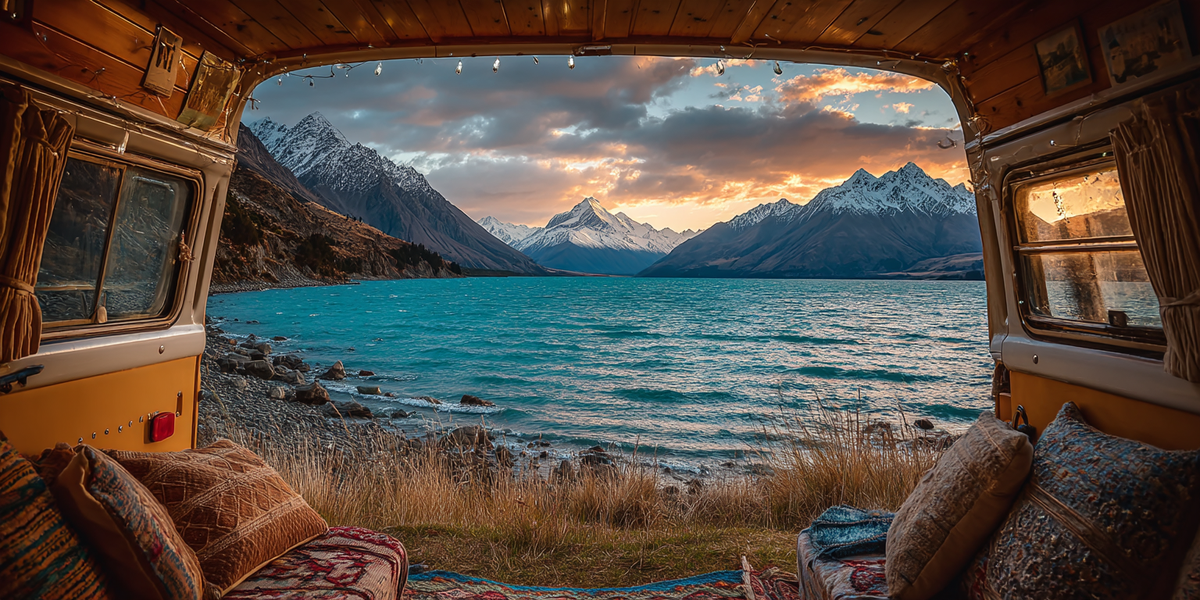
If you dream of exploring a country freely, on your own schedule, then circling New Zealand "van life" style may be the ultimate way to travel.
This guide covers everything you need to turn that dream into reality — how to plan an epic road trip around the South and North Islands while sleeping in your van, plus recommended itineraries, costs, and the pitfalls to watch out for.
Planning a Campervan Road Trip in New Zealand: How Much Time on the Road?
A full lap of New Zealand by road is an adventure many travellers dream about. The first question when planning is usually: "How much time do I actually need?"
How Long Is Ideal?
New Zealand is a compact country — roughly 70% the land area of Japan — but it packs in an enormous number of sights, and driving between them takes time.
- At least one month: If you want to properly enjoy either the South Island or the North Island, or race through both, one month is the realistic minimum.
- Two to three months is the sweet spot: To soak up the best of both islands — hitting the famous highlights and venturing to lesser-known corners — two to three months gives you comfortable breathing room. Plenty of travellers doing the full circuit take about this long.
- Long stays (working holiday, etc.): If you can stay long-term on a working holiday or similar visa, you can spend six months or even a year slowly wandering the country, enjoying the scenery as the seasons change.
The key is to build a realistic plan around your interests and how long you're able to stay.
Distances and Routes Between the South and North Islands
New Zealand is split into two main landmasses — the South Island and the North Island — connected by ferry.
- Total driving distance: Depending on your route, a full loop of both islands adds up to roughly 5,000–7,000 km. To put that in perspective, it's like driving the length of Japan — Tokyo to Kagoshima — more than four times over.
- A typical route:
- Start in Auckland or Christchurch: Most travellers begin in one of these two cities, since both have international airports and plenty of rental options.
- South-to-north or north-to-south: Which direction you go depends on preference and season. Summer (December–February) is peak time for the South Island, but the shoulder seasons (spring and autumn) are a great way to dodge the crowds.
- The ferry crossing: You take your vehicle across on the ferry linking Picton (South Island) and Wellington (North Island) — operated by Interislander or Bluebridge. The crossing takes about three and a half hours.
Research to Do Before You Go
Doing your homework before departure is the key to a smooth, enjoyable trip.
- Visa: Make sure you have the right visa for your length of stay (visitor visa, working holiday visa, etc.).
- Driving documents: If your driver's licence isn't in English, you'll need an International Driving Permit or an approved translation — carried together with your original home-country licence.
- Flights: Booking early generally means cheaper fares.
- Rental car/van: Choose a vehicle that matches your travel style and book early — availability disappears fast in high season.
- Insurance: Travel insurance is essential. Also read your rental vehicle's insurance terms carefully.
- Freedom camping rules: You cannot simply sleep in your vehicle anywhere you like. Each local council sets its own rules, and overnighting outside designated areas can mean a fine. Check the DOC (Department of Conservation) website, or campervan travel apps such as CamperMate and Rankers Camping NZ.
The Appeal of a Campervan Trip — and the Realities
Sleeping in your vehicle — "van life" — is the ultimate style for travellers who love total freedom. But it's important to understand the realities and caveats behind the romance.
Why Van Life Is So Good
- Total freedom: No fixed schedule — stay as long as you like wherever you fall in love with. "Let's have breakfast with this view today," "Let's swing by that town tomorrow" — deciding your itinerary on a whim is the biggest draw.
- Big savings: Accommodation costs drop dramatically. New Zealand lodging is on the expensive side, so sleeping in your van at campgrounds is a serious money-saver. Cook your own meals and your food budget shrinks too.
- Immersion in nature: Waking to birdsong, falling asleep under a blanket of stars — van life lets you soak in New Zealand's wilderness completely. Camp inside a national park and the experience is unforgettable.
- A space of your own: Your rental van (or the one you bought) becomes your home for the whole journey. Having your own comfortable base that travels with you is deeply reassuring.
Freedom Camping, Campsites and Holiday Parks
New Zealand has a huge variety of campgrounds.
- DOC campsites: Run by the Department of Conservation, these are often in spectacular locations such as national parks. Facilities are basic (sometimes just a toilet, no running water), but they're free or very cheap. Many don't require booking, though popular sites and peak periods may.
- Holiday parks / motor camps: Privately run campgrounds with full facilities — kitchens, showers, laundry, Wi-Fi. Pricier than DOC sites but very comfortable. Booking ahead is usually recommended.
- Designated freedom camping areas: Free or low-cost overnight spots approved by local councils. In most cases only self-contained vehicles (with an onboard toilet) are permitted. Check locations and rules via the apps.
🚐 Sleeping in Your Van in New Zealand: Pros & Cons 🤔
👍 Pros
- ✅ Total freedom: Go where you want, when you want!
- ✅ Cost savings: Slash accommodation and food expenses.
- ✅ Close to nature: Wake up surrounded by epic scenery.
- ✅ Your own space: A "home" that moves with you.
👎 Cons & Cautions
- ⚠️️ Facilities: Showers, toilets and power take planning.
- ⚠️️ Weather: Rain and cold can be tough.
- ⚠️️ Freedom camping rules: Follow them — fines apply!
- ⚠️️ Security: Watch out for vehicle break-ins.
- ⚠️️ Driver fatigue: Plan rest stops on long drives.
💡 Good preparation and research keep the downsides to a minimum!
What About Toilets and Water?
Two of the big practical questions of van life: toilets and water.
- Toilets:
- Public toilets: Found in towns, parks, tourist sites and petrol stations. Cleanliness varies by location.
- Campground toilets: DOC campsites usually have basic facilities; holiday parks have clean, plentiful ones.
- Onboard toilets: Certified self-contained campervans come with a toilet. This is often a requirement for freedom camping. You'll need to empty it at designated dump stations.
- Water:
- Drinking water: Buying it at the supermarket is the safest option. Large bottles work out cheaper.
- Everyday water: Available from taps at campgrounds, petrol stations and some public toilet areas. Always check whether it's marked potable/drinking water. If your van has a tank, top it up regularly at fill points.
Build toilet stops and water refills into your route planning.
Campervan Hire in New Zealand: Rent or Buy?
Nothing shapes your trip more than the vehicle itself. Should you rent, or buy? Let's weigh up the pros and cons of each.
Recommended Rental Companies and How to Choose
For shorter trips (a few weeks to around three months), renting is the standard, hassle-free option. New Zealand has a wide range of rental companies.
| Type of Company | Typical Examples | Characteristics | Pros | Cons |
|---|---|---|---|---|
| Major international brands | Avis, Hertz, Budget, etc. | Airport counters, newer vehicles, peace of mind | Reliability, consistent service | Higher prices |
| Major NZ local companies | GO Rentals, Jucy, Apex, etc. | Relatively affordable, many branch locations | Good value, convenient within NZ | Vehicles may be slightly older |
| Campervan specialists | Maui, Britz, Mighty, Apollo, etc. (many under the THL group) | Vans and motorhomes in every size, well equipped | Vehicles purpose-built for sleeping on the road, good support | Rental rates can get expensive |
| Budget / backpacker-focused | Spaceships, Escape Rentals, etc. | Fun designs, usually include bedding and cooking gear | Affordable; great if basic equipment is all you need | Vehicles are often older; comfort may be limited |
What to look for when choosing a rental:
- Budget: Rates vary hugely by company, vehicle type, rental length, season and insurance level. Compare several companies before deciding.
- Vehicle type: Choose based on how many people are travelling, how much gear you have, and where you'll sleep (in the van or in a tent). For couples, a small van (Toyota Hiace-style) is a popular pick. Families or comfort-seekers might prefer a larger motorhome.
- Self-contained certification: If you want to freedom camp, you'll need a certified self-contained vehicle (look for the sticker). Certification requires at least three days' worth of fresh and waste water capacity and a portable toilet, among other things.
- Insurance: Full-cover insurance is strongly recommended. Check what the excess (deductible) is.
- Equipment: Confirm whether bedding, cooking gear and camping equipment are included. If not, they can usually be added for a fee.
- Mileage limits: Check whether the rental comes with unlimited kilometres. A full circuit of New Zealand racks up serious distance.
- One-way rentals: If you plan to pick up in Auckland and drop off in Christchurch (or similar), confirm whether one-way rental is possible and what the fee is.
🚙 Foolproof Checklist for Choosing Your Rental Van ✅
💰 Budget & Duration
- □ Does it fit your budget?
- □ Are the rental period and pricing clear?
- □ Any high-season rates or discounts?
👥 Vehicle Type & Size
- □ Does it seat everyone in your group?
- □ Will all your luggage fit?
- □ Is there comfortable space to sleep?
- □ Do you need self-contained certification?
🛡️ Insurance & Contract
- □ Is it full-cover insurance?
- □ How much is the excess?
- □ Any mileage limits? (Unlimited?)
- □ Is one-way rental possible? Extra fee?
- □ Age limits or driving-history requirements?
🍳 Equipment & Extras
- □ Is bedding included?
- □ Are cooking gear and tableware provided?
- □ Camp table and chairs included?
- □ Is roadside assistance included?
- □ What's the fuel policy on return? (Full to full?)
🔍 Compare and confirm carefully in advance to find the perfect vehicle!
Buying a Vehicle (For Long-Term Stays Such as Working Holidays)
If you're staying three months or more — especially on a working holiday — buying a used vehicle is another option worth considering.
- Pros: Potentially cheaper overall than renting. You can customise it however you like. Sell it before you leave and you recover part of the cost.
- Cons: The purchase process is fiddly (ownership transfer, WOF — the roadworthiness inspection — and Rego, the vehicle registration/licensing). Breakdowns are a risk, and repairs can be costly. There's no guarantee you'll get your asking price when you sell.
- Where to buy: Trade Me (New Zealand's biggest online marketplace), Facebook Marketplace, car fairs (such as Ellerslie in Auckland), and used-car dealers.
If you do buy, a pre-purchase inspection by a trusted mechanic is strongly recommended.
Driving in New Zealand: What You Need to Know
Even experienced drivers should be aware of a few New Zealand-specific rules and conditions.
- Drive on the left: New Zealand drives on the left, the same as Japan, the UK and Australia. If you're used to driving on the right, give yourself time to adjust.
- Roundabouts: Roundabouts replace traffic lights at many intersections. Always give way to traffic coming from your right and check it's clear before entering. There are also specific rules for indicating.
- Speed limits: Watch the signs. The default is 100 km/h on open roads and 50 km/h in urban areas, but limits vary by location. Speeding fines are steep.
- Give Way rules: Learn the priority rules properly. At T-intersections, traffic on the through road has priority.
- Road conditions: Outside the cities, roads get narrower, twistier and hillier. The South Island in particular is mountainous, so drive carefully. You'll also encounter unsealed gravel roads.
- Animals on the road: Sheep, cattle, possums and other animals can dart onto the road — take extra care at night and in the early morning.
- Rest breaks: You'll be covering long distances, so take a break at least every two hours. Pushing through fatigue is how accidents happen.
- Weather: Conditions can change fast. In winter, roads can ice over or close due to snow, so check forecasts and road updates frequently.
Where to Go: Road Trip Routes on the North and South Islands
Both islands overflow with unmissable places. Here are some of the most popular destinations and natural wonders to visit on a campervan trip.
South Island: Nature at Its Most Dramatic
- Queenstown: The "adventure capital of the world" — bungy jumping, skiing, hiking and more, with stunning views over Lake Wakatipu.
- Fiordland National Park: A World Heritage site. The epic fiord cruises on Milford Sound and Doubtful Sound are unmissable, and the drive in is spectacular in its own right.
- Aoraki/Mount Cook National Park: Home to New Zealand's highest peak, Aoraki/Mount Cook. Plenty of beginner-friendly hikes, including the Hooker Valley Track, and phenomenal stargazing.
- Lake Tekapo: Famous for its turquoise water and the Church of the Good Shepherd. It sits within a dark sky reserve — one of the best places on Earth for stargazing.
- Abel Tasman National Park: Golden beaches and emerald water make this beautiful park perfect for kayaking and hiking.
- The West Coast: Wildly varied landscapes, from the Pancake Rocks at Punakaiki to the Franz Josef and Fox Glaciers.
North Island: Volcanoes and Māori Culture
- Auckland: New Zealand's largest city. Take in the view from the Sky Tower, or hop over to Waiheke Island for a day of winery-hopping.
- Rotorua: A famous geothermal region. See geysers and bubbling mud pools at Te Puia, experience Māori culture, and soak in hot springs.
- Tongariro National Park: Another World Heritage site, home to the active volcanoes Tongariro, Ngauruhoe and Ruapehu. The Tongariro Alpine Crossing day hike is world-famous.
- Coromandel Peninsula: Gorgeous beaches everywhere. At Hot Water Beach you can dig your own hot pool in the sand, and Cathedral Cove is a beloved scenic spot.
- Wellington: The nation's capital — compact but packed with stylish cafés, restaurants and museums, including Te Papa Tongarewa, the national museum.
🗺️ Sample Full-Circuit Route (South Island Start, About 2 Months) 🚗💨
[South Island] Big Nature Route (About 4 Weeks)
- 1 Arrive in Christchurch → pick up your rental
- 2 Lake Tekapo & Mount Cook (stargazing & hiking) ✨
- 3 Queenstown (adventure activities) 🚣♀️
- 4 Fiordland (Milford Sound) 🚢
- 5 West Coast (glaciers & Pancake Rocks) 🧊
- 6 Abel Tasman (kayaking & beaches) 🏖️
- 7 Picton → ferry to the North Island ⛴️
[North Island] Volcanoes & Culture Route (About 4 Weeks)
- 8 Wellington (capital city stroll & museums) 🏛️
- 9 Tongariro National Park (volcanoes & trekking) 🌋
- 10 Rotorua (geothermal wonders & Māori culture) 🔥
- 11 Coromandel Peninsula (beaches & hot springs) ♨️
- 12 Northland (the far north & Bay of Islands) 🐬
- 13 Auckland (city time, drop off the van, fly home) ✈️
💡 This is just one example — arrange it freely to suit your own interests and pace!
Outdoor Activities to Enjoy Along the Way
New Zealand is an outdoor paradise, and van life makes it easy to try all kinds of activities on a whim.
- Hiking/trekking: Everything from short DOC-managed walkways to the multi-day Great Walks — there's a track for every level.
- Kayaking/canoeing: On lakes, the sea and rivers. Sea kayaking in Abel Tasman National Park is especially popular.
- Camping: From fully equipped holiday parks to remote DOC campsites deep in nature, the options are endless.
- Stargazing: Light pollution is minimal in much of the country, especially the South Island. Lake Tekapo is world-famous for its night skies.
- Fishing: Rivers, lakes and the sea all offer great fishing. Check whether you need a licence.
A Campervan Itinerary: Auckland to Queenstown, North to South
Two to three weeks is the usual campervan holiday. If you have that, the classic road trip route runs north to south and finishes where the scenery peaks. Take your time driving — the distances look small and the roads are not.
- Days 1–4 — Auckland, the Coromandel Peninsula and the Bay of Islands. Pick up the camper in Auckland, head north for a few nights, then swing back through the Coromandel for hot-water beaches and an area of native bush at every second bend.
- Days 5–8 — Rotorua, Taupo and Tongariro. Geothermal parks, the big lake, and the Tongariro Alpine Crossing if the weather plays along.
- Day 9 — Wellington and the ferry. Book the crossing early; a campervan takes a vehicle slot and they sell out in summer.
- Days 10–12 — Abel Tasman and the west coast. Golden sand at the top of the island, then the glacier country at Franz Josef and Fox.
- Days 13–16 — Wanaka, Queenstown and Lake Wakatipu. Mount Aspiring National Park on one side, the lake on the other. This is where most people wish they had left more time on the road.
- Days 17–19 — Te Anau, Fiordland and Milford Sound. Sleep in Te Anau and drive in early; there is nowhere to park a camper overnight at the sound itself.
- Days 20–21 — Central Otago, Lake Tekapo and Mount Cook to Christchurch. Finish through the Mackenzie Country and drop the van in Christchurch.
Running it in reverse — Queenstown to Christchurch, or Christchurch to Auckland — works equally well. What matters is that you start and end in cities with a depot, so you are not paying a one-way fee twice.
The Best Time to Visit New Zealand by Campervan
December to February is summer: the warmest weather, the longest days, and the highest prices for campervan hire in New Zealand. Sites in popular spots need booking. March and April are the sweet spot — the roads empty out, the light turns golden, and rental rates drop by a third or more.
Winter is cheap and perfectly doable in the north, but a campervan road trip through the South Island between June and August means dealing with frozen water tanks, snow on the alpine passes, and a lot of dark hours in a small space. Freedom camping spots also close seasonally. If it is your first trip to New Zealand, the shoulder months are the safer answer.
What a Campervan Road Trip Costs
Freedom is wonderful, but a budget still matters. So how much does a campervan trip around New Zealand actually cost?
Key Factors When Setting Your Budget
- Trip length: The longer you travel, the higher the total cost — naturally.
- Travel style: Your rental vehicle grade, choice of campgrounds (free vs. paid), how often you eat out, and how many paid activities you do all move the needle significantly.
- Season: High season (summer) tends to push rental and some accommodation costs up.
- Exchange rates: Costs in your home currency will shift with the New Zealand dollar (NZD). (For reference, this article uses 1 NZD = approx. ¥93 as of August 2026 for yen conversions; rates fluctuate constantly, so always check the latest.)
Rough Cost Guide (1 Month / Per Person)
The table below gives a ballpark for one month (30 days) of relatively frugal, backpacker-style travel. Travelling as a couple lets you split the rental and fuel costs.
{/* Background colour changed to light mauve */}| Expense | NZD (approx.) | JPY (approx., at 1 NZD = ¥93) | Notes |
|---|---|---|---|
| Vehicle rental (small van) | $1,500 – $3,000 | approx. ¥142,500 – 285,000 | Insurance included; varies widely by season and company. Halve it if travelling as a pair. |
| Fuel | $700 – $1,200 | approx. ¥66,500 – 114,000 | Based on roughly 5,000 km of driving; depends on fuel economy and petrol prices (approx. $2.5–3.0/L). |
| Food (mostly self-catered) | $600 – $900 | approx. ¥57,000 – 85,500 | Mainly supermarket shopping, with the occasional meal out. |
| Accommodation (campgrounds) | $300 – $600 | approx. ¥28,500 – 57,000 | Assuming a mix of free/cheap DOC sites and paid holiday parks. |
| Ferry (vehicle + 1 person) | $250 – $400 | approx. ¥23,750 – 38,000 | One way, not return. Varies by season and how far ahead you book. |
| Activities & miscellaneous | $500 – $1,000 | approx. ¥47,500 – 95,000 | Park fees, paid activities, phone/data, laundry, etc. |
| Total (approx., per person) | $3,850 – $7,100 | approx. ¥365,750 – 674,500 | Flights and travel insurance not included. |
*These figures are rough guides only. Actual costs vary greatly with your individual travel style.
Smart Ways to Keep Costs Down
- Travel off-peak: Spring (September–November) and autumn (March–May) offer fairly mild weather at lower prices than high season.
- Shop around for rentals: Compare rates and inclusions across several companies carefully. Early-bird discounts are sometimes available.
- Cook your own meals: Buy groceries at supermarkets (Pak'nSave, Countdown, New World, etc.) and cook in your van or the campground kitchen to slash your food budget.
- Use free and cheap campgrounds: Make good use of DOC campsites and designated freedom camping spots — but always check the facilities and rules first.
- Enjoy free activities: Hiking, beach walks, stargazing — plenty of New Zealand's best experiences cost nothing.
- Save on fuel: Avoid hard acceleration and braking, and drive economically. Fuel price comparison apps such as Gaspy help too.
- Travel with others: Splitting the rental and fuel costs brings the per-person price down considerably.
Living in a Camper: Everyday Tips for Time on the Road
A few small habits make a long stretch of living in a van far more comfortable.
Easy, Delicious Breakfast Ideas
Start the day right with a good breakfast — simple, energising options work best on the road.
- Cereal/muesli + fruit + yoghurt: The no-cook classic with good nutritional balance. New Zealand-grown fruit is often cheap and delicious.
- Toast + avocado + poached egg: Worth the little extra effort. Avocados are relatively inexpensive in New Zealand.
- Pancakes: Easy with a pancake mix — top with maple syrup and fruit.
- Oatmeal (porridge): For mornings when you crave something warm. Simmer with water or milk, then add fruit, nuts or honey.
- Last night's leftovers: Reheating leftover soup or stir-fry from dinner is an efficient, satisfying option too.
Pack some coffee or tea gear (a portable dripper, a small pot) and your mornings will feel that much richer.
Tips for Making the Most of Your Time
Getting the most out of limited time takes a little discipline.
- Early to bed, early to rise: Setting off early gives you more daylight hours and helps you beat the crowds at popular spots — and you might catch a beautiful sunrise.
- Drive in daylight: Plan to complete your driving during daylight and arrive at your destination (campground, etc.) before dark. Night driving carries much higher risk.
- Check information often: Keep up with weather forecasts, road conditions and campground availability via apps and websites. DOC visitor centres and i-SITE information centres are great resources too.
- Don't overpack the schedule: Build in buffer days and rest days. Staying fresh keeps your trip safe and enjoyable.
- Laundry and grocery runs: Batch these chores on the days you stay at a well-equipped holiday park — it's far more efficient.
What Van Life Reveals About New Zealand
Travelling New Zealand from a van shows you a side of the country no guidebook can capture.
- Staggering natural diversity: Fiords, glaciers, volcanoes, beaches, ancient forests… the constantly shifting scenery will amaze you daily.
- The warmth of the people: New Zealanders — "Kiwis" — are famously friendly and kind. Don't be surprised when strangers offer help the moment you look lost.
- Freedom and adventure: Choosing your own road and heading somewhere unknown at your own pace — that feeling is the essence of van life.
- Simple living: Getting by on the essentials has a way of prompting you to rethink what abundance really means.
Final Thoughts: Your New Zealand Adventure Awaits!
Driving around New Zealand and sleeping in your van is, without question, the experience of a lifetime. Chasing epic views at your own pace, living immersed in nature, connecting with locals — it's an extraordinarily rich way to travel.
Keys to making this trip a success:
- Plan thoroughly: Duration, route, budget, vehicle choice, paperwork — good preparation matters.
- Stay informed: Keep on top of freedom camping rules, road conditions and the weather at all times.
- Drive safely: Keep the schedule relaxed and take regular breaks behind the wheel.
- Stay flexible: Plans going sideways is part of the adventure — adapt as you go.
- Enjoy it: Above all, never lose the joy of soaking up this incredible country's nature and culture!
We hope this guide helps you plan your own van life adventure in New Zealand and takes you one step closer to the trip of a lifetime.
For more detailed information, these resources are worth a look:
- Tourism New Zealand: General travel information
- Department of Conservation (DOC): National parks, campsites and hiking track information
- CamperMate: A handy app for finding campgrounds, toilets, dump stations and more (external link)
Disclaimer: This article was created using AI-generated information. While we strive to provide the most current and accurate information possible, details may become outdated or change. For information that changes frequently — especially prices and opening hours — always check official websites for the latest details. This article is intended as general information only and does not constitute advice for individual circumstances. The content may be updated in the future based on personal experience and additional information.