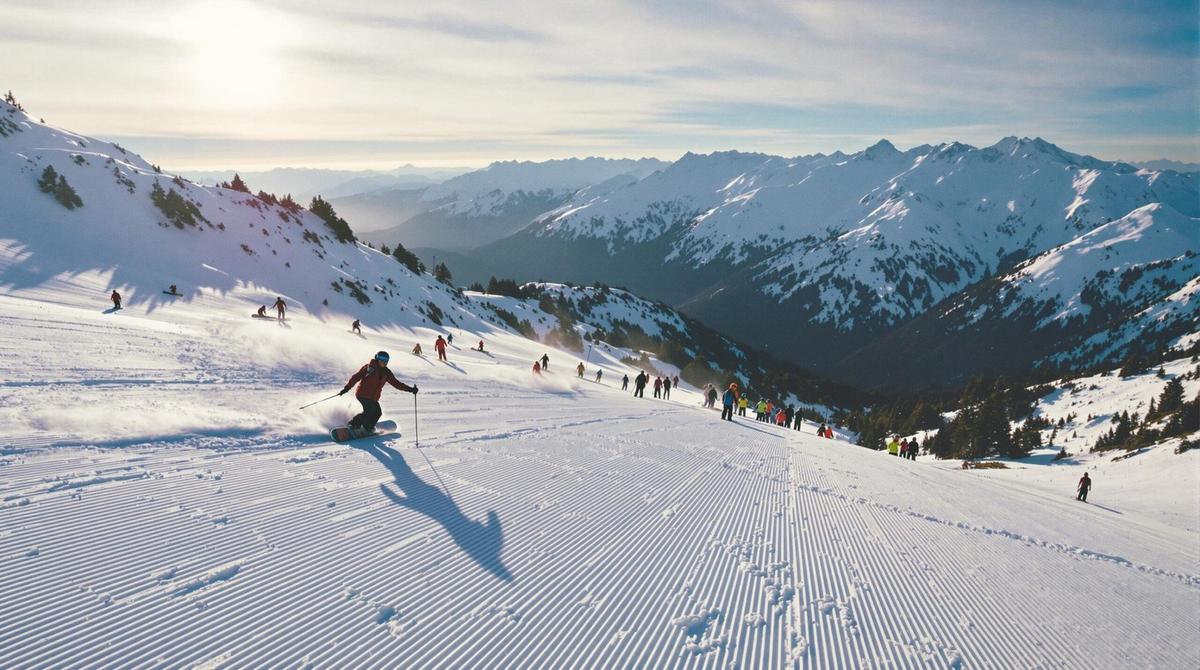
Skiing or snowboarding in July or August? It might sound strange at first — but because New Zealand sits in the Southern Hemisphere, it enjoys its prime winter season while the Northern Hemisphere is in the middle of summer. If you've been dreaming of skiing overseas, or want to squeeze a snow trip into your summer holidays, New Zealand is very close to the perfect answer.
In this guide, based on the latest information for 2026, we cover the 10 best ski resorts in New Zealand, along with season dates, how to get there, and what makes skiing in New Zealand so special. Get ready to carve fresh powder surrounded by some of the most spectacular scenery on Earth!
Where Are New Zealand's Ski Areas? South Island vs North Island
If you want to ski or snowboard in New Zealand, your two main options are the South Island and the North Island. Each has its own character, so you can choose based on your goals and travel style.
A Treasure Trove of Ski Resorts: The South Island
Most of New Zealand's ski fields are concentrated in the South Island, along the magnificent Southern Alps. The areas around Queenstown and Wanaka in particular draw skiers and snowboarders from all over the world.
- Around Queenstown: Easily accessible ski fields like Coronet Peak and The Remarkables make Queenstown an incredibly convenient base — and it has an international airport, so getting there from overseas is relatively straightforward.
- Around Wanaka: Home to resorts known for expansive terrain and stunning views, such as Cardrona Alpine Resort and Treble Cone. Wanaka has a more relaxed vibe than Queenstown and suits longer stays.
- Canterbury region: Mt Hutt and other fields are easily reached from Christchurch.
South Island ski fields are known for their high elevation and excellent snow quality. The biggest drawcard, though, is skiing amid genuinely breathtaking scenery.
Skiing on a Volcano? The North Island's Unique Experience
Meanwhile, the North Island has two major ski areas on Mt Ruapehu, an active volcano.
- Whakapapa: New Zealand's largest ski area, with a diverse range of runs for everyone from first-timers to experts. The vast beginner zone "Happy Valley" is especially popular with families and newcomers.
- Tūroa: Located on the southwestern slopes, with more natural terrain that appeals to intermediate and advanced riders — and spectacular views to match.
The North Island's ski fields offer a genuinely unique riding experience thanks to the volcanic terrain, and they're accessible from both Auckland and Wellington.
Whichever island you choose, an unforgettable New Zealand ski and snowboard experience awaits.
- Season kicks off!
- Most ski fields open
- Snow may still be thin
- Relatively uncrowded
- Season in full swing!
- Snowfall picks up
- School holidays can mean crowds
- Best season!
- Best snow quality of the year
- Stable conditions
- Powder days possible!
- Best season!
- Spring skiing begins
- Weather tends to settle
- Some snowmelt possible
- Relatively mild conditions
- End of the season
- Some fields close
- Check operating dates
- Ride it out to the last day!
When Is New Zealand's 2026 Ski Season? What's the Best Time to Go?
New Zealand's ski season typically runs from late June to early October. While the Northern Hemisphere is at the height of summer, the Southern Hemisphere is hitting peak winter-sports season.
When the Season Starts and Ends
Most ski fields begin opening in the second half of June and close between early and mid October. These dates shift with annual snowfall and weather, though, so it's essential to check the official website of the field you're planning to visit. Early and late in the season, the number of open runs can be limited.
The Best Months to Ride
Generally speaking, July and August are considered the best months for skiing and snowboarding in New Zealand. During this period:
- Heavy snowfall: Your chances of fresh snow and powder days go up.
- Reliable snow base: More days with excellent on-mountain conditions.
- Everything open: At most fields, all runs and lifts are operating.
Keep in mind that July often overlaps with New Zealand's school holidays, so resorts and lifts tend to get busy. If you'd rather avoid the crowds, late August through early September is a smart window. From September, spring skiing kicks in — you'll get more bluebird days, though the snow can turn a little heavier.
Combining Snow with Other Activities
New Zealand's appeal isn't limited to winter sports. Even during ski season, lower-elevation areas offer hiking, sightseeing, and plenty more. Resort towns like Queenstown are packed with year-round activities — bungy jumping, jet boating, and beyond. There's something special about adrenaline activities in the crisp winter air.
The 10 Top Rated New Zealand Ski Resorts
New Zealand has no shortage of fantastic ski fields, but here are our 10 top picks — from the South Island to the North Island, each with its own personality.
(Note: Lift pass prices are approximate. Yen conversions use the rate of 1 NZD ≈ ¥93 as of August 2026. Prices vary by season and how you purchase, so always check the official websites.)
Recommended Ski Fields at a Glance
| No. | Ski Field | Location | Highlights & Skill Level | Approx. 1-Day Lift Pass (NZD) | Approx. 1-Day Lift Pass (JPY) |
|---|---|---|---|---|---|
| 1 | Cardrona Alpine Resort | Near Wanaka | Beginner to advanced, family-friendly, world-class terrain parks, wide gentle slopes | $160 – $199 | approx. ¥15,200 – ¥18,900 |
| 2 | Treble Cone | Near Wanaka | Intermediate to advanced, spectacular views, off-piste terrain, steep runs | $150 – $180 | approx. ¥14,250 – ¥17,100 |
| 3 | Coronet Peak | Near Queenstown | Beginner to advanced, superb access, night skiing available, varied terrain | $160 – $199 | approx. ¥15,200 – ¥18,900 |
| 4 | The Remarkables | Near Queenstown | Beginner to advanced, family-friendly, huge beginner area, modern facilities, stunning scenery | $160 – $199 | approx. ¥15,200 – ¥18,900 |
| 5 | Mt Hutt | Canterbury region | Beginner to advanced, vast terrain, excellent snow quality, among the South Island's highest elevations | $149 – $179 | approx. ¥14,150 – ¥17,000 |
| 6 | Whakapapa | Mt Ruapehu, North Island | Beginner to advanced, NZ's largest ski area, "Happy Valley" beginner zone, volcanic terrain | $139 – $169 | approx. ¥13,200 – ¥16,050 |
| 7 | Tūroa | Mt Ruapehu, North Island | Intermediate to advanced, natural terrain runs, big vertical drop, dramatic landscapes | $139 – $169 | approx. ¥13,200 – ¥16,050 |
| 8 | Ōhau Snow Fields | Mackenzie region | Intermediate to advanced, hidden-gem vibe, welcoming atmosphere, gorgeous views (toward Lake Tekapo) | $115 – $135 | approx. ¥10,900 – ¥12,800 |
| 9 | Roundhill Ski Area | Near Tekapo | Beginner to intermediate (rope tow for advanced riders), stunning Lake Tekapo views, friendly | $105 – $125 | approx. ¥10,000 – ¥11,900 |
| 10 | Porters Alpine Resort | Near Christchurch | Beginner to advanced, closest field to Christchurch, family-friendly, affordable prices | $110 – $130 | approx. ¥10,450 – ¥12,350 |
Ski Field Profiles: Coronet Peak, The Remarkables, Cardrona and Mt Hutt
- Cardrona Alpine Resort – Near Wanaka
- Why go: One of New Zealand's flagship resorts. It caters to every level, from wide, mellow beginner slopes to an Olympic-size halfpipe. It's superb for families too, with childcare and kids' lessons on offer, plus plenty of cafés, restaurants, and other facilities. Sitting roughly halfway between Wanaka and Queenstown, access is relatively easy — and the recently opened Willow's Basin area adds even more terrain.
- Cardrona official website
- Treble Cone – Near Wanaka
- Why go: Famous for jaw-dropping views over Lake Wanaka. With plenty of steep, challenging runs, it's hugely popular with intermediate and advanced skiers and snowboarders. The extensive off-piste terrain is a powder-lover's dream, and with the biggest vertical drop in the South Island, the riding here is seriously satisfying.
- Treble Cone official website
- Coronet Peak – Near Queenstown
- Why go: The closest field to Queenstown (about 25 minutes by car), with unbeatable access. Varied terrain and well-groomed runs suit everyone from beginners to experts. It also offers night skiing (weekends only) — a rarity in New Zealand — and carving turns with the city lights twinkling below is something special. State-of-the-art gondola and lift infrastructure has been installed in recent years.
- Coronet Peak official website
- The Remarkables – Near Queenstown
- Why go: True to its name, this field is surrounded by the majestic scenery of the Remarkables mountain range. A spacious beginner area and well-built terrain parks make it a favorite with families and freestyle riders alike. A new base building and lifts constructed in recent years have made it more comfortable than ever, and frequent shuttle buses run from Queenstown.
- The Remarkables official website
- Mt Hutt – Canterbury Region
- Why go: About 90 minutes by car from Christchurch. Known for its vast terrain and high elevation, which help it accumulate consistently good snow. It's a proven performer, repeatedly named New Zealand's Best Ski Resort at the World Ski Awards. On clear days you can see all the way to the Pacific Ocean.
- Mt Hutt official website
- Whakapapa – Mt Ruapehu, North Island
- Why go: New Zealand's largest ski area, with unique volcanic terrain to explore. The beginner zone "Happy Valley" is fully separated from the main mountain, making it a famously safe place to learn. Ride the modern Sky Waka gondola and you'll reach 2,020m in one go, with spectacular views along the way.
- Mt Ruapehu official website
- Tūroa – Mt Ruapehu, North Island
- Why go: Located on the southwestern slopes of the same Mt Ruapehu as Whakapapa. It leans toward natural terrain, making it popular with intermediate and advanced riders. The Highnoon Express — the lift with the greatest vertical rise in New Zealand — delivers long, dynamic descents, and the extensive backcountry terrain is another big draw.
- Mt Ruapehu official website
- Ōhau Snow Fields – Mackenzie Region
- Why go: A world away from the big resorts, Ōhau charms with its intimate, hidden-gem atmosphere. It sits between Wanaka and Tekapo, overlooking beautiful Lake Ōhau. Lifts are few, but the varied slopes and untouched terrain make it a standout for intermediate to advanced riders and powder hunters. Staying at the Lake Ōhau Lodge at the base of the mountain is popular too.
- Ōhau official website
- Roundhill Ski Area – Near Tekapo
- Why go: Perched above Lake Tekapo — famous for its world-class starry skies — in one of the most scenic locations of any ski field. Plenty of wide, gentle slopes make it ideal for beginners and families, and the atmosphere is wonderfully friendly. For experts, the world's longest rope tow opens up access to vast backcountry terrain (proper equipment and experience required).
- Roundhill official website
- Porters Alpine Resort – Near Christchurch
- Why go: The closest ski field to Christchurch (about 1 hour), making it perfect for day trips. Compact but well-rounded, with runs for beginners through to advanced riders. Affordable lift passes and family-focused programs are big drawcards, and both the access road and facilities have seen recent improvements.
- Porters official website
The Best Ski Fields for Beginners and Families
If it's your first time skiing in New Zealand — or you're traveling with young kids — choosing the right field matters even more. Here are the spots where you can relax and enjoy the snow with confidence.
Best Slopes for Beginners
- Cardrona: Expansive gentle slopes plus multiple beginner-only conveyor lifts (magic carpets). The learner areas are excellent, so you can build skills without white-knuckle moments.
- The Remarkables: A very large beginner zone right near the base area lets you practice with peace of mind, and the modern facilities are top-notch.
- Coronet Peak: The beginner area is on the compact side, but the easy access from Queenstown makes it a low-stress place to get started.
- Whakapapa: The North Island's pick. "Happy Valley" is a dedicated beginner zone completely separated at the bottom of the mountain, fully equipped with lifts and conveyor belts — a stress-free place for your snow debut.
Lessons for First-Time Snowboarders
At the fields above — and at all of New Zealand's major ski resorts — beginner ski and snowboard lessons are excellent. Experienced instructors teach with patience, so even complete first-timers are in good hands. Both group and private lessons are available. Lessons are taught in English, though instructors who speak other languages, including Japanese, may be available depending on the season and location. Booking in advance is recommended.
Top Picks for Families
- Cardrona: Outstanding kids' programs, childcare (from 6 months old), snow-play areas beyond skiing — its family facilities and services are in a league of their own. Apartment-style on-mountain accommodation is also available.
- The Remarkables: The roomy beginner area is perfect for kids to ride safely, and the modern base building includes a kids' space.
- Coronet Peak: Easy access is a big plus for families — you'll be on the slopes in no time.
- Mt Hutt: Sometimes runs kid-friendly promotions such as the "Kids 4 Free" program (conditions apply). The wide-open terrain is also great for skiing together as a family.
Many of these fields also offer areas for tobogganing, snowshoeing, and other snow fun beyond skiing and snowboarding.
What Makes Skiing in New Zealand Special? Experiences You Can't Get Anywhere Else
Why do people from all over the world fall in love with skiing in New Zealand? Because it offers a set of experiences that are genuinely hard to find anywhere else.
Riding Through Extraordinary Natural Scenery
The single biggest drawcard of skiing in New Zealand is the location. In the South Island, you'll ski while looking down on the rugged peaks of the Southern Alps and the turquoise waters of Lake Wakatipu and Lake Wanaka — scenery on a scale most ski destinations simply can't match. In the North Island, you get the truly unique experience of riding down the flanks of an active volcano. Carving perfect powder through views that look like postcards in every direction is an exhilaration all its own.
Well-Equipped Resorts with Excellent Service
New Zealand's major ski resorts are exceptionally well equipped:
- Modern lift systems: Plenty of high-speed lifts and gondolas keep you riding efficiently.
- Quality rentals: Hire the latest ski and snowboard gear on the mountain.
- Great restaurants and cafés: On-mountain and base-area dining with views to match.
- Excellent ski schools: Lessons for every level, from first-timers to experts.
- Accommodation for every budget: From on-mountain hotels and apartments to hotels and backpacker hostels in nearby towns.
Snow Activities Beyond Skiing and Snowboarding
In New Zealand, there's a whole world of snow activities beyond the groomed runs:
- Heli-skiing / heli-boarding: The ultimate experience — drop onto untouched mountains by helicopter and ride pristine powder.
- Cat skiing: Access off-piste terrain by snowcat.
- Snowshoeing: Strap on snowshoes and hike through winter landscapes.
- Sightseeing: Ride the gondolas and lifts purely for the views — no skis required.
- Terrain parks: Jumps, rails, and features for freestyle skiing and snowboarding. Cardrona's parks rank among the best in the world.
All of these options make a winter trip to New Zealand that much richer.
Step 1: Fly to New Zealand
Fly into Auckland, Christchurch, or Queenstown
(A connecting flight is often required)
Step 2: Reach Your Base Town
For South Island fields (Queenstown/Wanaka area):
➡️ Fly to Queenstown International Airport (ZQN)
For South Island fields (Canterbury region):
➡️ Fly to Christchurch International Airport (CHC)
For North Island fields (Mt Ruapehu):
➡️ From Auckland International Airport (AKL) by domestic flight or road / from Wellington International Airport (WLG) by road
Step 3: Get to the Ski Field
Main transport options from your base town:
How to Get to New Zealand's Ski Fields
There are several ways to reach New Zealand's ski fields depending on where you're headed. It pays to sort out the logistics at the planning stage.
Transport from the Major Cities
- Queenstown / Wanaka area (South Island):
- By air: Most international travelers fly into Queenstown International Airport (ZQN), typically via Auckland or Australia. From the airport, buses, taxis, and rental cars will get you into town.
- By road: From Christchurch, it's about 6–7 hours by long-distance coach or rental car.
- Canterbury region (Mt Hutt and others) (South Island):
- By air: Christchurch International Airport (CHC) is the nearest major airport.
- By road: Mt Hutt is about 90 minutes by car from central Christchurch, and shuttle buses also operate.
- Mt Ruapehu area (North Island):
- By air: Auckland International Airport (AKL) or Wellington International Airport (WLG) are your gateways. From there, take a domestic flight to Taupō or Palmerston North, or continue by road.
- By road: About 4–5 hours by car from Auckland, and roughly the same from Wellington. Long-distance coaches are also available.
Driving vs Taking a Shuttle Bus
- Rental car:
- Pros: Total freedom to travel on your own schedule — great if you want to hit multiple ski fields or explore the surrounding area.
- Cons: Winter mountain roads can be icy or snow-covered, so experience driving in snow is essential. Some ski fields require you to carry and fit snow chains (chain rental is available). You'll need an International Driving Permit, or your home-country licence with an approved English translation.
- Shuttle bus:
- Pros: The safest and easiest option if you're not confident driving on snow. Numerous shuttles run to the ski fields from major towns and accommodation hubs including Queenstown, Wanaka, Christchurch, Methven (the town at the base of Mt Hutt), and National Park (North Island).
- Cons: Fixed timetables mean less flexibility, and services fill up during peak periods, so booking in advance is recommended.
Many ski fields also sell packages that bundle a shuttle from the base town with your lift pass.
Airport Access at a Glance
- Queenstown Airport (ZQN): About 15 minutes to the town center. Buses, taxis, shuttle services, and rental car companies are available.
- Christchurch Airport (CHC): About 20 minutes to the city center, with buses, taxis, and rental car companies. It's also a departure point for shuttles heading to Canterbury's ski fields.
- Auckland Airport (AKL) / Wellington Airport (WLG): To reach the North Island ski fields, continue on from here by domestic flight, rental car, or long-distance coach.
Whichever transport option you choose, winter road conditions can change quickly with the weather — so before setting out, always check road updates (via NZ Transport Agency Waka Kotahi) and the ski field's operating status.
Final Thoughts: Make 2026 the Year You Experience New Zealand's Ultimate Winter!
In this guide to the 2026 New Zealand ski and snowboard season, we've covered the 10 best ski resorts, the best time to go, how to get there, and everything that makes skiing in New Zealand unique.
- Season: Late June to early October (July–August is best)
- Locations: South Island (Queenstown, Wanaka, Canterbury) and North Island (Mt Ruapehu)
- Highlights: Spectacular scenery, quality snow, well-equipped resorts, diverse activities
- Access: Rental car or shuttle bus from the major airports
Because New Zealand's seasons are flipped relative to the Northern Hemisphere, you can enjoy world-class winter sports during the northern summer. From first-timers to experts to families, there's a ski field here for everyone — and the thrill of riding surrounded by such vast, wild scenery is something you'll never forget.
So why not spend your next summer holiday experiencing an extraordinary winter in New Zealand? Check the individual ski field websites and the official Tourism New Zealand website for more details, and start planning your New Zealand ski trip today!
Disclaimer: This article was created with the assistance of AI-generated information. While we strive to provide the most current and accurate information possible, details may become outdated or change over time. In particular, for information that changes frequently — such as prices and operating hours — always confirm the latest details on official websites. This article is intended as general information only and does not constitute advice for individual circumstances. Its content may be updated in the future based on personal experience and additional information.