New Zealand is home to UNESCO World Heritage sites — natural and mixed listings — most of which are concentrated in the mountains and fiordlands of the South Island. Because these areas are vast and the highlights are spread out, understanding the geography and access routes in advance is the key to a smooth trip. This article walks you through the must-see spots within New Zealand's World Heritage areas and the most efficient routes for visiting them.
Based on the latest information for 2026, this guide dives into what makes New Zealand's World Heritage sites so special. From vast natural wonders to places of deep cultural significance, we cover the spots worth visiting, how to enjoy them, trip-planning tips, and things to watch out for.
Our goal is to make your time in New Zealand deeper and more memorable, with practical, concrete information. Let's set off on a journey through New Zealand's World Heritage sites!
All 13 National Parks in New Zealand
New Zealand's national parks and its World Heritage areas overlap almost entirely: Te Wāhipounamu, the South West New Zealand World Heritage site, is made up of four national parks side by side. Here is the full set of New Zealand national parks, protected under the National Parks Act, run by the Department of Conservation and free to enter.
South Island
- Fiordland National Park — the largest, in the bottom corner of the south island, with Milford Sound, the Milford and Kepler tracks and more rugged wilderness than anywhere else. This national park is one of the great wildernesses left on earth.
- Mount Aspiring National Park — New Zealand's second largest national park, alpine valleys below the peaks of the Southern Alps above Wanaka; the Routeburn Track crosses into it from Fiordland.
- Westland Tai Poutini National Park — where the Franz Josef and Fox glaciers come down almost to the rainforest.
- Aoraki / Mount Cook National Park — the highest peaks and the Hooker Valley track under them.
- Abel Tasman National Park — the smallest and busiest, at the top of the south island: golden beaches, native forest and the Abel Tasman Coast Track, one of New Zealand's Great Walks. The best way to explore it is half on foot, half by water taxi.
- Kahurangi National Park — the Heaphy Track, marble karst and beech forest at the top of the island.
- Paparoa National Park — the Pancake Rocks at Punakaiki, limestone canyons and the newest Great Walk.
- Arthur's Pass National Park — the alpine crossing between the coasts, and the best place to be robbed by a kea.
- Nelson Lakes National Park — Rotoiti and Rotoroa, two glacial lakes with a jetty photographed a million times.
- Rakiura National Park — remote Stewart Island, covering most of the third island, and the surest place to see a wild kiwi.
North Island
- Tongariro National Park — the oldest national park in the country, established in 1887 after Ngāti Tūwharetoa gifted the volcanic peaks to the nation. It holds dual World Heritage status for both its landscape and its cultural meaning.
- Egmont National Park — a near-perfect volcanic cone, Taranaki Maunga, with the Pouākai Crossing on its flanks.
- Whanganui National Park — river country, travelled down the Whanganui River by canoe on the Whanganui Journey rather than on foot.
Entry to every one of New Zealand's national parks is free. Note that Te Urewera, once Te Urewera National Park, is no longer one of them — since 2014 it has held its own legal identity rather than national park status. What you pay for is huts, campsites and Great Walk bookings, all through the Department of Conservation.
Which Are the Best National Parks to Visit?
If you have limited time, these are the best New Zealand national parks to prioritise — chosen for what you can actually see in a day rather than for size.
- For a first visit: Aoraki / Mount Cook. The Hooker Valley day hike is flat, three hours return, and finishes at a glacier lake under the highest mountain in the country.
- For coastline: Abel Tasman, at the tip of the south island. This is the south island's most walked coast. Water taxi in, walk back along the coast track.
- For a single unforgettable day walk: Tongariro. The Alpine Crossing is the most famous of all New Zealand trails.
- For wilderness with no crowd: Kahurangi or Rakiura. Both of these island national parks take effort to reach, which is exactly the point.
- For the drive alone: Fiordland. The road to Milford Sound is the finest thing about the park that you can see without leaving the car.
What the parks offer that many countries' do not: no entry fee, no permit for day walking, and huts inside the park network that anyone can book. The parks were set aside in the national interest and that principle still holds — the only real cost of visiting is getting there.
Breathtaking Scenery: What Are New Zealand's World Heritage Sites?
New Zealand's World Heritage sites are defined largely by pristine natural beauty, geological significance that tells the story of how the Earth was formed, and unique ecosystems. At the same time, they are deeply intertwined with the culture and spirituality of the indigenous Māori people, giving them a distinctive value where nature and culture are woven together.
History and Overview: Treasures Recognized by UNESCO
New Zealand currently has three UNESCO World Heritage sites.
- Te Wāhipounamu – South West New Zealand: A vast natural heritage area inscribed in 1990.
- Tongariro National Park: Inscribed as a natural heritage site in 1990, then re-listed in 1993 as a mixed site meeting cultural criteria as well — one of the first places in the world to be recognized as a mixed World Heritage site.
- New Zealand Sub-Antarctic Islands: A natural heritage site inscribed in 1998. Difficult to access and not a typical tourist destination, but a precious place with a unique ecosystem.
This article focuses on Te Wāhipounamu and Tongariro National Park — the most accessible sites and the true highlights for travelers — as we explore the appeal of New Zealand's World Heritage.
Extraordinary Value as Natural Heritage
New Zealand's World Heritage sites — Te Wāhipounamu in particular — are a concentration of natural wonders. Towering mountains, deep fiords, vast tracts of ancient forest, and massive glaciers: these landforms were shaped by tectonic forces since the ice ages and tell the story of our planet's history.
In Fiordland National Park, you can see spectacular fiord landscapes epitomized by Milford Sound and Doubtful Sound. Meanwhile, Aoraki/Mount Cook National Park is home to Aoraki/Mount Cook, New Zealand's highest peak, and holds many glaciers. These regions are also a treasure trove of endemic flora and fauna that evolved in isolation, sheltering rare wildlife such as the kiwi and the kea, the world's only alpine parrot.
A History Deeply Tied to Māori Culture
Tongariro National Park is recognized not only for its natural beauty but also for its spiritual importance in Māori culture. The park's three volcanoes — Mount Tongariro, Mount Ngauruhoe, and Mount Ruapehu — have long been regarded as sacred (tapu) in Māori legend and belief.
In 1887, the Māori chief Te Heuheu Tūkino IV, fearing that these sacred sites would be damaged by development, gifted them to the British Crown. This became New Zealand's first national park and laid the foundation for protecting Māori culture and nature as one. This cultural background is one of the reasons Tongariro National Park was inscribed as a mixed World Heritage site. Visiting New Zealand's World Heritage sites is a precious opportunity to connect not only with the country's nature but also with Māori history and spirituality.
Must-See World Heritage Spots for Travelers
New Zealand is full of amazing places, but here we've hand-picked the World Heritage areas most worth visiting, along with the standout spots within them.
Te Wāhipounamu – South West New Zealand
This vast area, whose Māori name means "the place of greenstone (pounamu, or jade)," lies in the southwest of the South Island and encompasses four national parks: Fiordland, Aoraki/Mount Cook, Westland Tai Poutini, and Mount Aspiring. It is New Zealand's natural beauty at its most concentrated and overwhelming.
The Mystique of Fiordland National Park
New Zealand's largest national park, defined by fiords — deep glacier-carved valleys flooded by the sea. From the famous Milford Sound to Doubtful Sound and beyond, you can explore remote wilderness that remains virtually untouched. Expect sheer cliffs streaked with waterfalls, quiet coves, and — if you're lucky — encounters with dolphins, penguins, and fur seals.
Cruising Milford Sound
The highlight of any Fiordland visit. A cruise that brings you up close to waterfalls cascading down cliff faces and the majestic profile of Mitre Peak is an essential experience. Options range from day cruises to overnight cruises where you sleep on board. Even on rainy days, the swollen waterfalls create a spectacle all their own.
Glacier Trekking in Aoraki/Mount Cook National Park
This area takes in the Southern Alps, including Aoraki/Mount Cook, New Zealand's highest peak. Walks range from easy strolls for beginners to serious alpine routes. Hikes with close-up views of the Tasman Glacier and Hooker Glacier are especially popular. Icebergs floating on glacial lakes and the turquoise color of the water are breathtakingly beautiful.
- Access from Queenstown
From Queenstown, the adventure capital, numerous day tours run to Milford Sound. Aoraki/Mount Cook is also reachable by bus or rental car.
Tongariro National Park – Volcanoes and Sacred Māori Land
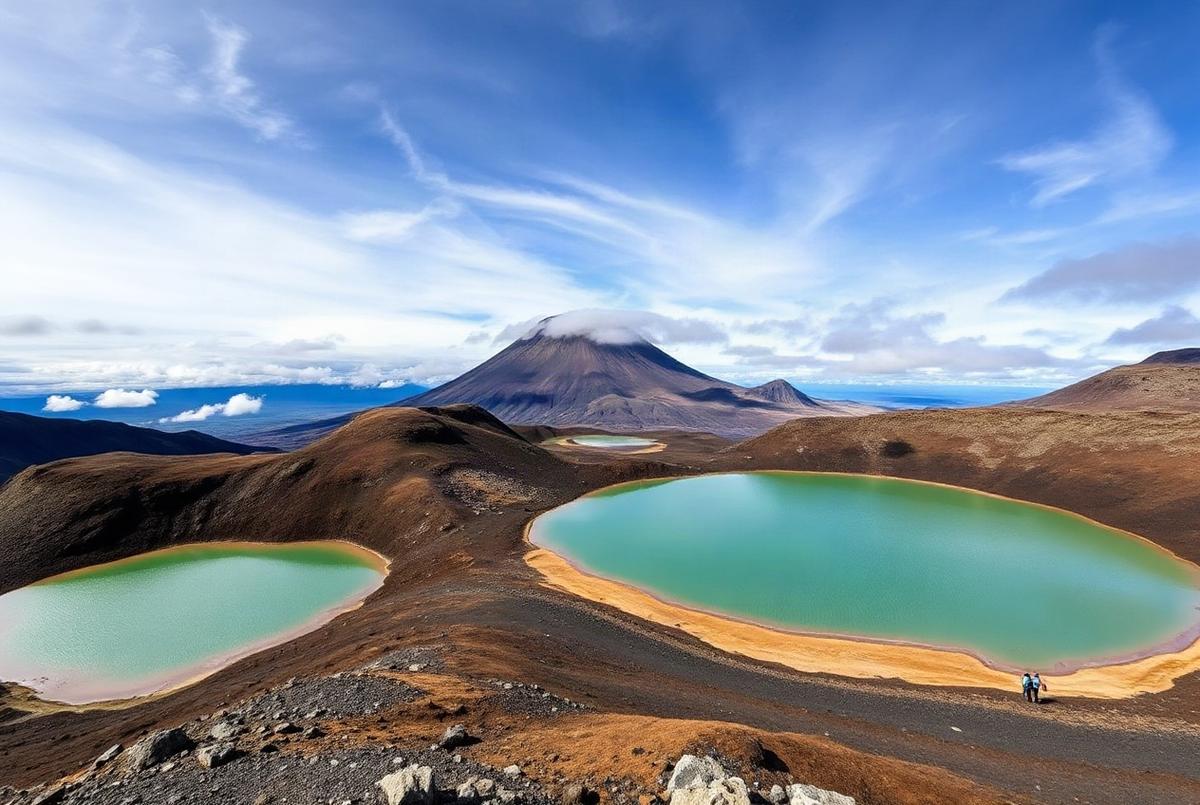
Located in the center of the North Island, Tongariro National Park is a mixed World Heritage site combining a dramatic volcanic landscape with deep spiritual significance in Māori culture.
The Appeal of the Tongariro Alpine Crossing
Often called one of the best day walks in the world, this hugely popular trek takes you past emerald crater lakes, old lava flows, and steaming vents — volcanic terrain so otherworldly it feels like another planet. At about 19.4 km with significant elevation change, it's a demanding route, but the sense of achievement and the views are extraordinary. The weather changes quickly here, so thorough preparation is essential and guided tours are recommended.
- What makes it a mixed cultural and natural heritage site
The three volcanoes (Tongariro, Ngauruhoe, and Ruapehu) are profoundly sacred to Māori. When visiting, be mindful of the natural environment and show respect for the cultural significance of the land. In winter, you can also ski on Mount Ruapehu.
🏞️ Te Wāhipounamu
- 📍Location:
Southwest South Island
- ⭐Type:
Natural heritage
- 🌲Key features:
Fiords, glaciers, ancient forests, alpine peaks
- 👀Highlights:
Milford Sound, Aoraki/Mount Cook, glacial lakes
- 🚶Popular activities:
Cruises, hiking, heli-hiking
- ✈️Gateway towns:
Queenstown, Te Anau
🌋 Tongariro National Park
- 📍Location:
Central North Island
- ⭐Type:
Mixed heritage (natural + cultural)
- 🔥Key features:
Active volcanoes, crater lakes, sacred Māori land
- 👀Highlights:
Emerald Lakes, Mount Tongariro, Mount Ngauruhoe
- 🚶Popular activities:
Tongariro Alpine Crossing, skiing
- ✈️Gateway towns:
National Park Village, Turangi
Te Wāhipounamu vs. Tongariro National Park: Two World Heritage Sites Compared
As the infographic above shows, Te Wāhipounamu is defined by its vast natural landscapes, while Tongariro National Park stands out for its blend of volcanic terrain and Māori culture. Both are among New Zealand's finest destinations, but because they are so different in character, it's worth choosing based on your interests and how long you're staying. If time allows, visit both and experience the full diversity of New Zealand's World Heritage.
Soak Up New Zealand's Nature: A Guide to Popular Activities
In New Zealand's World Heritage areas and national parks, a huge range of activities lets you experience the grandeur of the landscape firsthand. Here are some of our top recommendations.
Hiking & Trekking: Walk Through Spectacular Scenery
New Zealand is often called a hiker's paradise, with an incredibly well-maintained network of walking tracks. Of the nine famous multi-day routes known as the "Great Walks," several lie within World Heritage areas.
- Recommended tracks:
- Hooker Valley Track: In Aoraki/Mount Cook National Park. About 3 hours return, relatively flat and easy to walk, with stunning views of glacial lakes and Aoraki/Mount Cook — one of the most popular walks in the country.
- Tongariro Alpine Crossing: As mentioned above, the famous day walk in Tongariro National Park. Demanding, but the sense of achievement is unmatched.
- Milford Track: In Fiordland National Park. One of the multi-day Great Walks. Advance booking is essential and it's a challenging route, but it's often called "the finest walk in the world."
- Routeburn Track: A Great Walk spanning Fiordland and Mount Aspiring National Parks, prized for its remarkably varied scenery.
Cruises: The Beauty of Fiords and Coastlines
In Fiordland National Park, cruising Milford Sound or Doubtful Sound is the classic activity. Gazing up at sheer cliffs and thundering waterfalls from the deck is a completely different experience from viewing them on land — with a good chance of wildlife encounters, too.
Beyond the World Heritage areas, there are also plenty of beautiful coastal cruises, such as the Bay of Islands in the North Island and Abel Tasman National Park in the South Island.
Kayaking: Savor the Stillness of Lakes and Sea
Kayaking is also popular in the calm coves of the fiords and on the beautiful lakes within the national parks. Moving across the water at your own pace lets you feel the landscape at close range. Join a guided tour and even complete beginners can enjoy it with confidence. Milford Sound and Abel Tasman National Park are favorite kayaking spots.
Popular Activities Comparison Table
| Activity | Main Locations | Typical Duration | Approx. Cost (NZD/JPY) * | Features & Appeal | Beginner-Friendliness |
|---|---|---|---|---|---|
| Day hiking | Aoraki/Mount Cook, Tongariro, Fiordland, etc. | 1 hour to a full day | Free–$50 (up to approx. ¥4,500) | Easy access to spectacular views; tracks for every fitness level | ★★★★★ |
| Multi-day trekking | Milford Track, Routeburn Track, etc. | Approx. 3–5 days | $100–$300+ (from approx. ¥9,000) | Full immersion in wilderness; great sense of achievement; advance booking and preparation essential | ★★☆☆☆ |
| Fiord cruises | Milford Sound, Doubtful Sound | 2 hours to a full day | $80–$250+ (from approx. ¥7,200) | Sheer cliffs, waterfalls, wildlife watching; easy to access | ★★★★★ |
| Sea kayaking | Abel Tasman, Milford Sound | Half day to a full day | $100–$200 (from approx. ¥9,000) | Water-level views, tranquility, and a good workout | ★★★★☆ |
| Heli-hiking | Aoraki/Mount Cook (glaciers), Fiordland | Approx. half a day | $500+ (from approx. ¥45,000) | Helicopter access to spectacular spots; land on a glacier; a special experience at a premium price | ★★★☆☆ |
* Costs are rough guides only and vary by tour operator and season. Yen figures are converted at 1 NZD = approx. ¥93 (as of August 2026). Check operators' websites for current pricing.
Planning Your World Heritage Trip: Best Seasons and Complete Access Guide
To make the most of New Zealand's World Heritage sites, advance planning matters. Here's what to know about when to go and how to get around.
When to Go: The Best Seasons for Visiting New Zealand
New Zealand is in the Southern Hemisphere, so its seasons are the reverse of those in the Northern Hemisphere.
- Summer (December–February): The warmest season with the longest daylight hours — peak season. Ideal for hiking and water sports, but expect more crowds and higher accommodation prices.
- Autumn (March–May): Mild weather and beautiful autumn foliage. Summer crowds ease off, making it a relatively comfortable time to travel.
- Winter (June–August): Snow falls in the South Island and ski season begins. You can ski in Tongariro National Park too. The North Island stays relatively mild but gets more rain. Some hiking tracks close or require alpine equipment.
- Spring (September–November): Flowers start to bloom and temperatures gradually rise. Snowmelt swells the waterfalls at this time of year. The weather can be unsettled on some days.
The ideal season depends on your activities, but in general, summer (December–February) and autumn (March–April) are the best times to visit most World Heritage areas.
Summer (Dec–Feb)
☀️ Warm with plenty of sunshine
🚶 Perfect for hiking
🏖️ Great for water sports
GOOD Stable weather
NOTE Crowds & higher prices
Autumn (Mar–May)
🍂 Mild climate
🍁 Beautiful fall foliage
😌 Fewer crowds
GOOD Comfortable travel
NOTE Chilly mornings & evenings
Winter (Jun–Aug)
❄️ Ski season begins
⛷️ Snowy South Island
☔ More rain in the North Island
GOOD Great for skiers
NOTE Cold; some tracks closed
Spring (Sep–Nov)
🌸 Flowers start blooming
💧 Waterfalls at full flow
🐑 Lambing season
GOOD Fresh greenery
NOTE Unsettled weather
Getting There from the Main Cities: Domestic Travel Tips
The main ways to get around New Zealand are by plane, long-distance bus, and rental car.
- Flights: A well-developed domestic network connects major cities such as Auckland, Wellington, Christchurch, and Queenstown. Convenient when time is short or when traveling between the two islands.
- Long-distance buses: Companies such as InterCity operate a nationwide network. Relatively cheap, though journeys take longer — and many routes are wonderfully scenic.
- Rental car: The most flexible option if you want to explore at your own pace and stop wherever you like. New Zealand drives on the left, but rural roads can be winding and hilly, so drive with care. Make sure you have a valid driver's licence for New Zealand (an International Driving Permit if required for your home licence).
- From Auckland to the South Island: Flying to Christchurch or Queenstown is the usual approach.
- From Christchurch / Queenstown: These are the gateway cities for the Te Wāhipounamu World Heritage area in the South Island. From here, head to Aoraki/Mount Cook or Fiordland by rental car or bus tour.
- North Island (Tongariro National Park): Travel by bus or rental car from Auckland or Wellington, or fly to a nearby airport such as Taupo.
Access Overview for the Main World Heritage Spots
| World Heritage Spot | Gateway City | Main Transport Options | Approx. Travel Time (from gateway) | Notes |
|---|---|---|---|---|
| Milford Sound | Queenstown | Bus tour, rental car | Approx. 4–5 hours one way | Many day tours available; drive with care |
| Te Anau | Bus tour, rental car | Approx. 2 hours one way | The closest town to Milford Sound | |
| Aoraki/Mount Cook National Park | Christchurch | Rental car, bus | Approx. 4 hours one way | Public transport services are limited |
| Queenstown | Rental car, bus | Approx. 3–4 hours one way | The route via Lake Tekapo is popular | |
| Tongariro National Park | Auckland | Rental car, bus | Approx. 4–5 hours one way | |
| Wellington | Rental car, bus | Approx. 4 hours one way | ||
| National Park Village | On foot, shuttle bus (within the park) | – | The closest base for accommodation and activities |
* Travel times vary depending on traffic conditions and rest stops.
Types of Tours and How to Choose
Exploring independently is great, but tours are a convenient option if you want to sightsee efficiently or would rather not drive.
- Day tours: Easy access to major sights, such as Milford Sound cruise tours departing from Queenstown.
- Multi-day coach tours: Bus tours covering several cities and national parks over a few days, often with accommodation and meals included.
- Activity tours: Tours focused on a specific experience, such as guided hikes, kayaking, or glacier walks.
When choosing a tour, compare prices, inclusions, departure times, and reviews. Note that popular treks such as the Great Walks often need to be booked months in advance.
Making the Most of Your Trip: Etiquette and Things to Know
To protect New Zealand's beautiful nature and culture — and to stay safe — there are a few things to keep in mind.
Doing Your Part for Conservation
New Zealand takes environmental protection very seriously. To help preserve precious natural areas like its World Heritage sites, keep the following in mind.
- Pack out all rubbish: Never leave litter outside designated bins. On the trails especially, the rule is to carry out everything you carry in.
- Stay on marked tracks: Keep to the trail to protect fragile vegetation.
- Don't touch or feed wildlife: Keep your distance to protect the natural ecosystem.
- Camp and light fires only in designated areas: Follow the rules and make absolutely sure fires are fully extinguished.
- Arrive with clean gear: To prevent the spread of invasive species, clean your boots and camping equipment before entering national parks (kauri dieback disease is a particular concern in the North Island).
Respecting Māori Culture: How to Behave On Site
When visiting sacred Māori sites (tapu) such as Tongariro National Park, cultural respect is expected.
- Respect sacred places: Summits and certain lakes can hold special meaning for Māori. Follow signage and guides' instructions, and act with respect.
- Marae etiquette: If you have the chance to visit a marae (a Māori meeting ground), never enter the grounds uninvited. There are distinctive customs, such as the pōwhiri welcome ceremony.
- Photography: It's courteous to ask permission before photographing people or the interior of a marae.
Be Ready for Changing Weather: Packing Checklist
New Zealand's weather is famously changeable — locals say you can get "four seasons in one day." Conditions can shift abruptly in the mountains, so pack the right clothing and gear.
Essentials (All Seasons)
- Waterproof, windproof jacket
- Fleece or other mid-layer (for layering)
- Quick-dry base layers
- Comfortable walking shoes (waterproof recommended)
- Hat (for sun and warmth)
- Sunglasses
- Sunscreen (the UV here is intense!)
- Water bottle / drinks
- First-aid kit
- Backpack
For Hiking & Alpine Areas
- Trekking poles (recommended)
- Headlamp (just in case)
- Map & compass/GPS
- Emergency food
- Spare warm layers
- Rain pants
- Gloves
- Beanie
Nice to Have
- Insect repellent (especially in summer)
- Camera
- Power bank
- Towel
Tips for Staying Safe
- Do your research: Before visiting, check track conditions, weather forecasts, and safety alerts for your destination on resources such as the Department of Conservation (DOC) website.
- Tell someone your plans: Especially if you're hiking alone, let someone (your accommodation host or a friend) know your route and expected return time.
- Know your limits: Choose activities that match your fitness and experience level, and have the courage to turn back if you feel unwell or the weather deteriorates.
- Emergency contacts: Check how you'd get help in an emergency (mobile coverage, emergency contacts, and so on). New Zealand's emergency number is 111.
Conclusion: Set Off on Your New Zealand World Heritage Adventure!
New Zealand's World Heritage sites overflow with diverse attractions that leave visitors awestruck — the vast fiords and glaciers of Te Wāhipounamu, and the mystical volcanoes and Māori heritage of Tongariro National Park. These are not merely tourist destinations, but precious places where you can feel the Earth's history, unique ecosystems, and indigenous culture firsthand.
In this article, we've covered everything from an overview of New Zealand's World Heritage to specific highlights, activities, trip-planning tips, and what to keep in mind when visiting.
- Plan: Choose the World Heritage areas and activities that suit your interests and fitness level.
- Prepare: Check the best season and access options, and pack clothing and gear that can handle rapidly changing weather.
- Experience: Take in New Zealand's magnificent nature with all your senses — hike, cruise, kayak.
- Respect: Practice responsible travel and honor local culture, especially Māori culture.
Whether you're in New Zealand to study, on a working holiday, relocating, or simply traveling, a visit to its World Heritage sites is sure to become an unforgettable experience. Get ready and go find this country's greatest treasures!
For further research, these sites are excellent resources.
- Official Tourism New Zealand website: https://www.newzealand.com/
- Department of Conservation (DOC): https://www.doc.govt.nz/ (national park and trekking information)
Disclaimer: This article was created using AI-generated information. While we strive to provide the most current and accurate information possible, details may become outdated or change over time. In particular, always verify variable information such as prices and opening hours on official websites. This article is intended as general information only and does not constitute advice for individual circumstances. The content may be updated in the future based on personal experience and additional information.