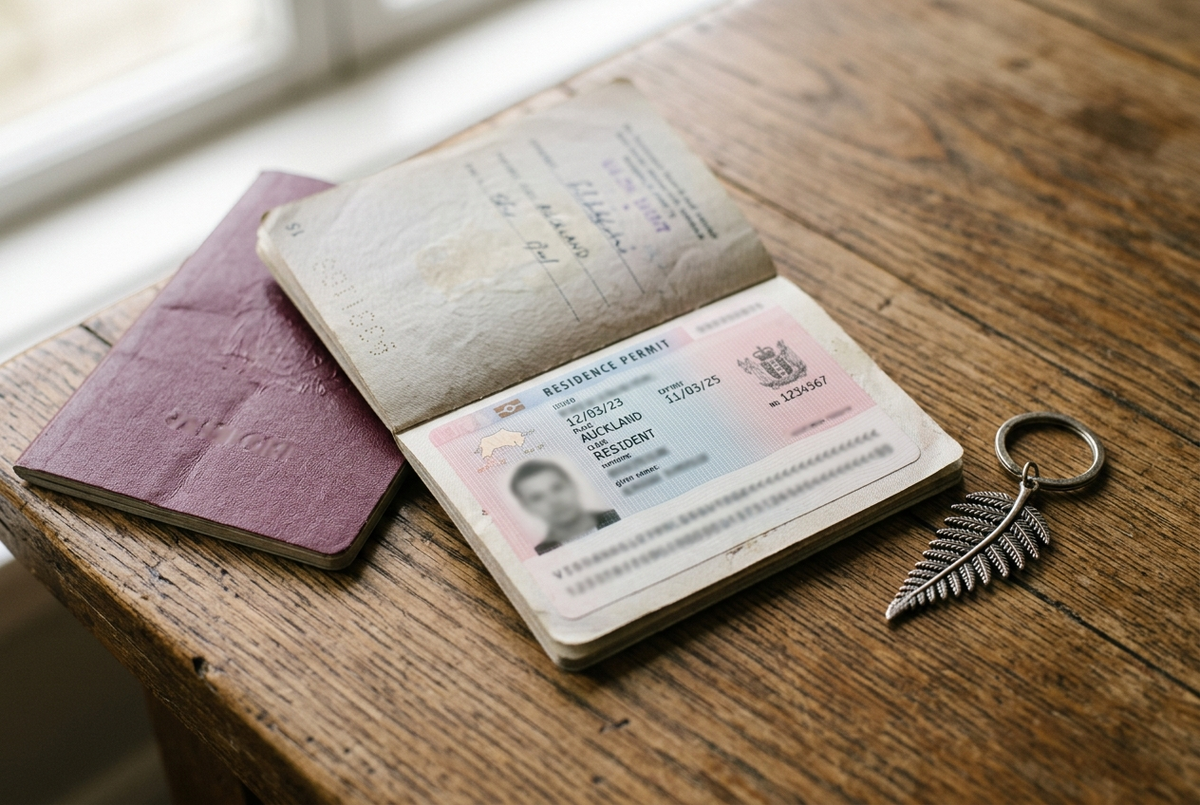
When people compare countries to migrate to, they usually compare how hard it is to get permanent residency. Far fewer ask the question that matters just as much: once you have it, what do you have to do to keep it?
Most destinations attach conditions. New Zealand, uniquely among the major English-speaking destinations, does not. In September 2026 a governing coalition party proposed changing that — but only for people who have not yet applied. Here is what the rules actually say, checked against primary sources.
What makes New Zealand's Permanent Resident Visa different
Immigration New Zealand states it plainly:
A Permanent Resident Visa does not have any conditions, or rules, on it.
What matters here is not what the visa grants, but what it lacks. No expiry date. No residency obligation. No renewal. No requirement to demonstrate ongoing ties. As long as it is held in — or transferred to — a valid passport, it simply continues.
Spend ten years entirely outside New Zealand and you can return the next day to live and work. In most countries, you would have lost your status somewhere along the way.
How the major destinations compare
| Country / status | What you must do to keep it | How you lose it |
|---|---|---|
| New Zealand Permanent Resident Visa | Nothing | It does not lapse with time |
| Canada Permanent Resident | 730 days in Canada within any five-year period | Failing the residency obligation |
| Australia Permanent Resident | Travel facility lasts five years | Once it lapses you must apply for a Resident Return Visa, which examines your recent residence |
| United Kingdom Indefinite Leave to Remain | Remain in the UK | More than 2 continuous years outside the UK |
| United States Green Card | Maintain US residence | Extended absence risks abandonment of status |
Among the destinations most migrants actually weigh — the US, Canada, Australia and the UK — New Zealand is the only one with no residency obligation and no renewal. Immigration lawyers have gone as far as calling it the only true permanent residence.
That exceptionalism is precisely why it is now being questioned.
September 2026: a proposal to abolish it
On 1 September 2026, ACT — a party in the governing coalition — announced an immigration policy that would:
- Abolish the Permanent Resident Visa and consolidate everything into the Resident Visa
- Attach a five-year travel facility to the Resident Visa
- Require 730 days in New Zealand within any rolling five-year period to renew it
That 730-day figure is not arbitrary. It is identical to Canada's residency obligation. In effect, the proposal would bring New Zealand into line with the countries it currently differs from.
ACT's immigration spokesperson, Dr Parmjeet Parmar, has said the privileges of permanent residence should reflect a "real and lasting connection" to New Zealand.
If you already hold a PRV, you are not affected
ACT's own policy page is explicit on this point:
This policy is not retrospective – existing Permanent Resident Visa holders will not be affected.
Existing holders are carved out. But read that sentence again, because it says something else too: the people who would be restricted are the ones who have not applied yet.
The same pattern is happening everywhere
Non-retrospective reform protects those already inside while tightening the door behind them. Recent examples from Europe follow the same shape:
- Spain closed its Golden Visa programme on 3 April 2025. New applications are no longer accepted.
- Portugal extended the residence requirement for citizenship from five years to ten, approved by parliament in October 2025.
In neither case were existing holders stripped of anything. In both cases, the terms available to future applicants got worse. Immigration systems have open periods and closed periods — and when they close, the notice is usually short.
What this means in practice
If you hold a PRV: nothing changes for you under the current proposal. Keep following policy news, but there is no action to take.
If you hold a Resident Visa: check the requirements for transferring to a PRV now. Under current rules you can apply after meeting conditions that typically include two years of residence. Whether that pathway survives depends on the election.
If you are still deciding: the terms on offer today are, in all likelihood, the most favourable they will be for some time. New Zealand's requirements remain lighter than comparable destinations, and its study costs are more modest than the United States. Against that, the domestic job market and the depth of specialist training available are smaller than in larger economies. Both sides of that trade are real, and worth weighing honestly.
The pathway, in brief
- Obtain a Resident Visa — through work, skills, family or investment routes. It carries travel conditions.
- Meet the requirements, which typically include two years of residence.
- Transfer to a Permanent Resident Visa — at which point the conditions fall away entirely.
The Green List of in-demand occupations is the most direct route into step one. Checking whether your occupation appears on it is the practical first move.
New Zealand is one of very few countries where permanent residents can vote in national elections without taking citizenship (residence conditions apply).
Frequently asked questions
Does the Permanent Resident Visa expire?
No. It has no expiry date and does not lapse, no matter how long you spend outside of New Zealand — you can stay away and still return to New Zealand, travel to New Zealand freely, and re-enter New Zealand whenever you choose. As long as it is held in a valid passport, you can re-enter and live in New Zealand as a resident at any time.
How do I apply for permanent residence?
You must first apply for a resident visa. Once the resident visa is granted, hold it for at least two years in a row (counted from the date your resident visa was granted). When you apply for a permanent resident visa, you also need to show a commitment to New Zealand in at least one of five ways set by Immigration New Zealand — the most common is having spent at least 184 days in New Zealand in each of the last 2 years. Other routes (such as tax residence status) exist, so check the official criteria against your situation.
Can I get there through a work visa?
Yes — that is the usual order: a work visa (for example through the Green List's Work to Residence pathway, or an accredited-employer job), then a residence visa application, then New Zealand permanent residence. The Work to Residence visa route through the Green List is the most direct example. Studying first is also common: many people study in New Zealand, move to a post-study work visa, and go on to residence from there.
What is the difference between a resident visa and a permanent resident visa — and citizenship?
No. New Zealand citizenship is a separate, later step — a New Zealand citizen holds a New Zealand passport, while a permanent resident keeps their original nationality's passport with an NZ visa in it. Because New Zealand allows dual citizenship, some migrants eventually naturalise; others simply live in New Zealand permanently as residents — the visa allows you to stay in New Zealand indefinitely. Notably, permanent residents can vote in national elections, which makes the practical gap smaller than in most countries.
Should I use an adviser?
For a straightforward case, the official guidance is often enough. If your situation is complex, use a licensed immigration adviser — in New Zealand it is illegal for unlicensed people to give immigration advice for a fee.
One important caveat
This is a party policy proposal, not enacted law. Whether it becomes reality depends on the election result and subsequent coalition negotiations. As of today, nothing has changed. Rules do change — always verify against Immigration New Zealand before acting.
Sources: Immigration New Zealand (Permanent Resident Visa); ACT New Zealand official policy page (immigration policy announced 1 September 2026); Immigration, Refugees and Citizenship Canada (residency obligation); GOV.UK (Returning resident visa). All verified September 2026.