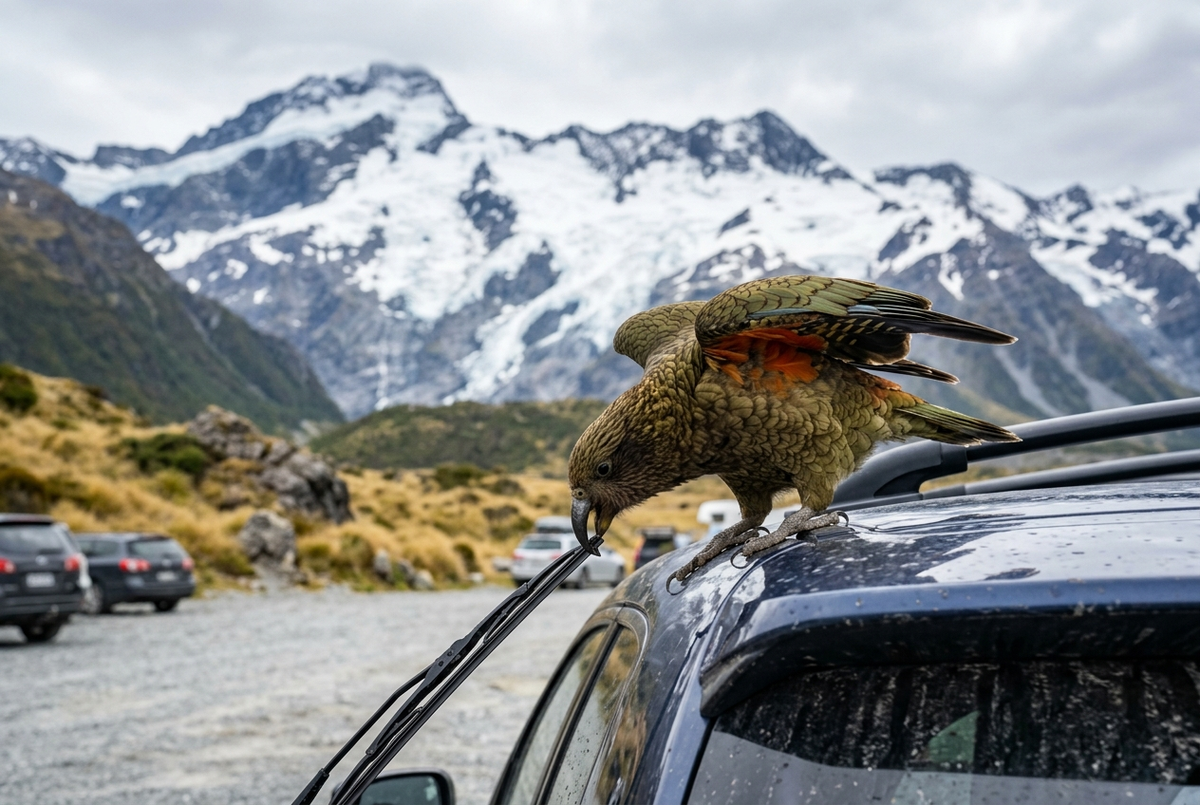
The kea (Nestor notabilis) is an intelligent parrot found only in New Zealand. It lives across the South Island, from alpine environments to lower country, and is famous for curiosity, problem-solving and investigating cars, packs and buildings.
New Zealand's alpine parrot
Kea are often described as the world's only alpine parrot. Their olive-green feathers hide bright orange-red colouring beneath the wings, which is easiest to see in flight. Their natural curiosity helps them explore a difficult mountain environment, but it can also bring them into conflict with people.
Kea population and conservation status
The Department of Conservation lists the kea as Threatened–Nationally Endangered and estimates a population of 1,000 to 5,000. Because this is an estimate, claims that a precise number remain should be treated cautiously.
Major threats include introduced predators, lead poisoning, deliberate harm, vehicle accidents and changes in behaviour caused by people feeding them.
How to behave around kea
- Never feed kea. Human food can harm them and teaches them to approach roads, buildings and people.
- Keep food, rubbish and loose belongings secured.
- Give the bird space and do not chase it for a photograph or video.
- Protect exposed rubber and loose items on parked vehicles where practical.
- Report an injured or distressed kea to DOC HOT on 0800 362 468.
Where visitors may see kea
Kea may be seen in parts of the South Island, including alpine roads, ski areas and mountain settlements. A sighting is never guaranteed. Observe wildlife from a respectful distance and follow any local signs or ranger instructions.
Official kea information
See the Department of Conservation kea guide for the current population estimate, conservation status and advice on caring for kea.
Information checked in October 2026.