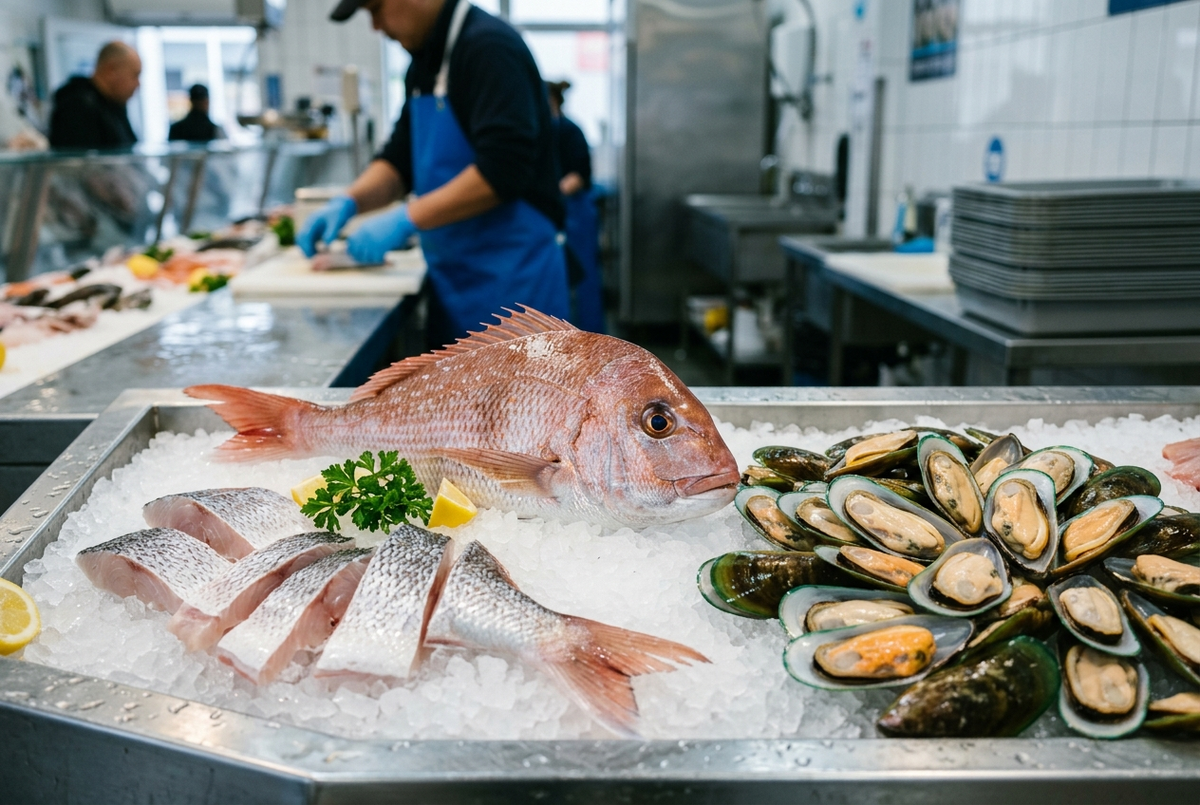
Surrounded by ocean on all sides, New Zealand is blessed with an abundance of seafood. But walk into a supermarket and you'll likely be greeted by a wall of unfamiliar names. What exactly is tarakihi? What does hoki taste like? If you're scratching your head, you're not alone. This guide walks you through the fish and shellfish you'll see most often in New Zealand.
Why New Zealand Seafood Is So Good
New Zealand's waters sit where cold, clean currents flowing up from the Antarctic meet warmer currents from the north, creating a rich marine environment that supports a remarkable diversity of species. Strict fishing regulations and a genuine commitment to sustainable fisheries also mean the quality of the catch is consistently high.
The Everyday Favorite: Tarakihi
One of New Zealand's most popular white fish is tarakihi. A medium-sized fish that looks a little like a perch, it has a mild, clean flavor with no strong fishiness — easy to love even if you're new to it.
It's a classic choice for fish and chips and works beautifully pan-fried, deep-fried, or steamed. Supermarkets usually sell it in fillets, with a pack (300–400g) running about NZ$10–15.
Hoki
Hoki is a deep-sea fish and one of New Zealand's biggest commercial catches — in fact, it's the fish used in McDonald's Filet-O-Fish in Japan. Its mild white flesh has few bones, making it very easy to eat.
It's also refreshingly affordable: frozen fillets are cheap and easy to find at supermarkets. Hoki turns up in fish and chips too, though its texture is a touch softer than tarakihi's.
At Mt Vic Chippery in Wellington you can choose between tarakihi and hoki — personally, I found the softer hoki a perfect match for the beer batter.
Groper (Hāpuku)
Also known by its Māori name hāpuku, this is one of New Zealand's premium fish. A type of grouper, it has firm, richly flavored flesh — comparable to high-end white fish you'd find at a fine restaurant. You'll see it more often on restaurant menus, served as a proper fish dish rather than battered and fried.
It costs more than other white fish (around NZ$20–30 per fillet), but it's well worth the splurge.
Flatfish: Terakihi and Flounder
Flounder is commonly caught along New Zealand's coastline, and its familiar flatfish shape makes it an approachable choice. You can sometimes find it at supermarkets as well.
New Zealand King Salmon
King salmon (Chinook salmon), farmed in the Marlborough Sounds and in Southland at the bottom of the South Island, is one of New Zealand's proudest seafood exports. Beautifully marbled with fat, it's outstanding as sashimi or sushi.
New Zealand king salmon is served at high-end sushi restaurants in Japan, but eating it here — at peak freshness — is something else entirely. Supermarkets stock fillets for around NZ$20–35.
Bluff Oysters
Harvested near Bluff, at the very southern tip of New Zealand, Bluff oysters are often ranked among the finest oysters in the world. The season runs from March to August, and during those months you may spot them on menus at Wellington's seafood restaurants.
They're large and intensely flavored, with a perfect balance of creaminess and briny ocean character. At NZ$5–8 apiece they're not cheap, but they're a delicacy everyone should try at least once.
Pāua (Abalone)
Pāua is New Zealand's native abalone. It's a different species from the abalone found elsewhere, notable for its dark flesh. It can be enjoyed raw, pan-fried in butter, or as fritters. The iridescent rainbow shell is also prized for jewelry and souvenirs.
Smart Shopping at the Supermarket
A few tips for picking fish at the seafood counter:
- Go for fillets labeled "Today's Catch" or "Fresh" first
- The freezer section has bulk packs of hoki and tarakihi — great for saving money
- Frozen seafood mix is handy for pasta dishes and stews
- Canned tuna, salmon, and sardines from New Zealand are also excellent quality
Recommended Seafood Restaurants
For a proper seafood meal in Wellington, head to the waterfront area. Ortega Fish Shack and Boulcott Street Bistro are both local favorites.
New Zealand's fish are wonderfully approachable, so whether you're visiting or settling in, make a point of trying them — at the supermarket, in your own kitchen, or at a local seafood restaurant.