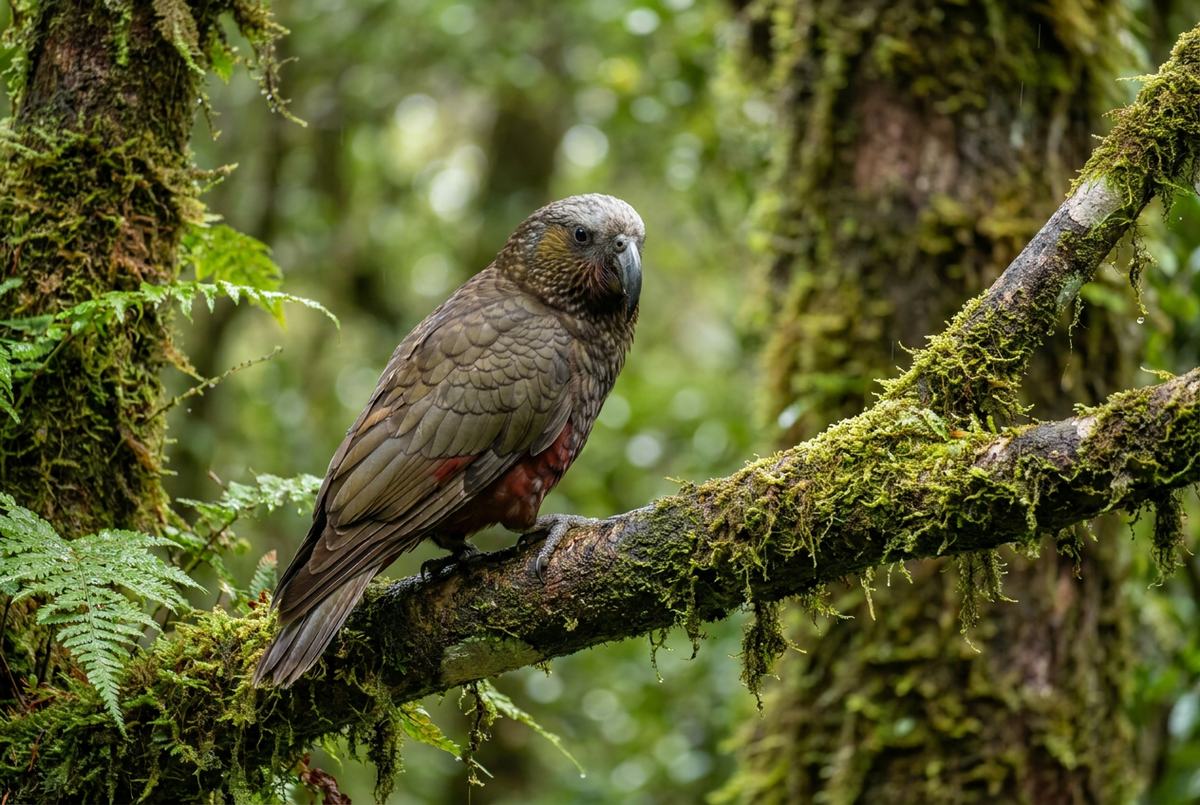
Just a few kilometres from central Wellington, one step through the gate takes you into another world. Zealandia is the world's first fully fenced urban ecosanctuary. Within 500 hectares of forest, a predator-proof fence keeps out mammalian predators like cats, rats, and stoats, allowing endangered native birds to live freely. It's an almost miraculous place where you can experience New Zealand's true wilderness without leaving the capital.
What Is Zealandia?
Opened in 1999, Zealandia is the world's first fully fenced urban nature sanctuary. Within its 500 hectares of predator-free forest, native New Zealand wildlife that was once on the brink of extinction now thrives in a natural state.
The sanctuary is home to more than 18 endangered species, and its conservation work has been so successful that tuatara and kiwi spreading out from Zealandia are now being spotted in parks around the city.
Wildlife You Can See
Kiwi
The kiwi, New Zealand's iconic flightless bird, is notoriously hard to spot in the wild — but Zealandia's night tours give you a real chance. Kiwi aren't active during the day, so you're unlikely to see one on a day visit. If a kiwi sighting is on your bucket list, book the night tour.
Tuatara
The tuatara is a living fossil, a reptile that has survived since the age of the dinosaurs and is found nowhere in the world but New Zealand. At Zealandia you may spot them on rocks or at the base of trees right beside the walking tracks — with a little luck, you can watch one up close.
Saddleback (Tīeke)
A beautiful bird with a distinctive brown saddle marking across its back. Once endangered, the saddleback has recovered so well under Zealandia's protection that it can now be seen in city parks as well.
Tīeke and Kākāriki
The kākāriki is a New Zealand parakeet, instantly recognisable by its vivid green plumage and wonderfully photogenic. You'll spot them frequently around Zealandia.
Weka
The weka is a flightless bird that's relatively comfortable around people. Famously curious, they'll wander right up to you — and have a reputation for making off with visitors' belongings. Keep an eye on your bags and lunch boxes.
Day Visits and Night Tours
Day Visit
During the day you can explore at your own pace. Grab a map at the entrance and wander the walking tracks looking for native birds and tuatara. Plan on around 2–3 hours. Guided tours (paid) are also available, with expert guides explaining the wildlife and conservation work in depth.
Night Tour
If you want to see a kiwi, the night tour is the way to go. You'll walk through the forest after dark with a guide, right when kiwi are active. It takes roughly 2–3 hours, requires advance booking, and has an excellent reputation for a high success rate of kiwi sightings.
Admission and Opening Hours
- Admission: Adults from NZ$21, children from NZ$10 (check the official website for current prices)
- Opening hours: 9:00am–5:00pm (last entry one hour before closing)
- Night tours: Separate fee, booking required
- Official website: visitzealandia.com
How to Get There
- Bus: Take a city bus (such as Route 2) from Wellington Station or the CBD toward Karori and get off at Zealandia
- Taxi or Uber: About 15–20 minutes from the CBD, roughly NZ$20–25
- Walking: About 40–50 minutes from the CBD (with some uphill)
- Free shuttle: Some Wellington hotels may offer a shuttle service (check in advance)
Tips for Your Visit
- Wear comfortable walking shoes — there are hills and dirt tracks
- Insect repellent makes the visit more comfortable, especially in summer
- Bring water and snacks (there's also a café on site)
- Binoculars make birdwatching far more rewarding
- Have your camera ready — an encounter with a tuatara or a rare bird is a once-in-a-lifetime moment
Great for Families Too
Zealandia is a fantastic outing for families. Interactive exhibits and guided tours make learning about New Zealand's ecosystems genuinely fun for kids. Because the wildlife is so close, it's a real-world experience that no picture book or zoo can match.
Zealandia offers a nature experience found nowhere else on earth, and it ranks among the very best things to do in Wellington.